Indigo is a deep, cool color between blue and violet. On a wall it can read as dark blue. Put a midnight-blue swatch next to it and its violet undertone becomes easier to see. That subtle shift gives indigo its character beside warm wood, ivory linen and patinated metal. The CSS named color indigo is …
Indigo is a deep, cool color between blue and violet. On a wall it can read as dark blue. Put a midnight-blue swatch next to it and its violet undertone becomes easier to see. That subtle shift gives indigo its character beside warm wood, ivory linen and patinated metal. The CSS named color indigo is #4B0082, or RGB 75, 0, 130.
Indigo vs. midnight blue vs. violet
Midnight blue reads more clearly as blue. Indigo has a violet undertone. Violet brings that undertone to the foreground. The difference matters most when you are coordinating two large surfaces, such as a painted wall and an upholstered sofa.
If you already have dark blue upholstery, hold the indigo swatch against the fabric. When the shades are close in depth, the difference is easier to see up close. If you want the contrast to register from the doorway, introduce a lighter element, such as a natural linen curtain or a section of ivory wall.
Light and dark indigo shades and HEX codes
| Swatch | HEX | Where to use it |
|---|---|---|
| Light, muted indigo | #8176A6 | A headboard, heavy drapery or a dining chair |
| CSS indigo | #4B0082 | A saturated digital reference with a pronounced violet undertone |
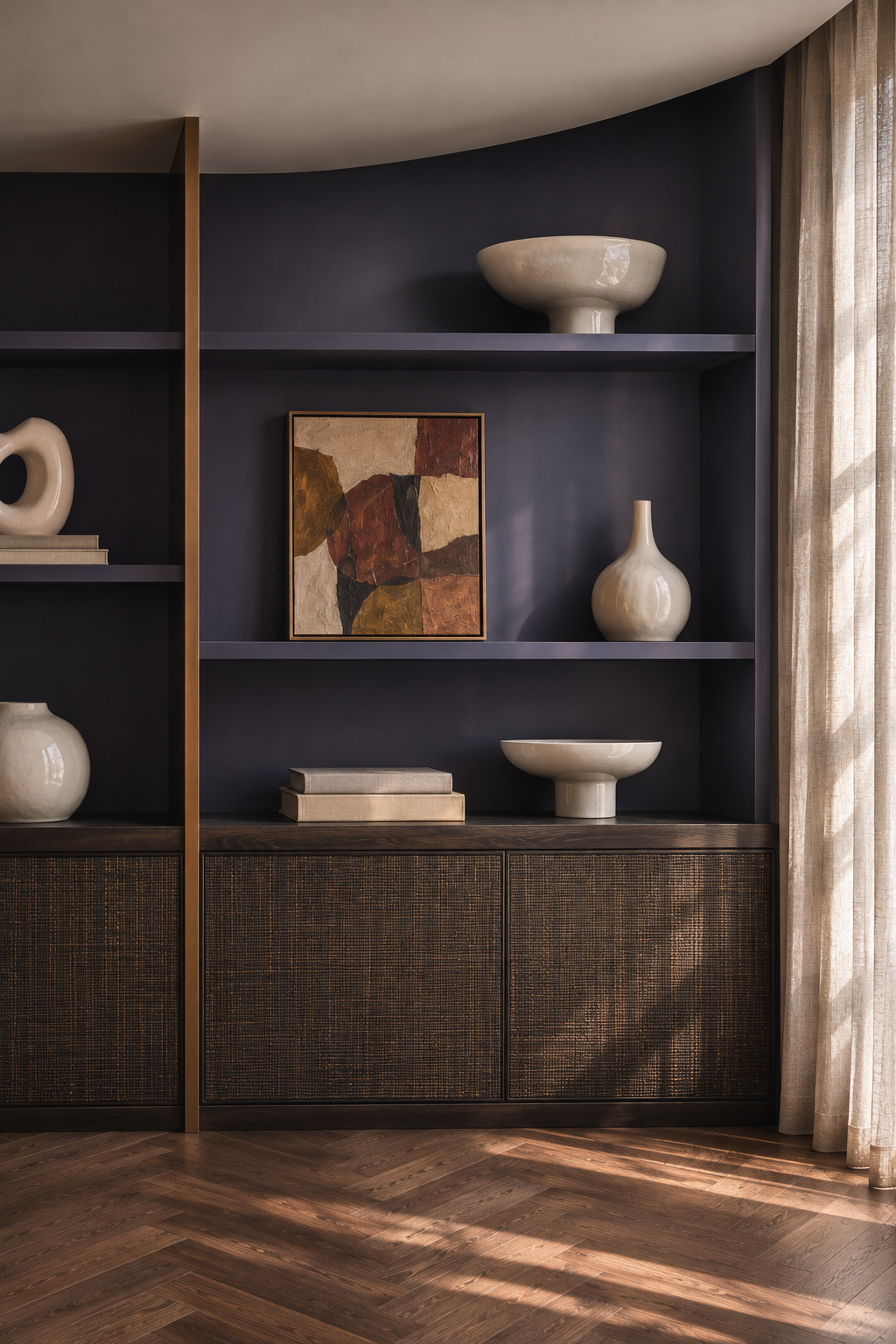
| Deep, muted indigo | #302A50 | The back of a bookcase, lacquered cabinetry or a wall in a cozy room |
The lighter and darker swatches are editorial color suggestions. When choosing paint, compare the manufacturer’s samples and test your favorite in the room. Light and sheen can change how the same shade reads. See the CSS named-color reference.
What colors go with indigo?
Indigo, ivory and walnut
Ivory is the softest backdrop of the three palettes. Let it cover the walls and bring in indigo through an armchair or low bookcase. Walnut adds depth and echoes the warmth of the ivory. If the floor is already dark, place a pale rug under the chair so its silhouette remains clear from across the room.
Indigo, dusty pink and aged brass
In a bedroom, pair matte dusty pink walls with an indigo headboard. An aged brass wall light adds a warm finish and a focused pool of light. A muted, powdery pink leaves room for the violet undertones in the fabric. A brighter pink will draw the eye first.
Indigo, ochre and natural oak
In a study, oak can run from the floor to the desktop. Use indigo on the wall behind the desk or on the back of a bookcase. An ochre chair is enough to punctuate the palette. The accent has more presence when the larger surfaces are wood and blue.
How to use indigo on walls, furniture and fabrics
One accent wall or the whole room?
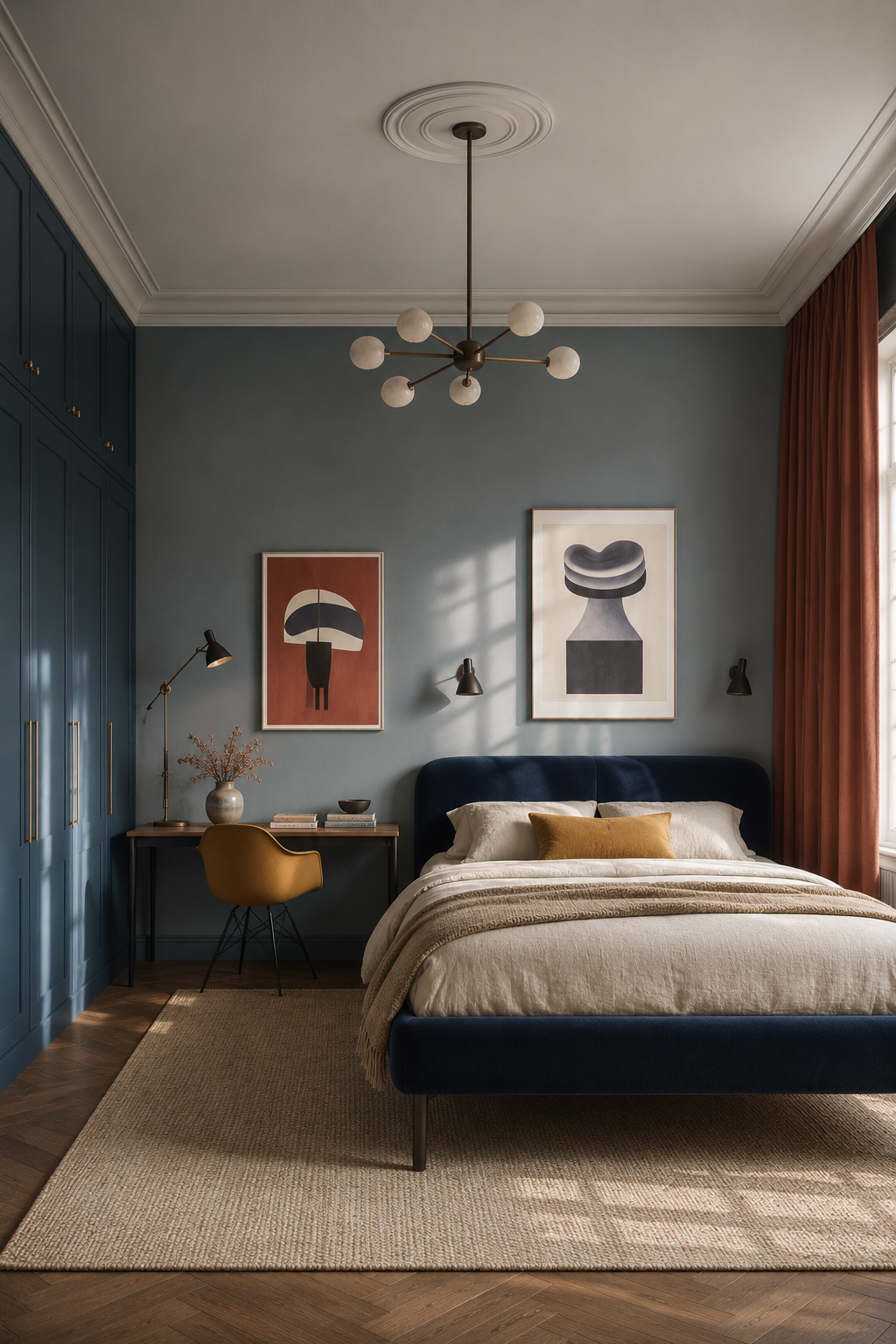
An indigo wall works best when it has something to frame: a headboard, a full-height bookcase or a desk at the far end of a study. In a room with several doorways and windows, a niche or the back of a set of shelves may offer a more continuous surface.
For a more enveloping room, carry the color across the walls, door and baseboards. The continuity softens the outlines of individual elements, an effect worth considering in a study or a dining room used after dark. Test a large swatch in two places and look at it in daylight and under the lamps you normally use.
Which white goes best with indigo?
Ivory works well with walnut, natural linen and beige stone. A cleaner warm white keeps the room bright when several other materials already lean warm. A cool white creates a sharper edge and can suit a kitchen with steel and gray surfaces. If the ceiling and baseboards are already white, hold the indigo sample right against their edges. That is where the colors will meet every day.
Matte paint, lacquer or velvet?
On a matte wall, indigo reads as an uninterrupted field of color. On a glossy cabinet door, windows and lamps enter the composition through their reflections. With velvet, the direction of the pile affects how the color reads. Turn a swatch and see how the shade deepens or lightens. If you are pairing an indigo seat with a wall in the same color family, compare the samples in their intended positions, even if they appear to match on a sample board.
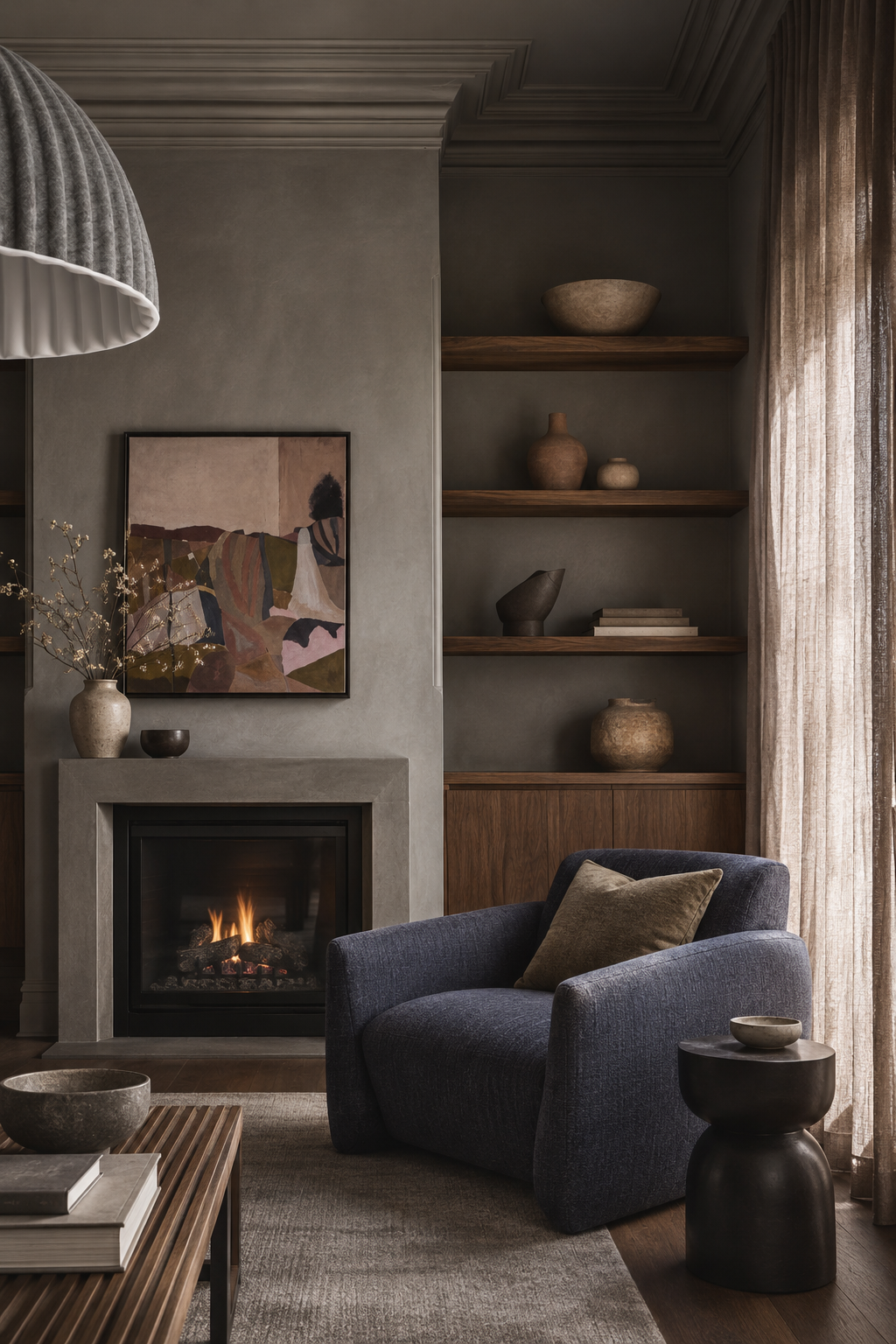
Indigo color FAQs
Is indigo a warm or cool color?
Indigo is generally considered cool. Paired with ivory, ochre or natural wood, it can sit comfortably in a palette that feels warm overall.
What colors make indigo?
To mix a similar paint shade, start with a deep blue and add violet in small amounts. The result depends on the pigments you start with. Natural indigo is a dye historically obtained from plants such as Indigofera tinctoria and used to color denim. Read more about indigo dye in textiles.
Can you use indigo in a small room?
Yes. To keep the room feeling bright, try indigo on a piece of furniture or in a niche and keep the largest surfaces light. For a more intimate room, extend it to the walls and position the lighting around the details you want to highlight.
This guide is part of our interior color dictionary. Explore colors that go with blue and our guide to ivory in interiors.