Summer rewrites the grammar of the home. It shifts our habits toward the light, stretches out time at the table, carries the living room beyond the walls, turns a terrace into a room suspended in the air and a garden into a place for connection. In contemporary design, the outdoors is no longer just a …
Summer rewrites the grammar of the home. It shifts our habits toward the light, stretches out time at the table, carries the living room beyond the walls, turns a terrace into a room suspended in the air and a garden into a place for connection. In contemporary design, the outdoors is no longer just a product category but a different way of thinking about space: more fluid, more sensory, closer to the landscape.
The defining outdoor design trend of 2026 is that gardens, terraces, patios, pool decks, outdoor dining areas and open-air hotels are becoming new rooms to live in. These are not extra spaces to furnish once everything else is settled, but environments with their own design identity: outdoor living rooms, outdoor kitchens, shaded areas, convivial tables, green pathways, soft lighting and materials that stand up to time without losing their aesthetic quality.
Homes look outward, hospitality builds experiences around the landscape, and contract design treats terraces, gardens and outdoor areas as decisive parts of the welcome. The result is a new vocabulary for outdoor living, in which comfort, nature and design are not separate elements but parts of the same vision.
When the outdoors becomes a room
The real shift in outdoor design in 2026 is not just about choosing garden furniture or the most weather-resistant materials. It is about how outdoor space is conceived. A terrace, patio or garden is no longer seen as a place to pass through or an area to kit out occasionally. It becomes a space to organize, scale, light, protect and make comfortable.
The idea of a room moves beyond the walls. A pergola can define a living room. An umbrella can mark out a gathering area. A hedge can become a green wall. An outdoor rug can frame the conversation area. A warm lamp can turn an outdoor corner into an evening retreat. Design no longer works only through architectural volume, but through atmosphere.
In this new idea of outdoor living, every element helps shape the space. The table is not just a surface but the center of social life. The seat is not just an accessory but an invitation to linger. Plants are not decoration but design material. Shade is not just shelter but climate comfort and visual definition. The outdoors becomes a room when it stops being thought of as “outside” and starts working as a real part of everyday life.
Gardens and terraces: the new outdoor living room

In residential projects, gardens and terraces are now among the spaces that architects, interior designers and private clients scrutinize most closely. The question is no longer just “how do I furnish a terrace?” but how to make it livable, consistent with the interiors, usable at different times of day and pleasant to look at even when nobody is out there.
A contemporary terrace can take on many identities. It can be a small urban living room, with low seating, side tables, potted plants and discreet lighting. It can become an outdoor dining area, set up for a carefully styled table with natural textiles, ceramics, colored glass and botanical details. It can turn into an extension of the kitchen, with countertops, advanced grills, outdoor modules and compact solutions for cooking outside without sacrificing order.
The garden, on the other hand, works on a larger scale. Here the outdoor design engages with paths, views, trees, shaded areas, relaxation zones, dining spaces, pools, small pavilions and lightweight structures. Greenery is not a backdrop but structure. Plants create depth; they screen, guide, separate and envelop. A well-designed garden is not just beautiful: it organizes time, modulates light and makes the relationship between house and landscape feel more natural.
Shade as an architectural element
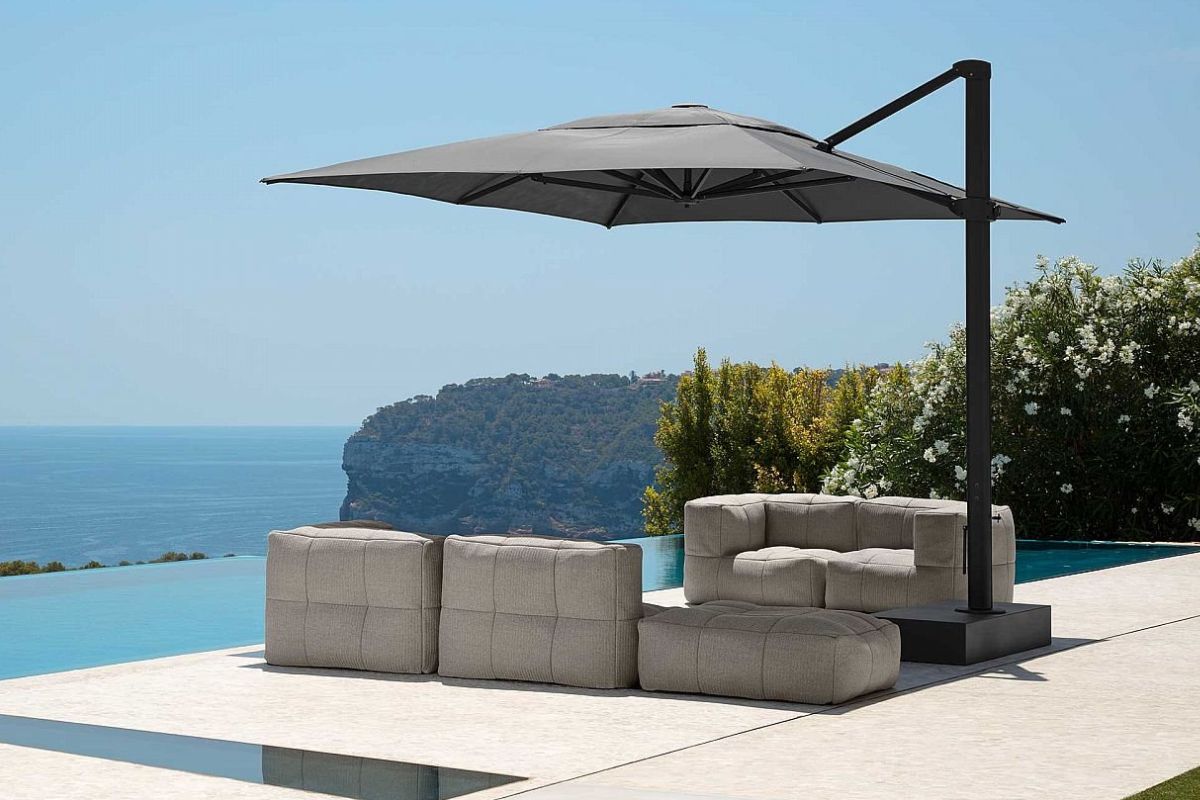
Shade is one of the central themes of contemporary outdoor design. For a long time it was treated as a functional necessity: blocking the sun, lowering the temperature, making a space usable during the hottest hours. Today shade has become genuine design material.
Pergolas, awnings, shade sails, louvers and garden umbrellas do more than protect. They shape volumes, create intimacy, establish hierarchies and suggest uses. A shaded area can turn a table into a summer dining room, a lounge into an outdoor living room, a pool into a hospitality space, an outdoor dining area into a recognizable setting.
The quality of shade affects how a space is perceived. Shade that is too rigid can feel heavy. Shade that is too weak can be ineffective. Well-designed shade follows the rhythm of the day, filters light, creates comfort without closing the space in, and lets you enjoy the outdoors naturally. In outdoor design trends for 2026, designing shade means designing how people stop, talk, eat, read and rest.
For hotels, restaurants and contract spaces, this becomes even more strategic. Shade is not only about guest comfort but also about the visual identity of a place. A well-kept outdoor dining area, a sheltered terrace or a garden equipped with elegant shade systems communicate care, quality and permanence. These details don’t shout, but they define the experience.
In this sense, designing outdoor shade with garden umbrellas means thinking about proportions, materials, orientation, comfort and the identity of the space. When chosen and positioned with care, the umbrella is no longer a seasonal accessory but a true architectural element.
Outdoor materials: lasting beauty, not temporary looks

One of the most common mistakes in designing outdoor spaces is to see durability as an aesthetic compromise. Contemporary outdoor design proves the opposite. The most interesting materials are those that combine longevity, tactility and visual quality.
Wood remains one of the most popular materials for terraces, decking, tables and seating, especially when chosen with maintenance and context in mind. It conveys warmth, naturalness and continuity with the landscape. Powder-coated aluminum, treated steel, porcelain stoneware, stone, technical fibers, nautical rope, outdoor fabrics and compact surfaces, by contrast, make it possible to create spaces that are durable, lightweight and sophisticated.
In 2026, outdoor design no longer aims for the “patio set” look. It seeks consistency with the interior. Colors become more restrained, textures more tactile, and shapes softer or more architectural depending on the project. Sand, clay, sage green, warm gray, terracotta, natural white, deep blue and leafy tones make up a palette closer to nature than to seasonal decoration.
The beauty of an outdoor space also depends on how well its materials age. A thoughtfully designed outdoor space shouldn’t look perfect only on installation day. It should keep its character over time, accepting light, wind, use and the presence of people. Quality doesn’t mean the absence of wear, but the ability to make that wear part of the atmosphere.
Outdoor kitchens: conviviality by design

One of the most visible developments in outdoor living is the rise of outdoor kitchens. No longer just a barbecue parked in the garden, they are increasingly complete, modular and integrated systems: countertops, sinks, burners, grills, storage, refrigerators, carts, technical surfaces, compact solutions for terraces and more elaborate setups for villas, resorts and hospitality venues.
The outdoor kitchen says a lot about how conviviality has changed. Cooking outside isn’t just about preparing food in the open air. It means moving the heart of the home outdoors and turning lunch and dinner into slower, more informal, more shared moments. Cooking becomes part of the experience, not something to hide.
That’s why the best outdoor kitchens focus not only on technical performance but on the relationship between function, materials and atmosphere. They have to be tough, of course. But they also have to relate to the table, the seating, the greenery, the light and the landscape. A well-designed outdoor kitchen doesn’t simply occupy a space: it activates it.
In private homes, it becomes an extension of the living area. In hotels and resorts, it can be part of culinary experiences, show cooking, outdoor breakfasts and dinners under the stars. In restaurants and beach clubs, it helps build a new idea of hospitality that is less rigid and more immersive.
It’s no coincidence that our research on the best outdoor kitchen brands confirms how firmly this segment has moved to the heart of outdoor design: no longer just technical equipment, but furniture, domestic architecture and a new culture of conviviality.
The outdoor table as a small exercise in atmosphere

Outdoor design in 2026 isn’t measured only by large furniture pieces, fully equipped kitchens or shade systems. Sometimes the quality of an outdoor space shows in the smallest details: a linen tablecloth, a textured ceramic, a colored glass, a botanical centerpiece, a low candle, a soft light, a comfortable chair, the way the table is angled toward the sunset.
Summer table setting has become a design language in its own right. It’s not just about decorative taste, but about creating an atmosphere that suits the place. A garden table can be natural, irregular, almost homespun. A terrace table can play with the view, the city lights, the potted greenery. A hotel table can become part of the identity of a stay, especially when it draws on local materials, craftsmanship, the colors of the landscape and rituals of hospitality.
Setting a table outdoors is about finding the right measure. Too little can look careless. Too much can look artificial. The most successful table is the one that seems to belong to its setting: not a rigid stage set, but a living composition designed to welcome real people. Here too, the best design isn’t what you notice first, but what makes you feel good.
That’s why learning how to set a table in the garden or on a terrace isn’t simply about choosing matching plates, glasses and napkins. It’s about creating a small domestic landscape where color, material, light and conviviality work together.
Open-air hotels: when the landscape becomes part of hospitality

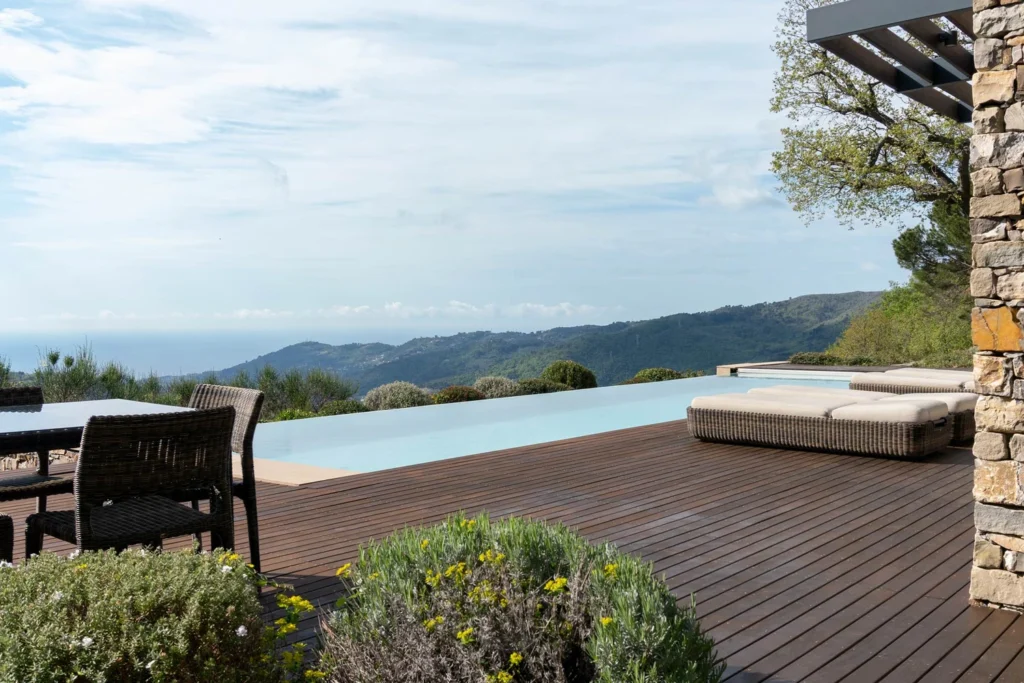
In hospitality, the relationship between architecture, interiors and landscape has become one of the strongest themes. Design hotels immersed in nature, scattered resorts, contemporary masserie (traditional fortified farmhouses of southern Italy), boutique hotels with livable gardens and properties overlooking the sea or the mountains no longer sell just rooms. They create spatial experiences.
The value lies not only in the view, but in how that view is designed. A room that opens onto a private terrace. Breakfast served in a green courtyard. A pool integrated into the landscape. A path through aromatic herbs. A shaded lounge area. An outdoor restaurant where materials, seating, lighting and table setting speak the same language as the place.
An open-air hotel isn’t necessarily rustic or informal. It can be extremely sophisticated. Its strength lies in no longer separating the indoor experience from the outdoor one. Guests don’t simply pass through different spaces; they live a sequence: room, terrace, garden, restaurant, pool, landscape. Each step adds to the memory of the stay.
This is why outdoor space in hospitality can’t be treated as a decorative add-on. It is part of a property’s positioning. It conveys the level of care, the relationship with the local area, the attention to comfort and the quality of the design. In a market increasingly focused on well-being, nature and the search for authentic places, outdoor spaces become a decisive lever.
Our selection of design hotels immersed in nature illustrates this direction clearly: design meets the landscape not as a mere aesthetic frame, but as an integral part of the guest experience.
Small terraces, big design possibilities

You don’t need a large garden to talk about outdoor design. Some of the most interesting projects involve small terraces, urban balconies, narrow loggias and compact outdoor nooks. These are complex, often underrated spaces that call for even more precise design.
On a small terrace, every choice counts. Seating must be properly scaled. Tables must be able to serve more than one function. Plants can’t be placed at random; they need to create rhythm and privacy. Lighting must be sufficient but not intrusive. Materials must relate to the interiors, because visual continuity becomes essential.
The secret isn’t to fill the space, but to give it a clear purpose. A small terrace can become a breakfast nook, a reading corner, a tiny dining room or a green space to enjoy from indoors too. Designed well, it doesn’t just increase the perceived square footage of the home. It improves the quality of everyday life.
Outdoor design in 2026 pays close attention to exactly these in-between spaces: places between inside and outside, between private life and the city, between architecture and climate. Not always spectacular, but often precious.
Lighting outdoor spaces without losing the night

Light is one of the most delicate elements in designing outdoor spaces. By day, design works with sun, shade, reflections and vegetation. In the evening, it has to change register. The mistake is thinking that lighting simply means making everything visible.
A well-lit garden or terrace keeps some of its darkness. Light should accompany, not erase. It can highlight a path, bring a green wall to life, make a dining area more intimate, mark a staircase or outline the volume of a pergola. It should help people move around and linger without turning the outdoors into an overexposed interior.
The most successful outdoor lighting works in layers: functional light, ambient light, decorative light. Small light points, portable lamps, lightweight pendants, discreet wall lights, step lights, contemporary lanterns and integrated systems make it possible to create different scenes. In the evening, the outdoor space can become cozier, slower, more evocative.
In hotels and restaurants, this matters even more. Lighting shapes how hospitality is perceived. A poorly lit terrace can lose its charm even when furnished with excellent products. Carefully calibrated lighting, on the other hand, can turn an outdoor dining area into one of the most memorable spaces in a project.
Greenery not as decoration, but as living architecture

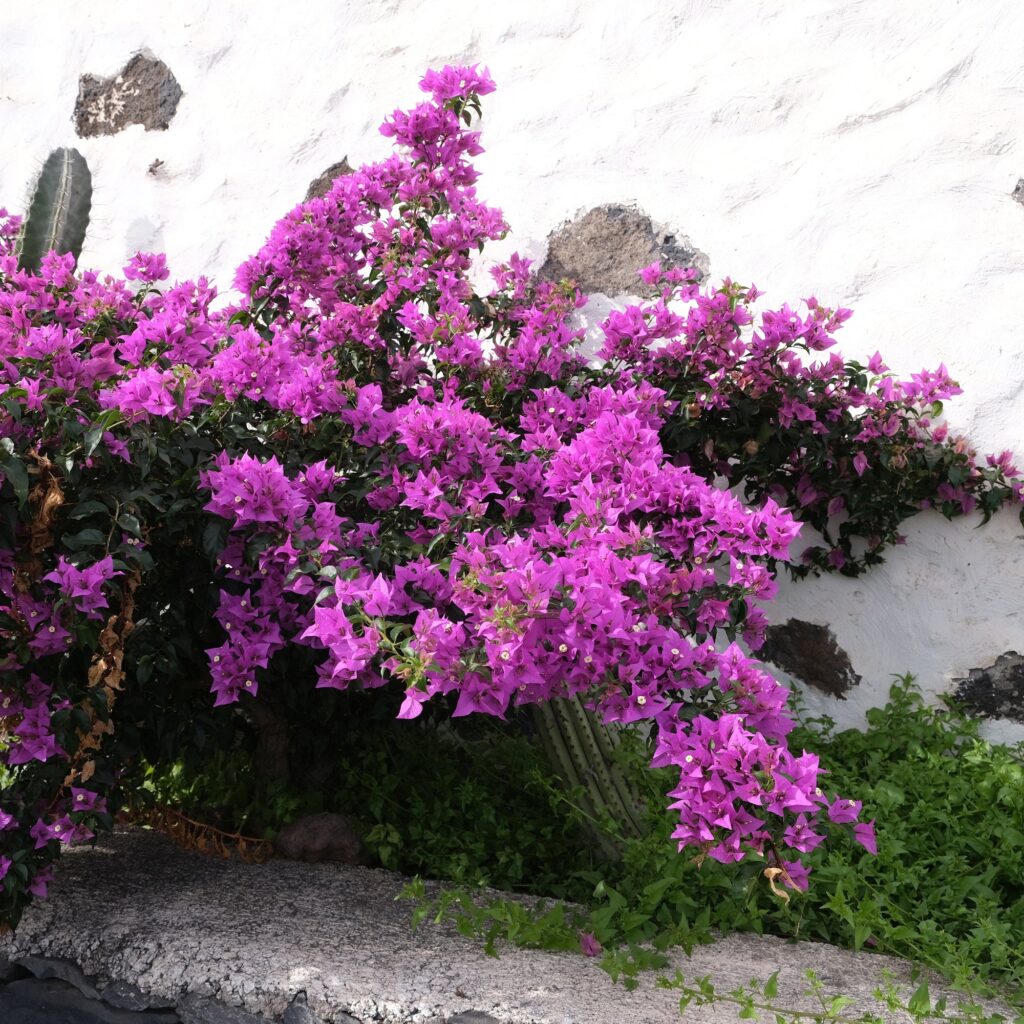
In the new outdoors, vegetation isn’t filler. It’s a structural part of the design. Trees, shrubs, climbers, ornamental grasses, herbs, flowering plants, potted plants and green walls help define the space just as much as furniture and materials do.
Greenery can screen a view, create privacy, soften a hard surface, guide a path, draw the eye, create shade and change how temperature is perceived. It can make an urban terrace feel more domestic or a large garden more intimate. It can bring the house closer to the landscape or introduce nature where there is no landscape at all.
In 2026, interest in outdoor greenery is becoming less ornamental and more experiential. People aren’t just looking for “pretty” plants, but for compositions that change over time, respond to the seasons, require sustainable maintenance, support biodiversity and convey a sense of life. The contemporary garden isn’t static. It’s a slow architecture.
Outdoor design 2026: a new idea of luxury
Outdoor luxury no longer means excess. It isn’t only about large spaces, expensive furniture or spectacular views. More and more, it’s about the quality of time a space can create.
Luxury is having breakfast on a well-oriented terrace. Luxury is dining outdoors without improvising. Luxury is a patch of shade at the right time of day. Luxury is reading in the garden in a comfortable chair under soft light. Luxury is staying in a hotel where the landscape isn’t just a photo backdrop, but a real part of the experience.
This idea of luxury is quieter, more tangible and more closely tied to well-being. It doesn’t always go for the spectacular. It prefers restraint, consistency, durability and attention to detail. In this sense, outdoor design becomes one of the most interesting territories of contemporary design, because it brings together beauty and use, aesthetics and climate, materials and gestures, architecture and everyday life.
How to design a contemporary outdoor space
Designing a contemporary outdoor space starts with a simple question: how will it actually be used?
Habits come before furniture. Some people want to eat outside every day, some need a space for entertaining, some want a quiet corner, some picture an outdoor kitchen, some need shade, some want to make the most of a view, and some need privacy from the neighbors. Every successful outdoor space begins with a precise reading of daily routines.
Then come the functions: dining area, conversation area, kitchen, relaxation zone, greenery, paths, storage, lighting and shade. Even in a small space, distinguishing between functions helps create order. It doesn’t mean dividing rigidly, but creating a sequence that reads clearly.
Finally come materials and atmosphere. This is where the project finds its identity: natural or urban, Mediterranean or minimalist, textured or colorful, domestic or more contract-oriented. Consistency doesn’t mean uniformity. On the contrary, it lets you mix furniture, plants, fabrics and surfaces without losing balance.
A well-designed outdoor space never looks random, but it shouldn’t look overly staged either. It has to leave room for life: a chair moved out of place, a glass set down, a tablecloth stirred by the wind, a changing light, a growing plant.
A new season of outdoor living
Outdoor design trends for 2026 point to a more open home, a more immersive kind of hospitality, and a way of designing that is less detached from the real conditions of daily life. Gardens, terraces and open-air hotels are becoming new rooms because they answer a specific desire: to make better use of time, light, landscape and our relationships with others.
It’s not about literally moving the interior outdoors, nor about turning every outdoor space into a perfect stage set. The real challenge is to create places that welcome outdoor life naturally: spaces that are beautiful, of course, but also comfortable, durable, shaded, well lit, well proportioned and true to the people who live in them.
Summer, after all, makes clear something that applies all year round: we need spaces that are less rigid, more alive, more responsive. Rooms that breathe. Tables that invite you to stay. Gardens you don’t just look at, but walk through. Terraces that don’t add square meters, but possibilities.
This is where the outdoors stops being a trend and becomes design. Not an outside to be furnished, but a new way of living.