There comes a moment when the language of fashion stops living only on the body and starts asking for a different scale, a different breadth, a different kind of presence. That is where the dialogue between fashion and interior design begins: not as a simple brand extension, but as the natural development of a vision. …
There comes a moment when the language of fashion stops living only on the body and starts asking for a different scale, a different breadth, a different kind of presence. That is where the dialogue between fashion and interior design begins: not as a simple brand extension, but as the natural development of a vision. For many Italian fashion houses, moving from clothing to space was neither a stretch nor a strategic sideline. Instead, it emerged as the logical continuation of a fully formed aesthetic code, one able to express itself through fabrics, colors, surfaces, atmospheres and details with the same precision it shows on the runway.
When a brand truly has a strong world of its own, it does not just put its name on objects: it builds recognizable universes. In this sense, the home becomes the most complete place in which that world can take shape. Some Italian fashion houses have thus translated their stylistic vocabulary into furniture, home collections and interior projects, showing that the line between fashion and domestic space is far finer than it seems. This article traces that journey: 10 Italian fashion brands that have carried their language from fashion into interior design, turning style into a lived experience.
Fashion and Interior Design: Why the Move Felt Natural for Many Italian Fashion Brands
Seen from today, the bond between fashion and interior design seems almost inevitable. Not only because both belong to the world of design, but because they share the same drive toward identity, materials, aesthetic gesture and the creation of a world of images. Fashion works on the body, interiors on space; yet in both cases what really matters is the ability to give shape to a recognizable atmosphere. When a fashion house has a strong, coherent, instantly legible language, the move from clothing to the home is not a change of course: it is a natural expansion of its vocabulary.
In Italy, this continuity is even more evident. The country’s fashion and design traditions share the same culture of manufacturing, of detail, of the relationship between beauty and function, between elegance and craftsmanship. That is why some fashion houses have not stopped at putting their name on home accessories, but have built a true domestic universe: a system of furniture, fabrics, surfaces, colors and signs that carries into space the same story they had entrusted to the runway for years.
Armani: When Luxury Stops Dressing and Starts Inhabiting
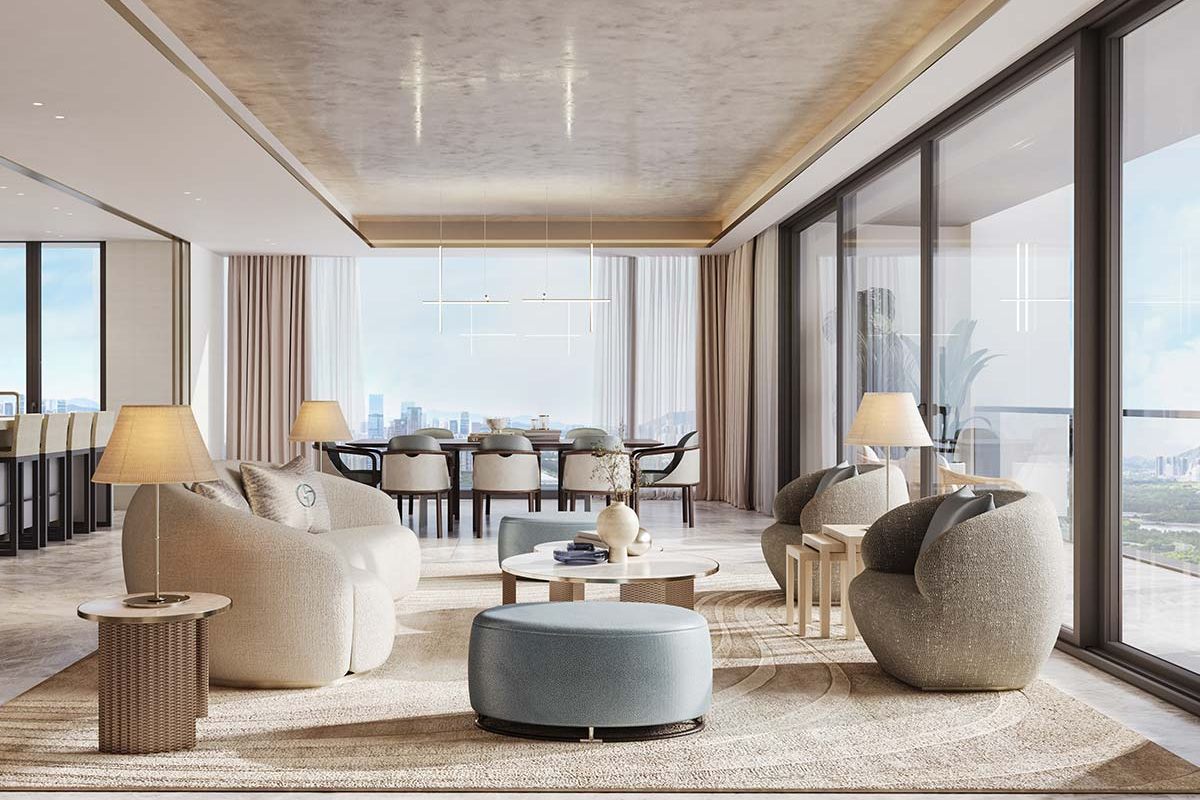
Founded in Milan in 1975 by Giorgio Armani and Sergio Galeotti, Armani is probably the most emblematic case of a natural transition from fashion to interior design. The reason is simple: even before it entered the home, the brand had already built a complete, recognizable language of soft rigor, restrained elegance, muted palettes, an almost obsessive attention to materials and a rejection of excess. When Armani/Casa was launched in 2000, that vocabulary did not change direction: it changed scale. It was the moment a vision born for the body moved into space without losing coherence. Tellingly, its signature object, the Logo Lamp, had been designed by Armani back in 1982 for his own Milan offices: long before the home line officially debuted, that lamp already held the seeds of his idea of living, made of geometry, atmosphere and restraint. When Armani/Casa launched, the Logo Lamp became the first manifesto of this domestic aesthetic.
Since then, Armani/Casa has gone well beyond a décor collection, evolving into a true design universe spanning furniture, lighting, rugs, tableware and textiles, culminating in 2004 with the creation of the Interior Design Studio under Giorgio Armani’s direct supervision. This is where the brand definitively crossed the line between fashion house and interior design firm: no longer just objects for the home, but residences, villas, yachts and international developments. Among the most notable projects are the Miami Residences by Armani/Casa, built to an architectural design by Cesar Pelli; the World Towers in Mumbai, with architecture by I.M. Pei; and Century Spire in Manila, designed by Daniel Libeskind. The most recent collections confirm this trajectory: at Salone del Mobile 2024, Armani/Casa presented “Echoes from the World”, a collection that reaffirms the core of its poetics, where décor is never gratuitous ornament but the construction of atmosphere. In short, at Armani the home is not an accessory extension of the brand: it is where fashion reaches its most complete form, because it becomes environment, experience and permanence.
Fendi: From a 1925 Roman Atelier to Luxury Home Design as a Complete Universe
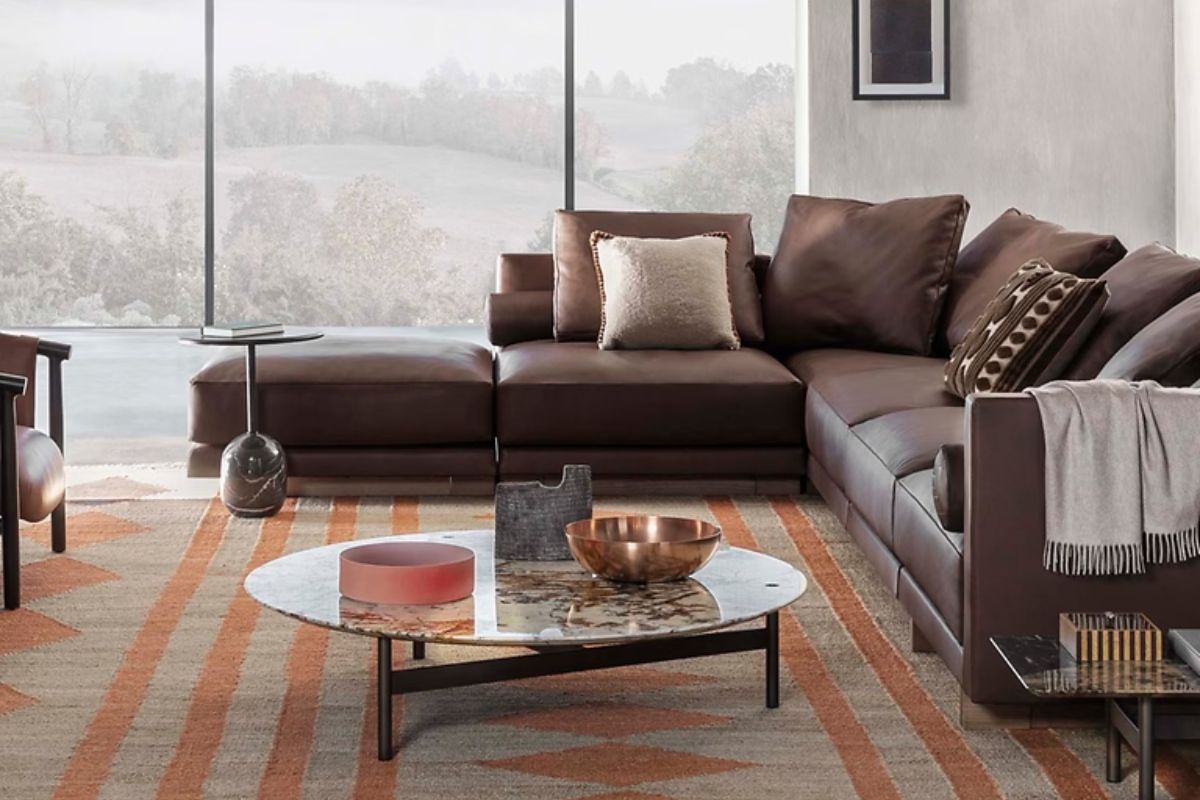
Founded in Rome in 1925 by Adele Casagrande and Edoardo Fendi, Fendi began as a house specializing in furs and leather goods, and it was from this culture of materials that it built, over the years, a language that would find an almost inevitable extension in the home. On the exact moment it moved into interiors, it is worth being precise, because historical sources do not fully agree. The Camera Nazionale della Moda Italiana (the Italian fashion council) dates the birth of Fendi Casa to 1989, while some industry accounts trace the start of the project to 1987, with the intuition of Alberto Vignatelli, and the line’s debut to the following year. Either way, the more interesting point lies elsewhere: Fendi was among the first fashion houses to understand that its world — leather, couture details, the FF logo, Roman rigor and the sensuality of materials — could step out of the wardrobe and into the home. Historical accounts of the brand describe how furs and fashion codes were translated into throws, cushions and furniture, launching an idea of lifestyle long before it became an overused formula.
The most interesting trajectory, however, is the recent one. In 2021, Fendi opened a new chapter with the FF Design joint venture with Design Holding, under the creative direction of Silvia Venturini Fendi, giving the home line an even more design-driven and international structure. From then on, Fendi Casa has presented itself not just as a luxury furniture collection but as a creative platform involving designers and studios such as Marcel Wanders Studio, atelier oï, Thierry Lemaire, Toan Nguyen, Cristina Celestino and Dimorestudio. The collection relaunched between 2021 and 2022 works precisely on this idea of continuity between fashion and interiors: the Five sofa by Marcel Wanders Studio, the Metropolis coffee table by atelier oï, inspired by the arches of Rome’s Palazzo della Civiltà Italiana, the Landscape bed, the Groove & Groovy seating and other pieces show how Fendi’s codes — from the Pequin stripe to Karligraphy, down to its obsession with tailored detail — can become furniture without losing their identity. Alongside these are special projects such as Fendi Château Residences in Surfside, Florida, announced in 2014 and completed in 2016: a residential development with architecture by Arquitectonica and interiors by Fendi in collaboration with Fanny Haim, which shows clearly that for the Roman fashion house the home is no longer a side business but a true form of spatial self-expression.
Versace: The Home as the Total Stage for a World Born in 1978
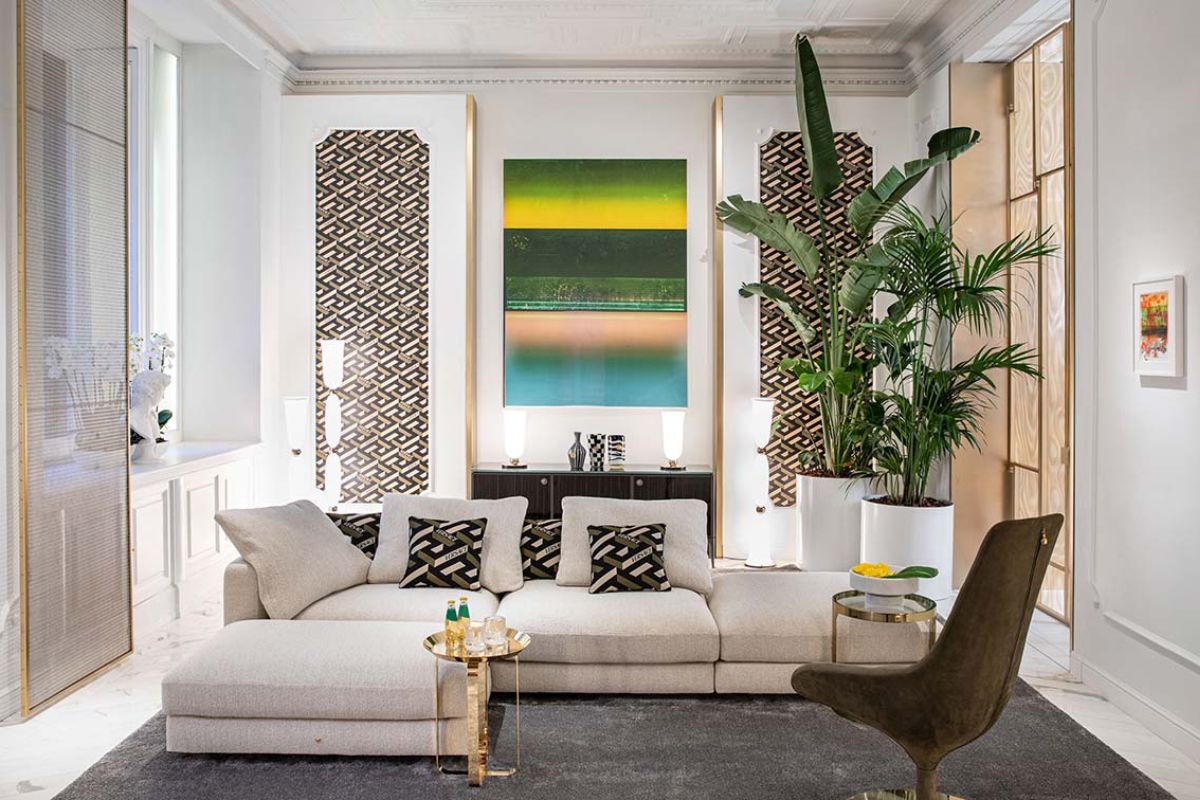
Founded in Milan in 1978 by Gianni Versace, the fashion house brought one of the most recognizable vocabularies in Italian fashion to interior design: Mediterranean classicism, theatrical flair, Baroque ornament, sensuality and a culture of the image. Its move into the home came in 1992 with the launch of Versace Home: first through textiles, then with the famous porcelain collections developed with Rosenthal, which made the dining table one of the brand’s first areas of expansion. It was an important step, because it showed right away that Versace had no intention of stopping at accessory home décor, but wanted to build a true domestic universe consistent with its idea of luxury.
The most recent phase marks a further leap. In 2020, the house signed a new agreement with Lifestyle Design Group for the development, production and distribution of its furniture line, opening a more structured chapter on the furniture front. This led to the collection presented in 2022, developed with Donatella Versace together with Roberto Palomba and Ludovica Serafini, in which codes such as the Medusa, the Greek key and neoclassical references are translated into indoor furniture, outdoor pieces and accessories with a more architectural language. In short, for Versace the move from fashion to interiors has never been a mere licensing exercise: it is the transformation of the fashion house into a total art of living, now also pursued through Versace Home Services and dedicated interior design projects.
Roberto Cavalli: From a 1970 Debut to Interiors That Amplify the Brand’s Most Sensual Side
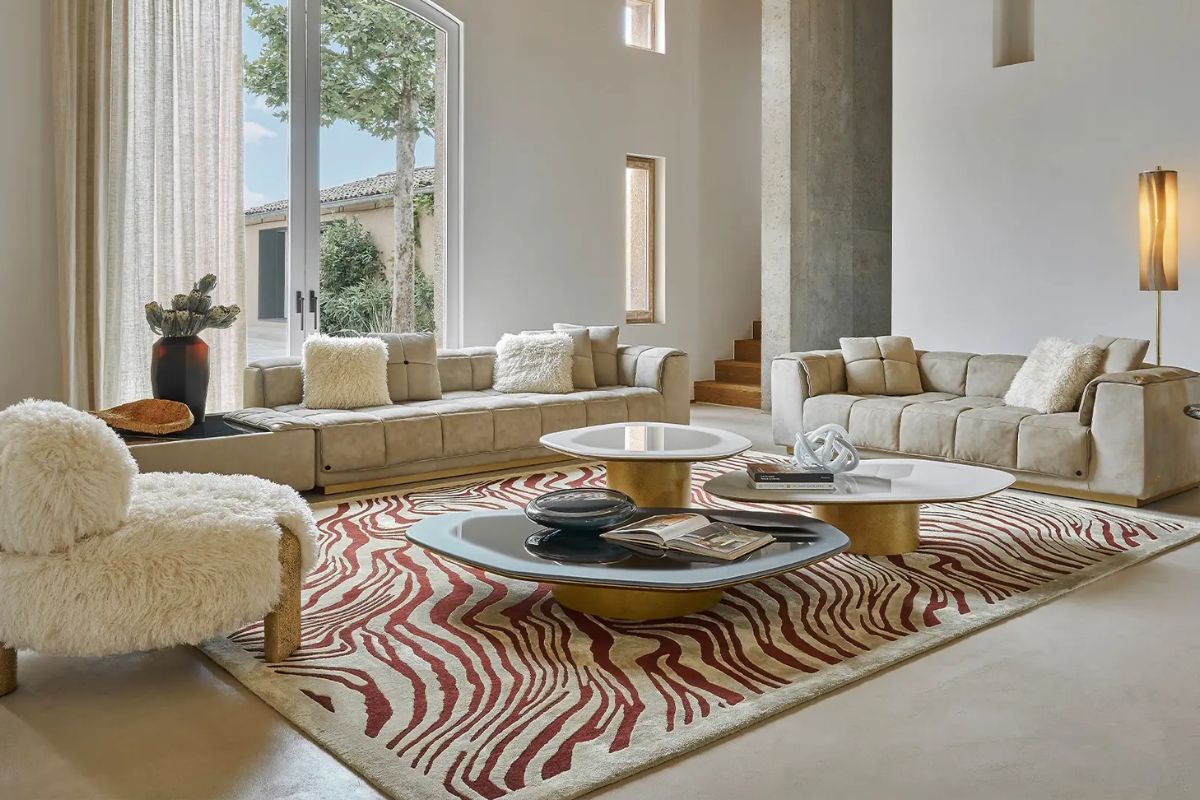
The Roberto Cavalli brand was born in 1970, when the Florentine designer debuted in Paris with a first collection marked by experimentation with materials, leather patchwork and an already highly recognizable vision of fashion. That signature of animal prints, seduction, glamour and rock spirit found a natural extension in interior design in 2012, the year Roberto Cavalli Home officially debuted; the groundwork was laid in 2011, when Jumbo Group obtained the license for the Roberto Cavalli Home Interiors line. It was a consistent move: few brands had developed in fashion a visual grammar so readily translatable into surfaces, patterns, sculptural volumes and high-impact materials as Cavalli had.
The interiors collection works precisely on what made the house famous: iconic prints, vibrant colors, precious weaves, bold contrasts and a wild soul tamed by luxury. Today the line is developed under the umbrella of ONIRO Group, which describes it as a seamless extension of the Cavalli world, built in dialogue with the fashion house and fueled by its most representative codes. Among the notable projects of recent years is a real estate strand: in 2026, ONIRO designed the interiors of the Roberto Cavalli Tower in Cyprus, a sign that the brand is using interiors not only as a collection but as a tool for creating immersive, branded environments. With Cavalli, the home does not tone down the fashion: it intensifies its personality.
Dolce&Gabbana: From 1985 to a Home That Stages Mediterranean Storytelling and Craftsmanship
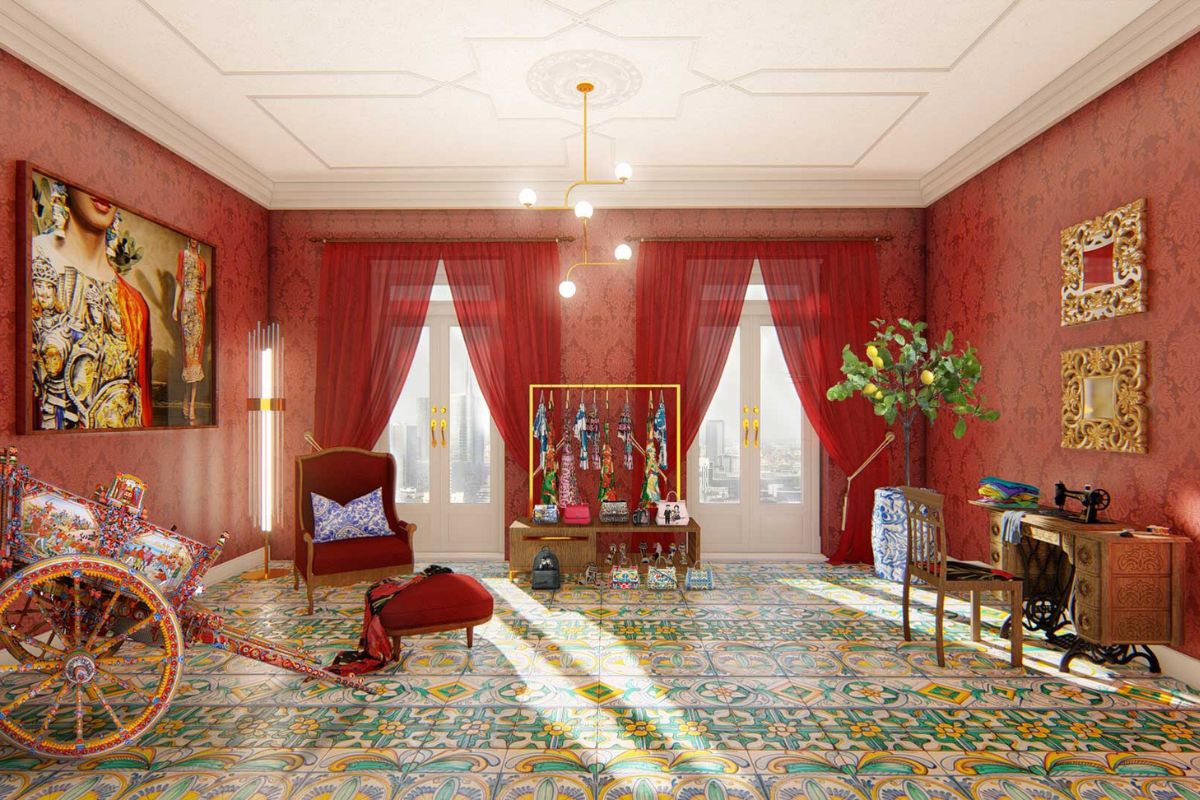
Dolce&Gabbana was founded in 1985 and from the outset built a strongly distinctive poetics rooted in southern Italy, in the theater of femininity, in handcraft, in the visual memory of Sicily, in a taste for ornament and in the narrative power of the image. Its entry into the home came late compared with other fashion houses, but that is precisely why it feels more deliberate: Dolce&Gabbana Casa was previewed in fall 2021 and then officially launched to the public in 2022, after the first Milan boutiques opened. It was a mature debut, not an experiment. The founders openly describe it as the creation of a unique lifestyle, able to carry the brand’s core values into the home: craftsmanship, respect for tradition and the pursuit of innovation.
The first home collections were built around some of the house’s most iconic themes: Blu Mediterraneo, Leopardo, Carretto Siciliano, Zebra. These are not simply decorative patterns applied to furniture, but true narrative devices that turn furniture, textiles and accessories into a direct continuation of the fashion brand. The industrial partner also says a lot about the nature of the project: production and distribution are handled by Luxury Living Group, while retail expansion has moved quickly, with dedicated boutiques and, in 2023, two London openings at Harrods and on Brompton Road. Dolce&Gabbana is perhaps the clearest case in which the home becomes a cultural mise-en-scène: not a restrained translation of the brand, but its full theatricalization in space.
Missoni: A Brand Born in 1953 That Finds Its Most Natural Extension of Textile Identity in the Home
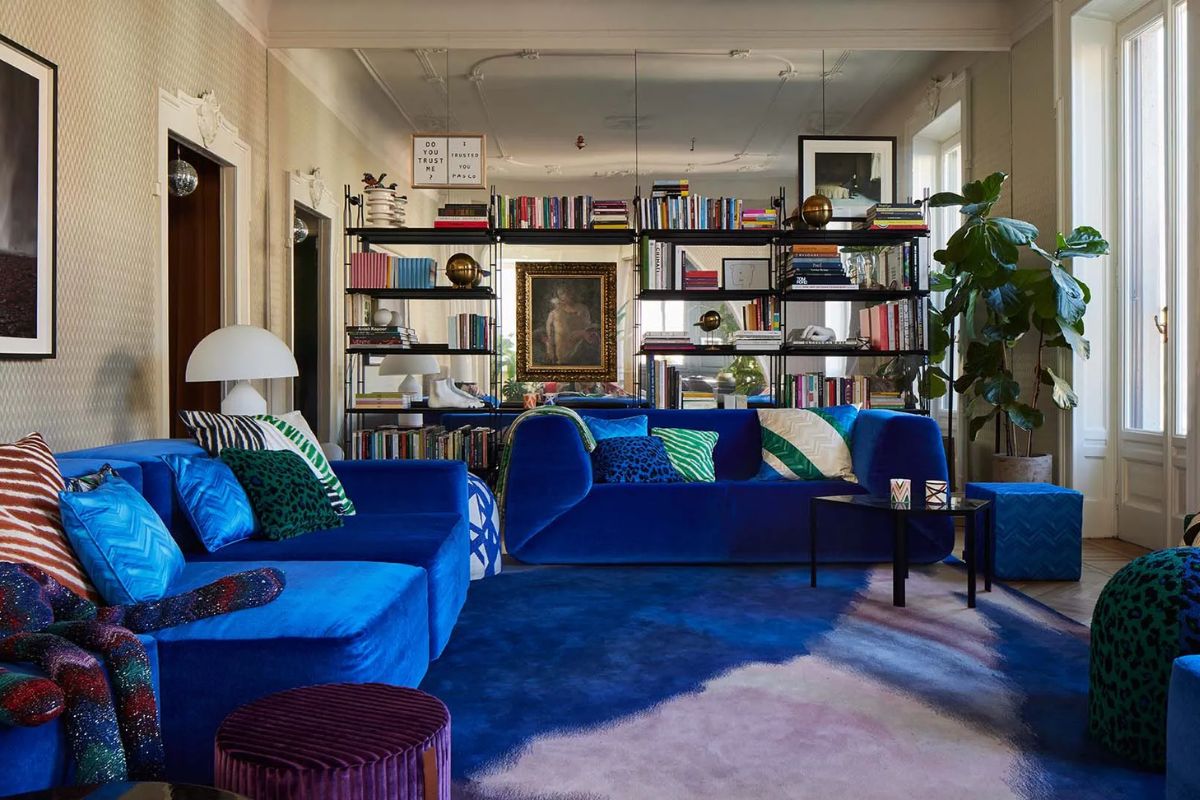
Founded in 1953 by Ottavio and Rosita Missoni, Missoni is one of the most organic cases of a move from fashion to interior design, because its language was born from the centrality of textiles, color and graphic rhythm. The chronology here is interesting: the house’s archive records that the Missoni Home Collection was officially presented in New York in November 2000, but its relationship with the home runs deeper and goes back further, tied to the textile culture that has accompanied the brand since its beginnings. For Missoni, then, the move into interiors does not look like diversification: it is almost the logical consequence of a brand that has always thought in terms of weave, surface and atmosphere.
Over the years, this calling has expanded well beyond traditional home products. In 2012, Missoni designed the interiors of Acqua Livingstone in Manila, presented as the world’s first residential building fully furnished by Missoni Home. More recently, the house has developed the Missoni Resort Club project, bringing its world to hospitality destinations and beach clubs in Sicily, Sardinia’s Costa Smeralda, Bali, Portofino and elsewhere. It is a significant step: for Missoni, the home no longer coincides solely with the domestic sphere, but with a widespread, immersive idea of lifestyle. It is perhaps the fashion house that best shows how the boundary between clothing, textiles and space can become almost imperceptible.
Etro: From a 1968 Textile House to Cultured, Ornamental and Increasingly Design-Led Interiors
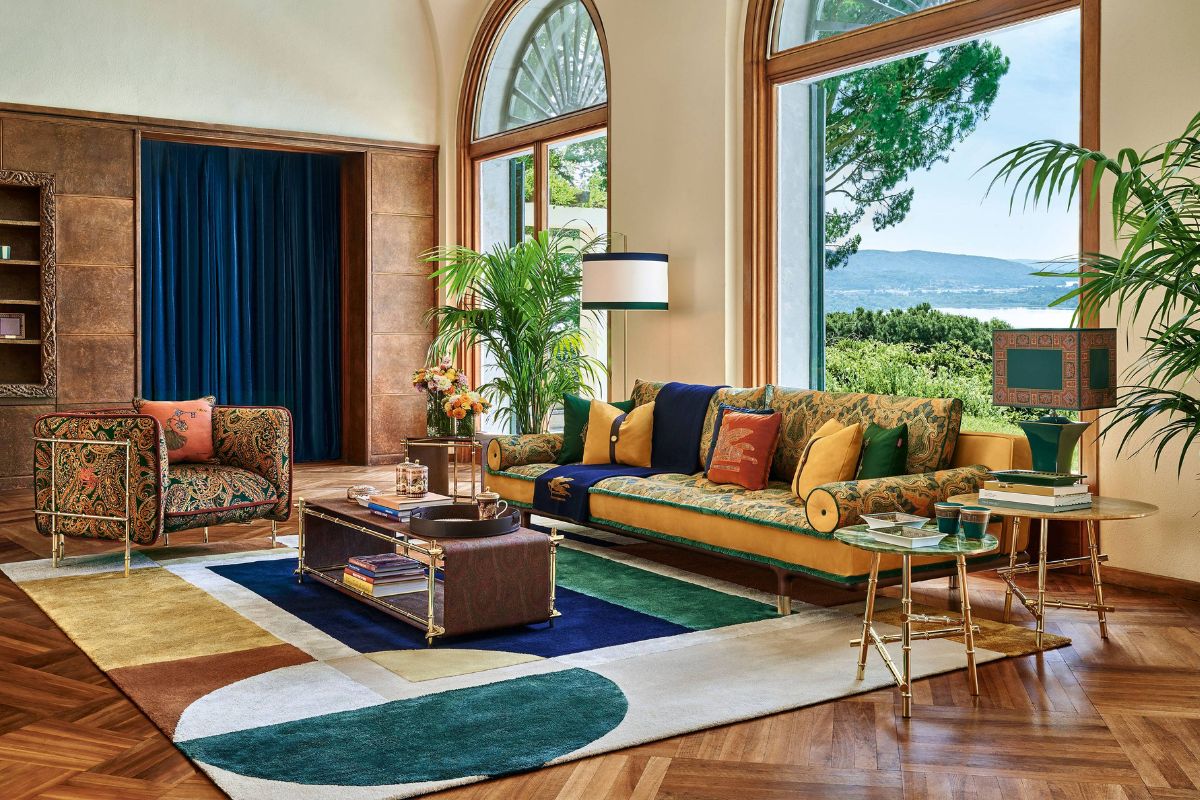
Etro was born in Milan in 1968 as a textile company founded by Gimmo Etro. This fact is essential, because it explains its relationship with the home better than any other: even before becoming a full-fledged fashion house, Etro was a brand that spoke the language of fabric, archives, ornamental motifs, color and cultural travel. That is why, in its case, the move into interiors should not be read as a sudden incursion but as a natural layering. If you look, however, at the moment the brand explicitly entered contemporary furniture design, the key date is 2017, when Etro began producing and distributing Etro Home Interiors with Jumbo Group — now ONIRO Group.
From then on, the trajectory became increasingly focused. In 2023, during Milan Design Week, the first Etro Home Interiors collection by Marco De Vincenzo was unveiled; De Vincenzo is also the new creative director of the men’s, women’s and home lines. It was an important step, because it refreshed the brand’s language without betraying its decorative heritage. The collaboration with ONIRO focuses precisely on this balance between contemporary forms and classic Etro fabrics, while in 2024 the brand continued its presence at the Fuorisalone with dedicated installations and settings. Ultimately, Etro brings to the home a more cultural than purely decorative idea of interiors: spaces made of memory, pattern, tactility and references, where the motif is not surface ornament but a system of identity.
Diesel: The 1978 Brand That Turned the Living Room into an Urban, Post-Industrial Lab
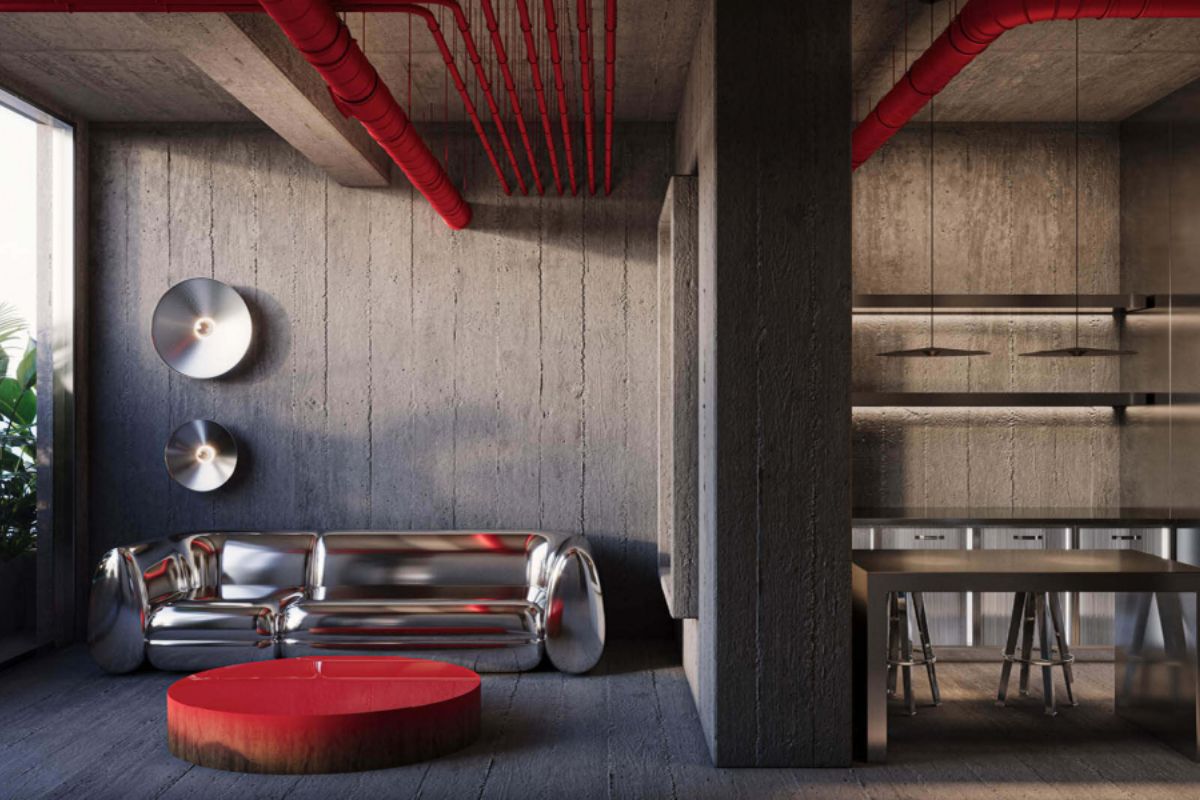
Founded in 1978 by Renzo Rosso, Diesel built its identity not on classic luxury but on a more irregular, industrial, ironic and metropolitan idea of style. It is precisely this distance from the language of traditional fashion houses that makes its entry into interior design interesting. The Diesel Living project took shape around 2009, when collaborations began with Moroso for furniture and Foscarini for lighting; over time, the scope expanded to Scavolini for kitchens and bathrooms, Lodes for lighting, Iris Ceramica for surfaces, Berti for flooring and other partners. Here, the move from fashion to the home does not try to make the brand more upscale: on the contrary, it keeps its informal attitude intact and carries it into space.
The decisive date for understanding how the project matured is 2012, with the arrival of Diesel Social Kitchen with Scavolini: no longer individual objects or scattered collections, but a complete environment blending kitchen and living room according to a more fluid, convivial vision of domestic life. From there the brand kept growing with lines such as Diesel Open Workshop, Get Together and Misfits Bathroom, always retaining a grammar of metal, technical materials, matte tones, modularity and industrial spirit. Diesel is perhaps the clearest case in which the move into interiors coincides with building a true contemporary lifestyle system, less decorative and more situational, where the home is conceived as an open, social, hybrid and anti-bourgeois space.
Trussardi: A House Founded in 1911 That Entered the Home in 2014 and Turned Milanese Elegance into Interiors
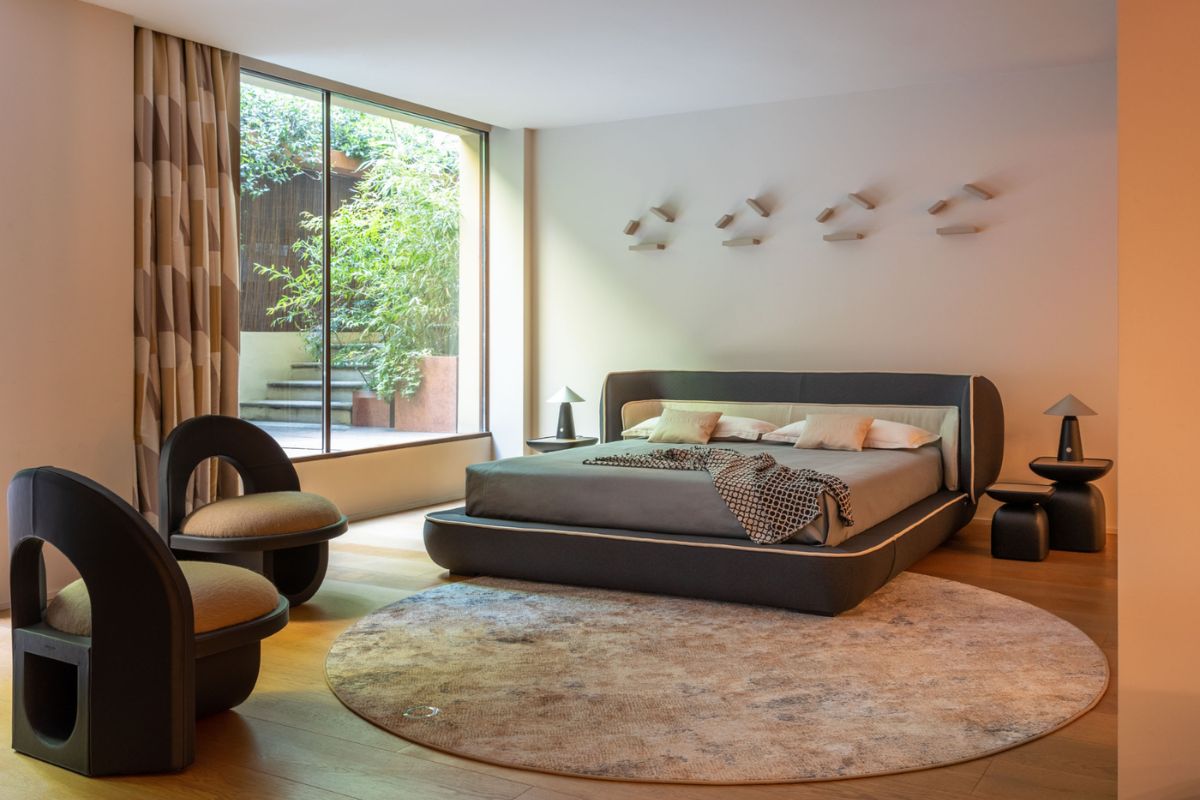
The story of Trussardi began in Bergamo in 1911, as a glove-making workshop founded by Dante Trussardi. Those origins still shape the brand’s character today: leather, sobriety, technique, restraint and attention to detail. When the brand made its explicit move into interior design with Trussardi Casa, the key year was 2014, with its debut at the Salone Internazionale del Mobile (the Milan Furniture Fair). Industry sources all stress the same point: the collection was conceived as a domestic translation of the “informal elegance” that has defined the greyhound-logo brand for more than a century. Here the transition is not a break but a continuity of tone: not spectacle, but composed, urban refinement.
In recent years the project has gained new visibility. At Milan Design Week 2024, Trussardi Casa presented a new collection and a temporary store on via Santa Cecilia, inviting a group of Italian and international designers to reinterpret the brand’s codes in a more contemporary key. At the same time, the brand has entered branded residential development with Trussardi Residences in Dubai, a project developed with Mira Developments and Luxury Living Group, with apartments fully furnished by Trussardi Casa. It is an important step, because it shows that for Trussardi the home is not just a product line but a true extension of style: a way of turning Milanese discretion into a livable experience.
Liu Jo: From a Brand Founded in 1995 to Glamorous Living Spaces in Search of a Design Identity
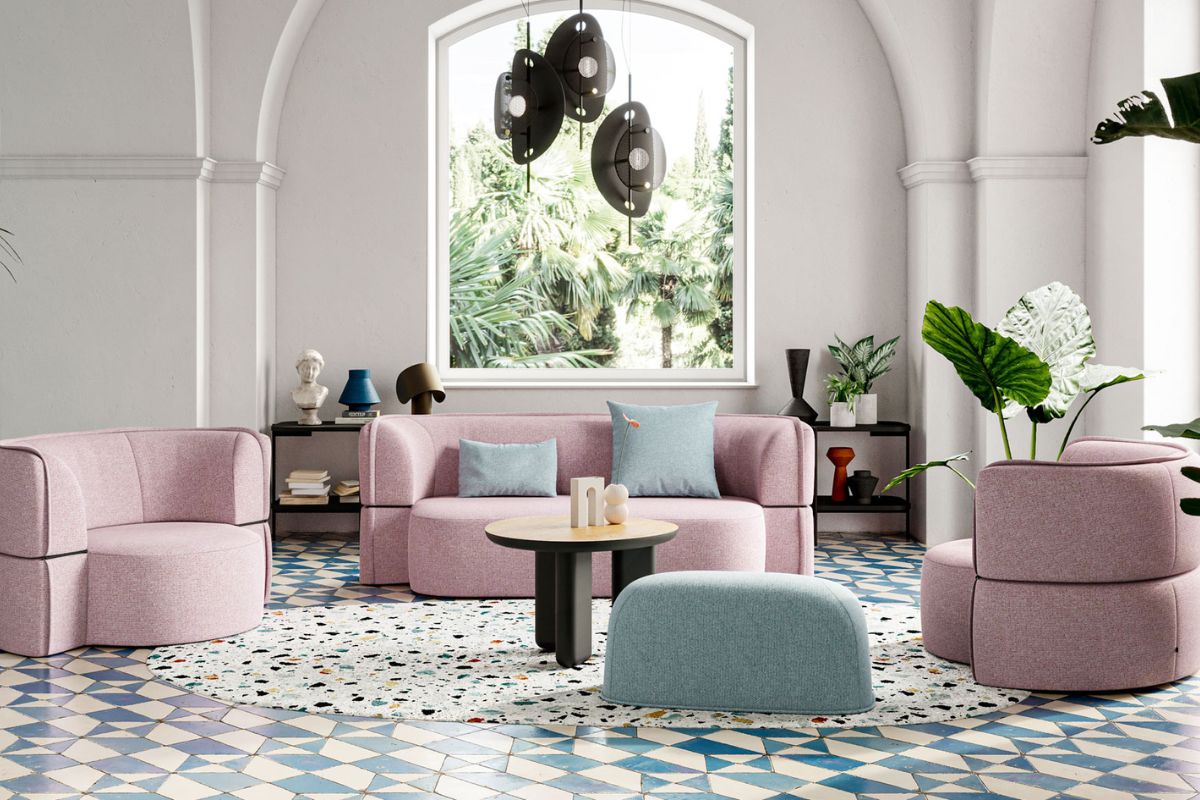
Liu Jo was born in Carpi, near Modena, in 1995, founded by brothers Marco and Vannis Marchi, and over time built a feminine, glamorous image, accessible yet polished and increasingly lifestyle-oriented. In this case the move into interior design is more recent and less “established” than at the big luxury houses, which is exactly what makes it interesting. Liu Jo’s first living collection debuted in 2018 at the Salone del Mobile, marking the brand’s first explicit entry into the furniture sector. It was not yet a vast system like Armani’s or Fendi’s, but a clear first gesture: bringing to the living room the same idea of soft seduction, modularity and customization the brand had built in fashion.
The project really took structure in the following years, however. In 2023, the Liu Jo Living Brera Showroom officially opened during Milan Design Week, while the brand appeared at the Salone with collections under the art direction of Simone Cagnazzo, who focuses on modular forms, repositionable pieces and configurable furniture. This is an interesting point: Liu Jo is trying to translate its fashion language not so much into ornamental décor as into “tailored” living spaces, with interchangeable upholstery, versatility and a contract as well as residential orientation. This maturity also shows in more recent projects, such as the 2025 work on the lounge spaces on the 37th floor of the Intesa Sanpaolo skyscraper in Turin, where the brand took on a more institutional and architectural kind of interior. Liu Jo may be the youngest name in the group, but that is exactly why it shows so well how even a contemporary fashion brand today can feel an almost inevitable need to move into space.