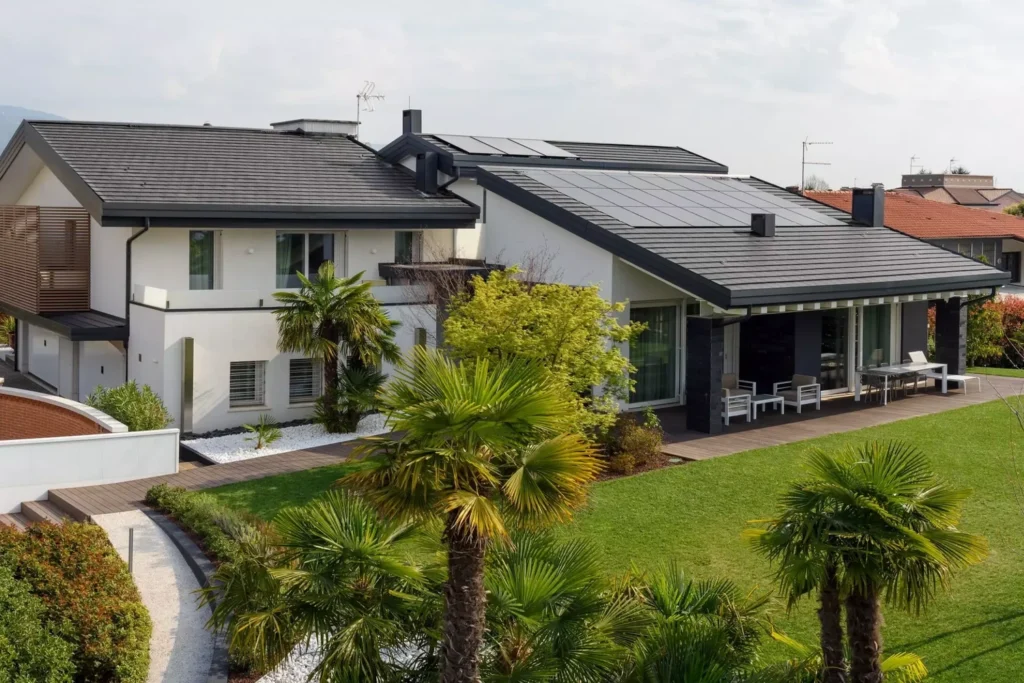
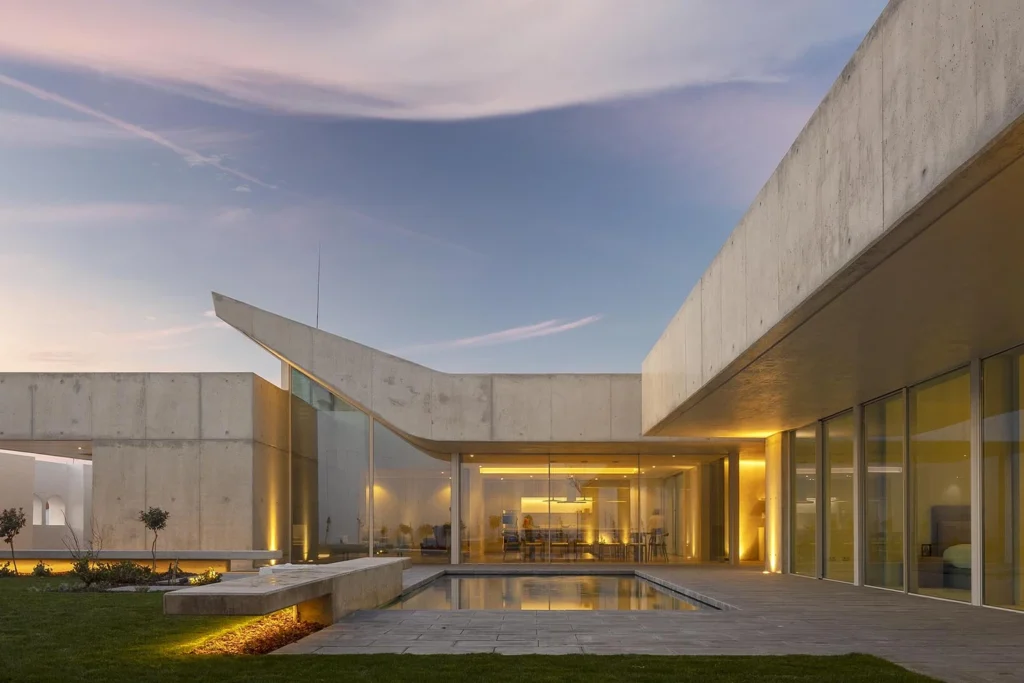
Six roof covering brands compared: aluminium, zinc, profiled metal, sandwich panels and bitumen. Practical advice on installation, prices and buying.
A restrained metal roof, a covering that recalls traditional curved tiles, or a lightweight garden shed roof: roof covering materials serve very different projects. The useful comparison brings together appearance, structure and installation rather than a single price per square metre.
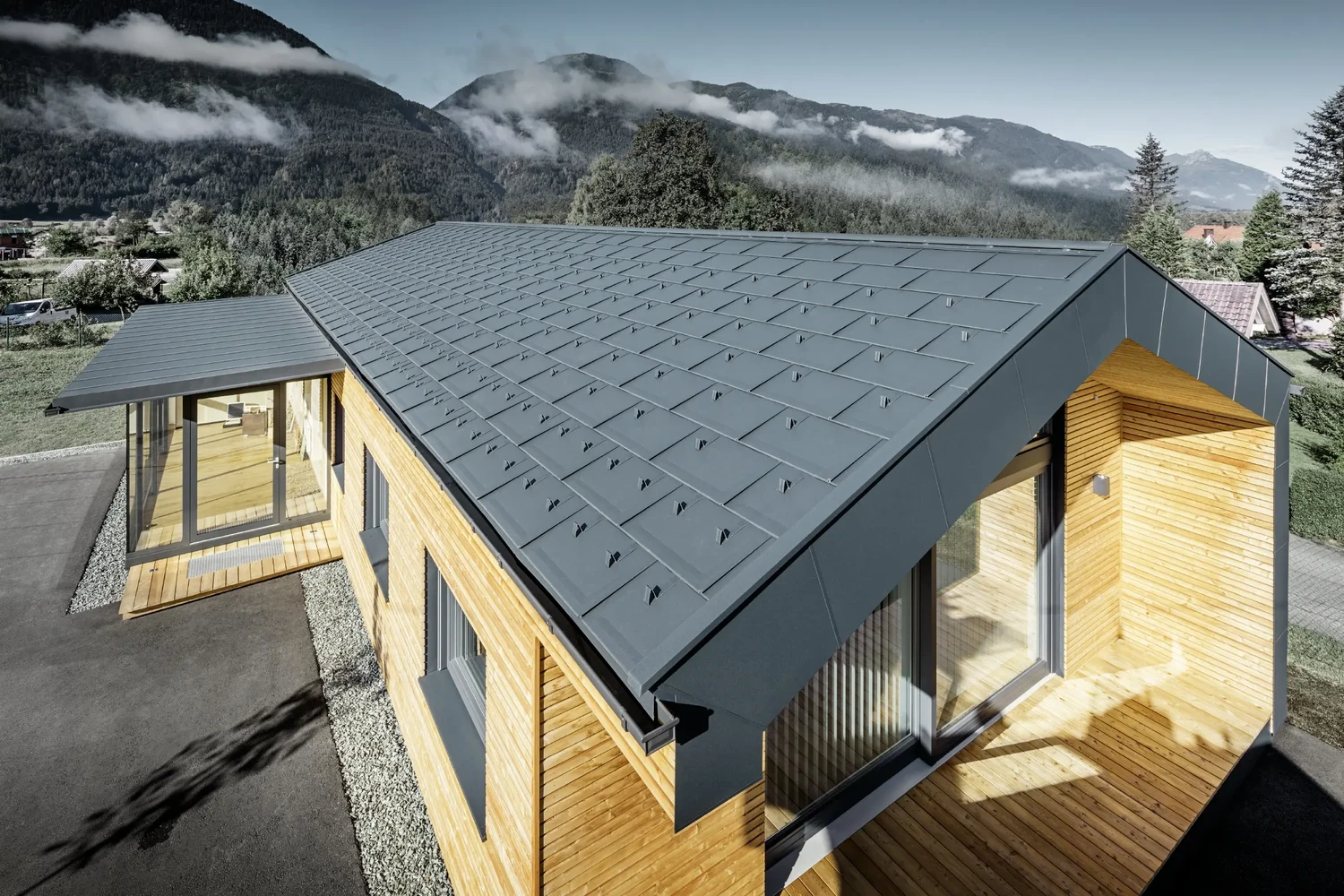
Our shortlist includes PREFA, RHEINZINK, Alubel, Isopan, Tegola Canadese and Onduline, covering aluminium, titanium zinc, profiled metal sheets, insulated sandwich panels and bituminous products. These manufacturers have documented ranges with different applications; this is not a ranking from comparative editorial testing. The selection reflects European systems and Italian-market references. For clay and concrete coverings, see our separate guide to roof tile brands.
The visible covering is one part of the roof
A roof covering protects the construction, but it is not the whole assembly. Beneath it may sit decking, separation layers, membranes, insulation and ventilation. Requirements also differ between a heated home, an unheated store and an open-sided shelter.
Single metal sheets and insulated sandwich panels serve different functions. Bitumen shingles need their specified support, while under-tile sheets are distinct from exposed final coverings. The role of each layer needs to be clear in a quotation.
Six roofing material brands to compare
| Brand | System to explore | Key check |
|---|---|---|
| PREFA | R.16 aluminium tiles | Support and pitch |
| RHEINZINK | Standing-seam titanium zinc | Detailing and fabrication |
| Alubel | Il Coppo di Alubel | Metal specification and flashings |
| Isopan | Isocop sandwich panels | Insulation and supports |
| Tegola Canadese | Master bitumen shingles | Continuous decking |
| Onduline | Base corrugated bitumen sheets | Effective coverage and laps |
PREFA: aluminium with a defined architectural rhythm
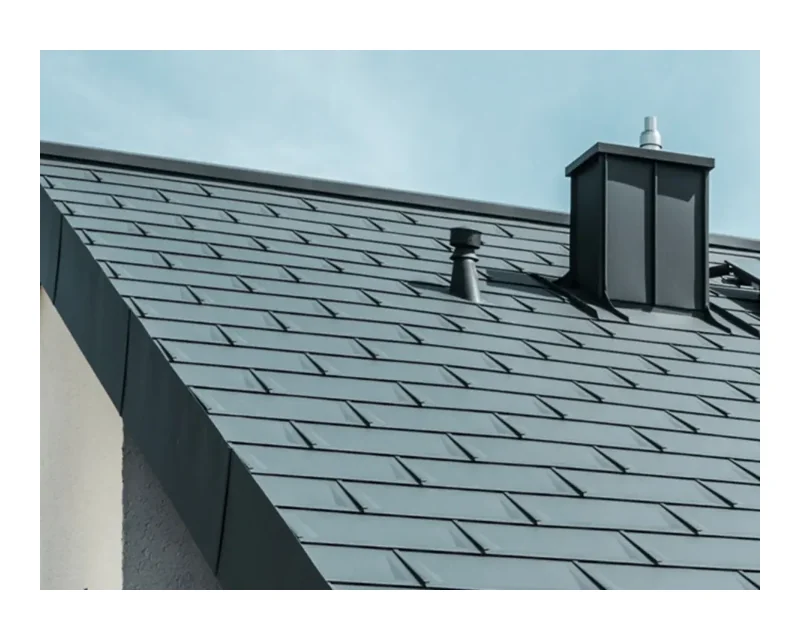
PREFA R.16 is a pre-coated aluminium roofing element with a regular pattern. The technical information gives approximately 2.5 kg/m² for the covering and an effective size of 700 × 420 mm per element. Low covering weight can be relevant to renovation, but does not replace assessment of loads and support.
For R.16, the manufacturer specifies a minimum roof pitch of 17°, approximately 31%, and installation on continuous decking with requirements for the separation layer. That figure is product-specific, rather than a rule for every PREFA system or exposure condition.
Roofing, support, underlying layers, verges, ridges, flashings and fixings belong in the same proposal. Sound performance concerns the complete build-up: an integrated strip alone does not describe what occupants will hear beneath it.
RHEINZINK: titanium zinc for standing-seam roofing
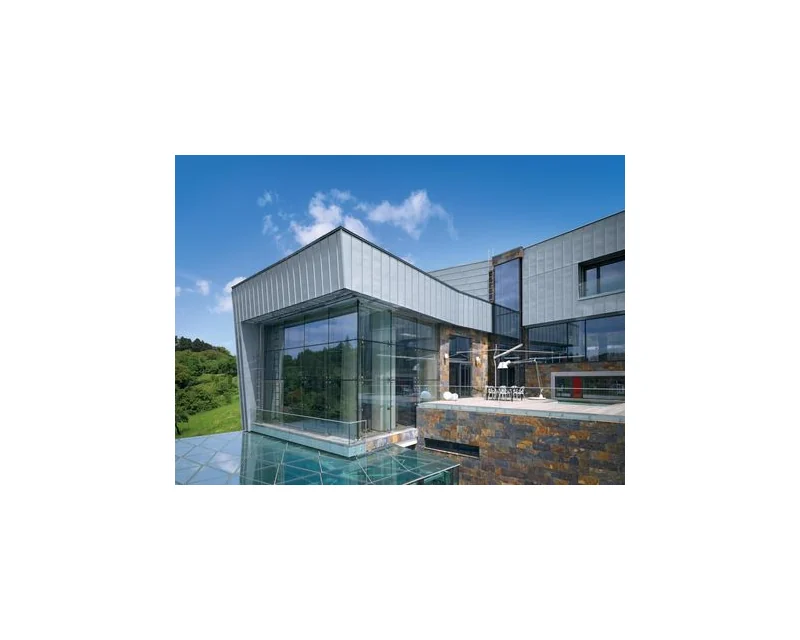
RHEINZINK offers titanium-zinc roofing systems including double standing seam, angled standing seam and flat-lock tiles. It is a reference to explore where the design calls for continuous surfaces, carefully formed junctions or more complex geometry.
Available finishes include pre-weathered surfaces. Examine samples and completed projects, allowing for the way the surface develops, rather than expecting an entire roof to remain identical to a small catalogue image.
The installer’s metalworking skills are part of this choice. Establish who will form seams, accommodate movement and detail junctions, what support is proposed, and how contact with other materials and water drainage will be managed. A coil or sheet price is not the cost of a fabricated, installed zinc roof.
Alubel: a traditional tile profile in metal sheet form
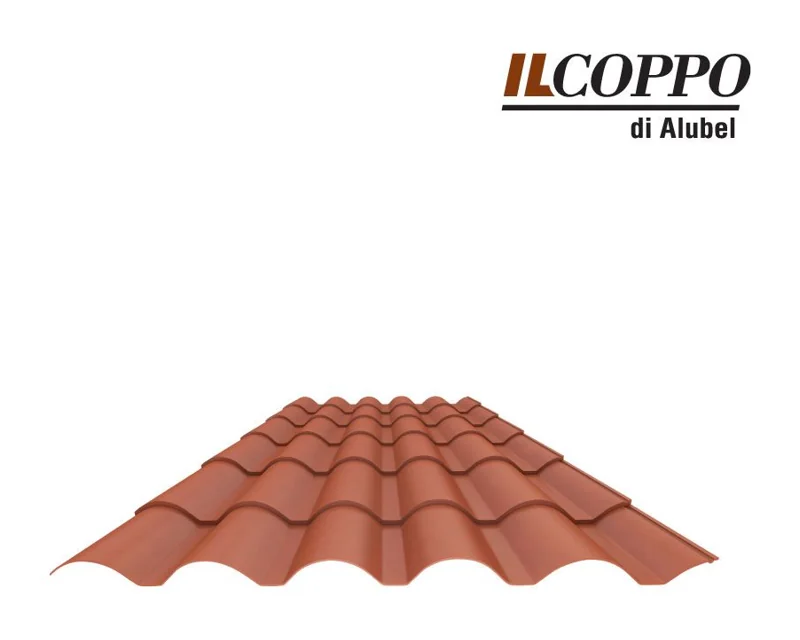
Il Coppo di Alubel is a pressed metal sheet whose profile recalls traditional curved tiles. The manufacturer offers copper, aluminium and pre-painted steel versions, with made-to-measure lengths and dedicated accessories.
It is an option where the design seeks a more traditional rhythm using larger roofing elements. That does not make every version automatically acceptable in a heritage setting: appearance and local project requirements still need assessment.
Specify the metal, thickness, surface protection, sheet lengths and fixing system. The product page states a 15% minimum gradient, which is not an angle of 15°. Flashings, valleys, ridges and junctions should be priced with the sheets, because these details must preserve the continuity of the covering.
Isopan: insulated sandwich roofing panels
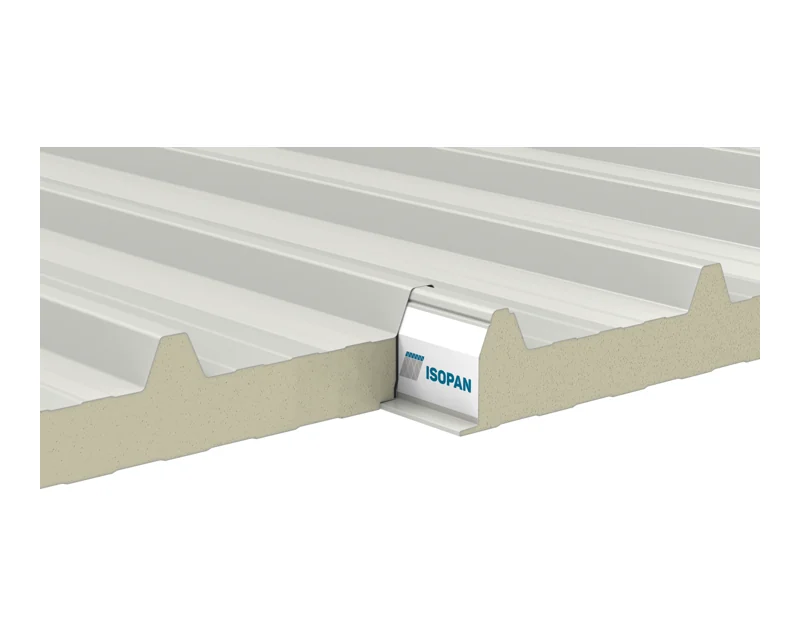
Isopan brings insulated sandwich panels into the comparison, combining metal facings and an insulation core within one manufactured product. Isocop is a polyurethane-insulated roofing panel with a five-rib profile; other configurations and tile-effect models are also available.
The specification needs to identify insulation thickness, metal facings, length, supports and joints. Simply ordering an insulated panel is insufficient: thermal properties, load capacity and fire characteristics belong to the exact version and its conditions of use.
Support spacing and loads follow the designer’s assessment, with documentation identifying the actual panel. Solar installations also need a compatible arrangement; the presence of metal roofing does not make every photovoltaic fixing suitable.
Tegola Canadese: Master bitumen shingles
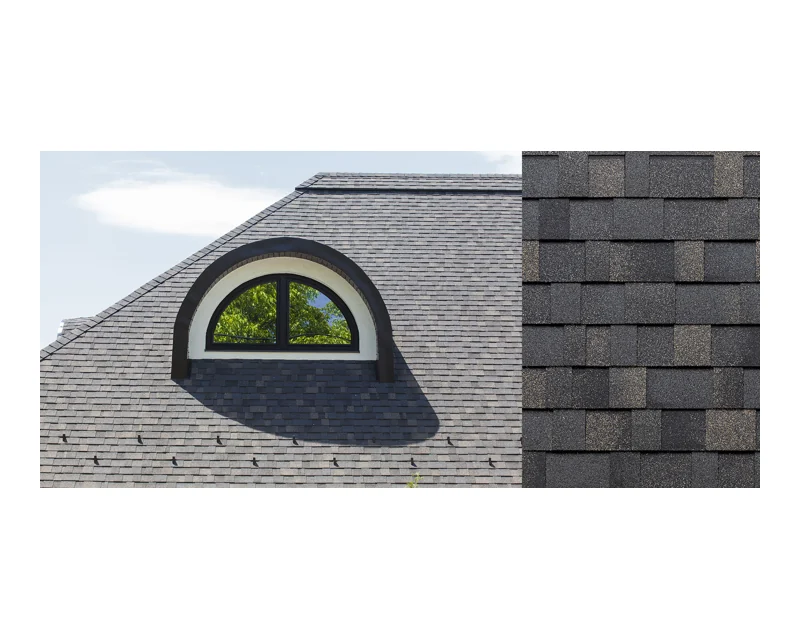
Tegola Canadese is a manufacturer’s brand. In Italian, the same expression is also used generically for a type of bitumen shingle, so the distinction matters when reading a quotation. Master uses laminated elements with a granule finish and shaded visual effect.
The installation instructions call for continuous, flat, dry and clean decking. That affects both cost and construction: a shingle-only price does not necessarily include creating or repairing the supporting deck.
Code, finish, pack coverage and underlying build-up define the supply. Dormers and complex geometry need explicit quantities and details. Adaptability to different shapes still relies on resolving every junction to the system instructions.
Onduline: lightweight sheets for sheds and outbuildings
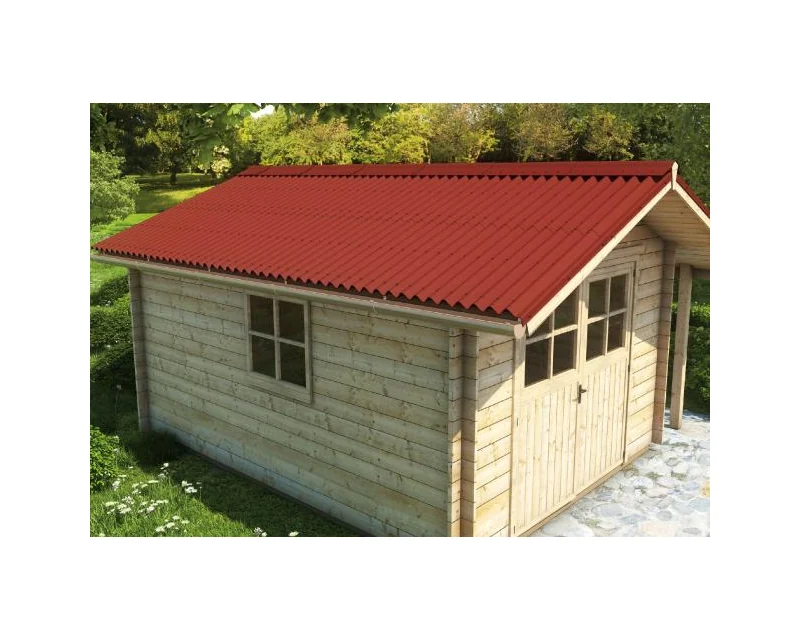
Onduline Base is a corrugated bituminous sheet worth comparing for timber sheds, shelters and other lightweight roofs. The Italian product page gives a length of 200 cm, a width of 85.5–86 cm depending on version, approximately 5.1 kg per sheet and effective coverage of 1.39 m².
The nominal sheet area is greater than the area covered after installation laps. Dividing the roof area by 2 × 0.855 m can therefore underestimate the required quantity.
Version, supports, overlaps and fixings follow the instructions for the proposed roof. Onduline’s under-tile products remain distinct from an exposed Base covering, despite a similar corrugated profile.
How much do roof covering materials cost?
Basic sheets, fabricated zinc and insulated panels perform different jobs, making a single price range unhelpful. An Italian offer listed black Onduline Base, 200 × 85.5 cm, at €12.99 including 22% Italian VAT. The indicative price needs reconfirming: home delivery was unavailable on the page and stock required checking locally.
Using the manufacturer’s effective coverage of 1.39 m² gives approximately €9.35/m² for the sheets alone. This excludes structure, fixings, ridges, flashings, transport and installation. Actual quantities also depend on geometry and the prescribed laps. It is an Italian product-price example, not an international average for roofing a home.
For bespoke coverings, obtain quotations with matching scope: stripping, support, insulation, membranes, covering, fittings, flashings and installation. Include lifting equipment and site access where relevant. Headline totals become meaningful only when they describe the same work.
Checks that prevent unsuitable purchases
Noise and condensation need assessment across the assembly. A metal finish is not inherently quiet or noisy regardless of construction; support, separation and insulation matter. An anti-condensation layer likewise does not replace a moisture assessment for the roof above occupied space.
Fire, wind and loading require information for the selected product and configuration. Reaction to fire of a material is different from fire resistance of a construction element. Support and fixing requirements need the design information, not a rule inferred from sheet thickness alone.
Maintenance and access deserve attention before ordering. Establish how flashings and drainage will be inspected, how damaged elements can be replaced and what access is provided for equipment. A description such as walkable does not mean every point of a roof is safe to step on.
Where to buy and what documentation to request
Roofing and architectural-metal distributors can coordinate coverings and accessories. For standing-seam zinc and bespoke fabrication, involve the installer early. Sandwich panels require support design and delivery planning. DIY retailers may stock sheets for small outbuildings, with availability checked locally.
Plans, sections, roof measurements, pitch and the use of the space below give the supplier a starting point. Code, material, finish, effective coverage and installation documents should identify the proposal. Separate thermal insulation boards need coordinating with the other layers.
A suitable covering needs to look right and work with the construction underneath. The brand is useful when it provides products, details and support that fit the specific project.