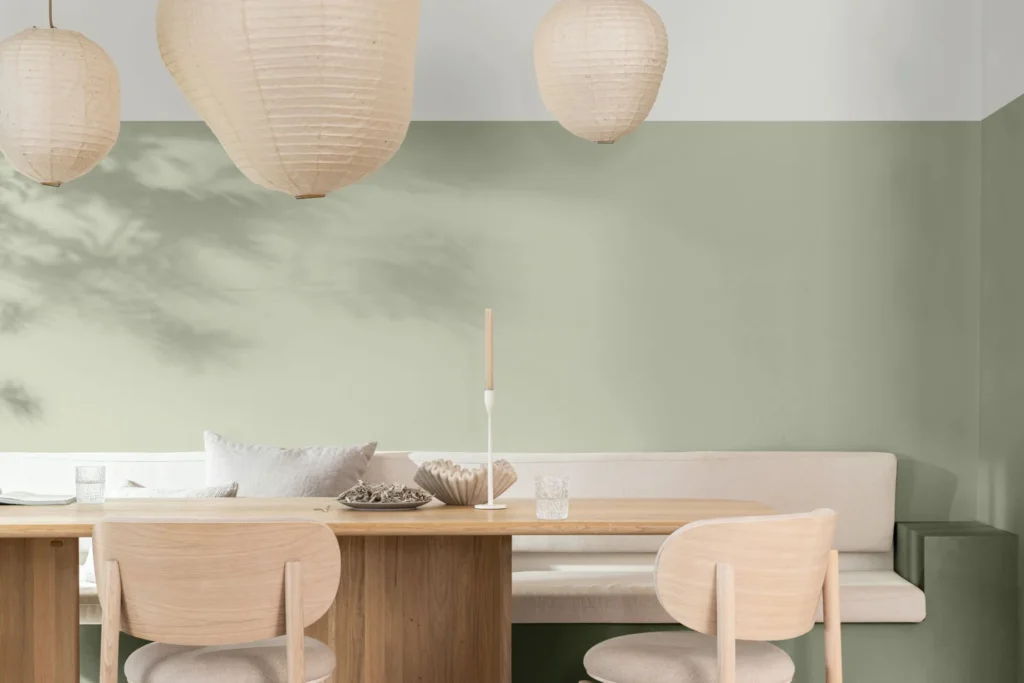
Stainless steel in interior design has long since moved beyond restaurants, laboratories and professional kitchens. Today it appears in homes as worktops, islands, cabinet fronts, sinks, furniture, shelves and wall cladding, combining corrosion resistance, ease of cleaning, reflectivity and workability. It is not indestructible, however: it can scratch, show fingerprints and limescale to different degrees …
Stainless steel in interior design has long since moved beyond restaurants, laboratories and professional kitchens. Today it appears in homes as worktops, islands, cabinet fronts, sinks, furniture, shelves and wall cladding, combining corrosion resistance, ease of cleaning, reflectivity and workability. It is not indestructible, however: it can scratch, show fingerprints and limescale to different degrees depending on the finish, and it can corrode under unfavourable conditions, particularly with prolonged exposure to chlorides. The most interesting contemporary approach therefore does not try to keep stainless steel looking permanently new, but selects the grade, finish and construction details with an understanding of how the surface will change through use.
Why stainless steel has moved from professional kitchens into the home
Its association with catering environments has practical origins: stainless steel is corrosion-resistant, can be fabricated into continuous surfaces and is easy to clean. The Nickel Institute identifies AISI 304 as one of the most widely used grades for domestic and industrial sinks, while companies specialising in professional kitchens have gradually transferred their fabrication techniques, ergonomics and construction precision into residential interiors.
In recent years, this transition has become particularly evident from an aesthetic perspective as well. In 2025, Architectural Digest documented a new generation of steel kitchens less closely associated with the pure “gastro look”, while in 2026 AD and Living featured numerous European residential interiors in which steel is paired with timber, colour, stone and historic surfaces.
The 041BÖT Apartment by Christopher Sitzler, published in 2026, is an effective example: a matt stainless steel kitchen is positioned beneath a mahogany-veneered ceiling and above a sand-coloured poured floor. Rather than pursuing the aesthetic of a laboratory, the metal introduces a cool counterpoint within a warm, material-led palette.
This is where stainless steel becomes particularly interesting in interior design: when its technical origins remain visible without forcing the entire home into an industrial language.
What is stainless steel and why does it resist corrosion?
“Stainless steel” does not refer to a single material, but to a family of iron-based alloys containing at least 10.5% chromium. Chromium enables the spontaneous formation of a very thin passive film rich in chromium oxides on the surface, which is responsible for corrosion resistance. If this film is damaged, it can normally reform under sufficiently oxidising conditions.
This does not mean that stainless steel is immune to corrosion.
Chlorides, iron contamination, stagnant moisture, certain acids, unsuitable cleaning products and construction details that retain water can locally compromise the passive film. Worldstainless and Outokumpu note that even stainless steels can experience phenomena such as pitting and crevice corrosion under unfavourable conditions.
In a domestic interior, this mainly means avoiding an overly simplistic interpretation of the word “stainless”: the material is resistant, not invulnerable.
AISI 304 or 316: when does the difference really matter?
For most domestic applications, 304, also identified in Europe as 1.4301 in corresponding specifications, is a widely used reference grade. The Nickel Institute identifies it as a common material for sinks, while Abimis uses AISI 304 for its residential kitchens derived from professional-kitchen expertise.
316 contains molybdenum, which increases resistance particularly in environments exposed to chlorides. It can therefore become relevant in more aggressive conditions, but specifying it automatically for every domestic kitchen or piece of furniture does not necessarily improve the project. Outokumpu clearly distinguishes between ordinary indoor environments, where 304 is commonly appropriate, and marine or more corrosive situations, where more resistant alloys can be useful.
The grade should be selected according to the actual environment rather than treated as a premium label.
Satin, brushed, polished or mirror-finished: the surface changes everything
Two surfaces both described as “stainless steel” can look almost completely different.
Worldstainless distinguishes between numerous surface treatments, from 2B, which is relatively smooth and slightly reflective, to bright annealed 2R, as well as brushed, satin and mirror-polished finishes. Sandblasted, embossed, patterned and proprietary treated surfaces are also available.
The finish is not purely aesthetic. It affects reflections, fingerprint visibility, the perception of scratches, ease of restoration and, in some contexts, behaviour in relation to dirt and corrosion.
Brushed or satin finishes introduce a more controlled texture and generally handle signs of everyday use more discreetly. The British Stainless Steel Association notes that brushed finishes tend to show fingerprints less clearly and make it easier for minor scratches to blend into the direction of the existing grain.
A mirror finish, by contrast, creates sharper reflections and can turn an island or wall into an almost immaterial element, but it requires greater care if the aim is to maintain a perfectly uniform appearance.
Stainless steel kitchens: where aesthetics and performance meet
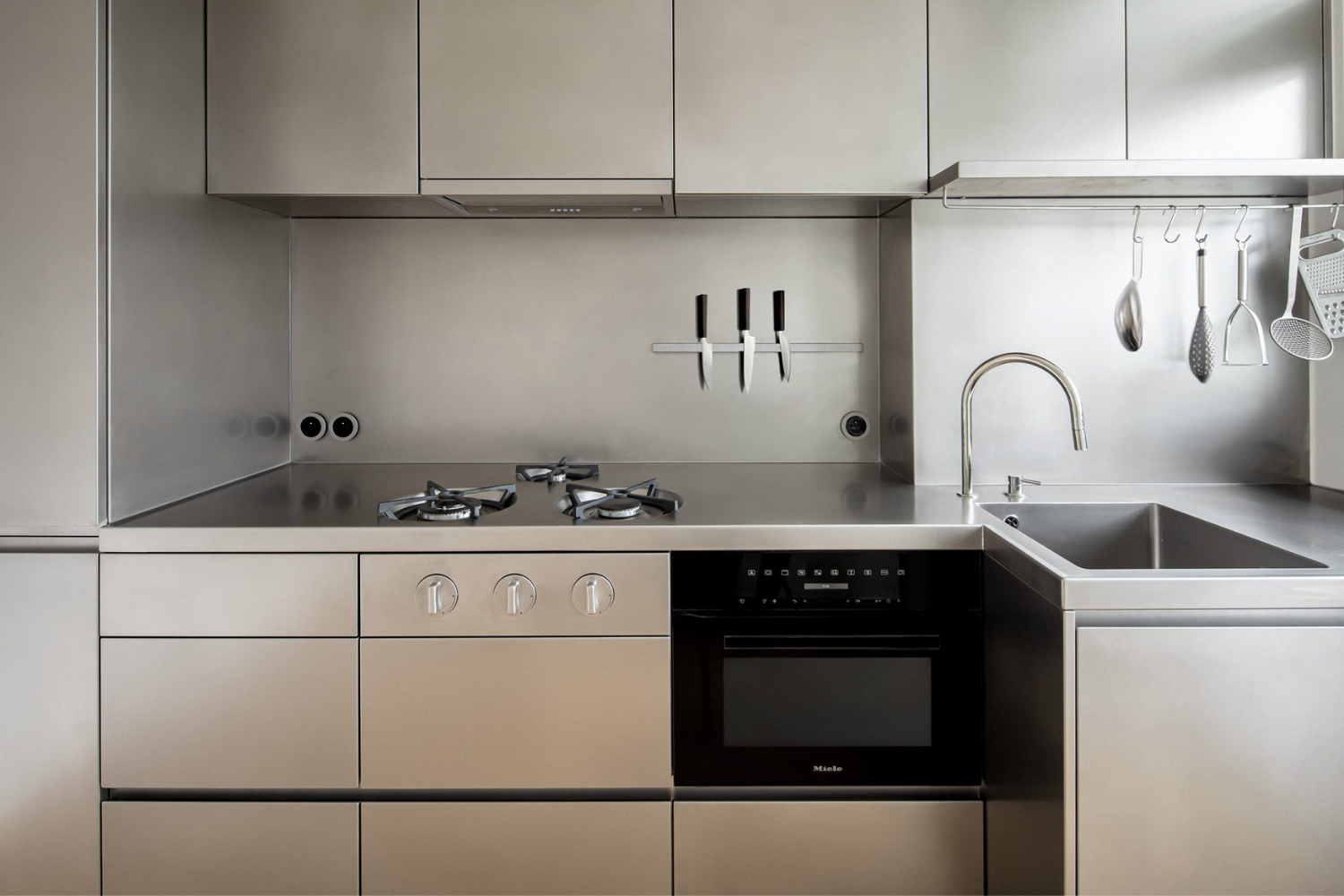
The kitchen remains the space where stainless steel expresses its professional origins most clearly.
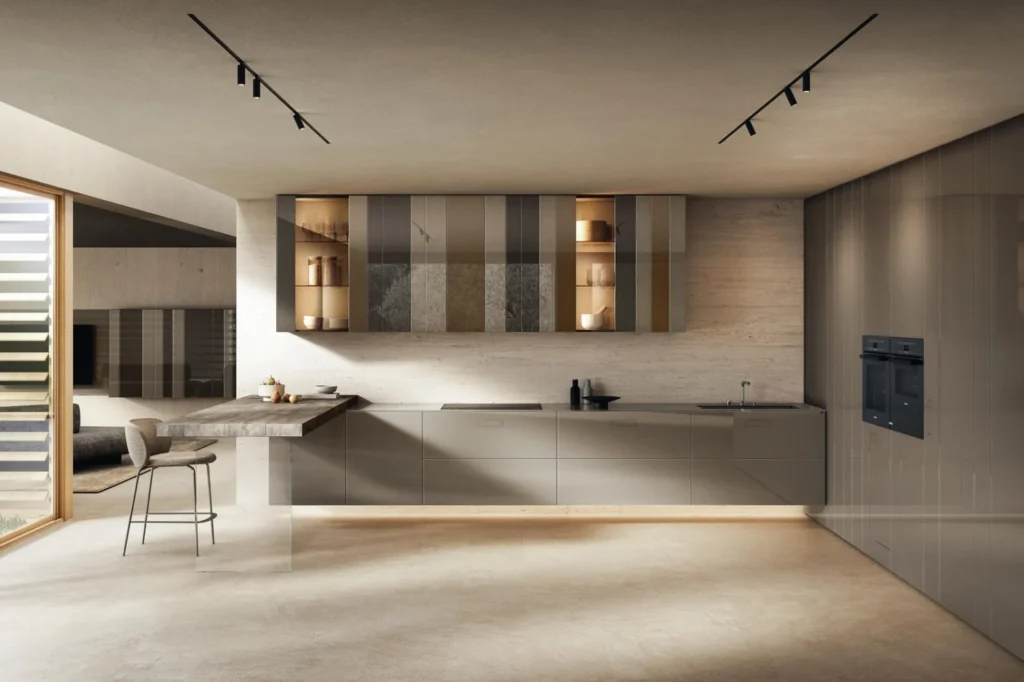
A worktop can be fabricated by integrating the work surface, splashback and sink, reducing discontinuities and areas that are difficult to clean. In more sophisticated systems, bowls, edges and cooking zones can also be designed as part of a single volume.
Arclinea describes Proxima, designed by Antonio Citterio, precisely through the balance between professional-derived equipment and a domestic atmosphere. Abimis follows a similar approach with Ego, made from AISI 304 and available in orbital or mirror-polished finishes.
In practical use, however, the idea of a permanently perfect surface needs to be reconsidered.
Stainless steel scratches. Franke states this explicitly for its sinks: surface marks are a normal consequence of use and, over time, tend to blend into a more uniform patina.
In a residential project, this can become a positive characteristic, provided it is understood and accepted before purchase.
Sinks and worktops: fingerprints, water and limescale are part of the design
Stainless steel makes certain residues particularly visible, even when they would simply be less noticeable on matt materials.
Fingerprints can appear on cabinet fronts and decorative surfaces; Worldstainless generally recommends soapy water or a slightly damp microfibre cloth, while advising that cleaning should follow the direction of the grain on brushed surfaces. Specific finishes designed to reduce the visibility of fingerprints are also available.
On sinks and worktops, the more common issue is the residue left by water. Franke recommends rinsing and drying the surface after use, particularly in areas with hard water.
This is not a structural defect in the steel, but an important aspect of its everyday appearance: a uniform metal surface simply makes droplets, marks and residues easier to see.
Stainless steel beyond the kitchen: furniture, shelving and wall cladding
Limiting stainless steel to worktops and appliances means overlooking much of its current design potential.
Folded sheet metal and panels can become cabinet fronts, shelves, bookcases, consoles, wall panelling and cladding. Steel reflects surrounding colours, people and light, and for this reason a piece of metal furniture changes continuously with the room around it.
In the Guinle Park Apartment – Caledônia Building by LINHA Arquitetura, published by ArchDaily in 2024, the kitchen’s original stainless steel cabinetry was restored and incorporated into the new design. The material therefore appears not as a futuristic addition, but as part of the apartment’s own history.
This example also highlights an often overlooked quality: stainless steel can work particularly well with historic architecture precisely because it openly declares its contemporary character instead of attempting to imitate existing materials.
Stainless steel in bathrooms: pay particular attention to water and cleaning products
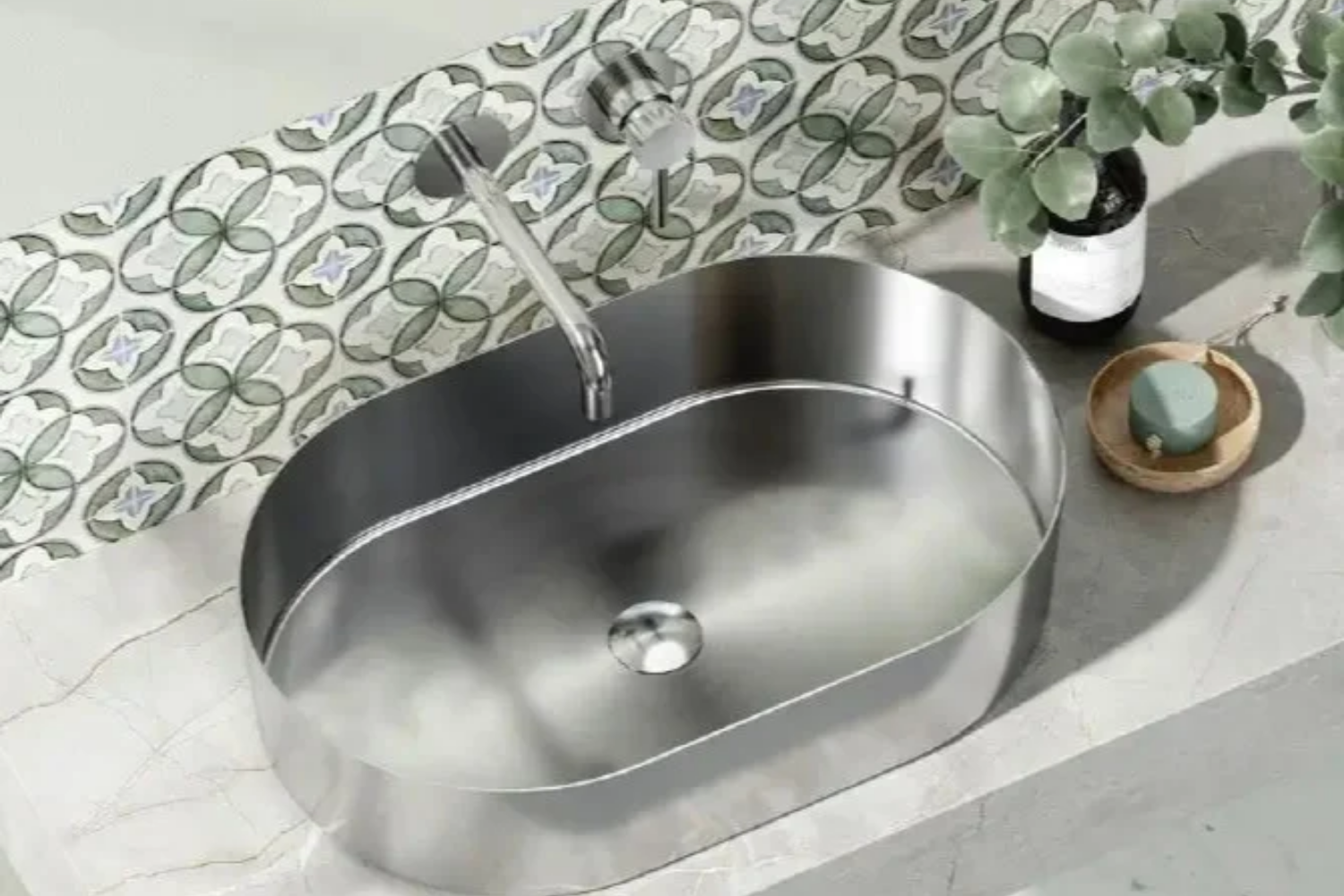
Basins, furniture and metal cladding can also work in bathrooms, where the reflective surface increases light diffusion and allows thin, visually lightweight elements to be created.
Ordinary domestic humidity does not automatically make the bathroom a problematic environment for correctly specified stainless steel, but standing water, deposits and chlorine-containing cleaning products need to be managed correctly.
Worldstainless and the BSSA advise against aggressive chlorine-based products and hydrochloric acid; routine cleaning can normally be carried out using a mild detergent followed by rinsing and drying.
Here too, the design should provide easily accessible surfaces and construction details that do not create small areas of standing water.
What to pair with stainless steel to avoid an industrial-kitchen effect
Metal becomes more domestic largely through the materials placed alongside it.
Timber, natural stone, plaster, saturated colours, glass and textiles soften the technical character without hiding it. Contrast can be created through temperature or texture.
A satin steel kitchen paired with oak or walnut creates a softer balance, while polished steel and marble produce a more graphic interior. Strong colours, glazed tiles and matt surfaces can break up a large expanse of metal without weakening its presence.
In the Boleslavova 3 apartment by Plus One Architects, for example, the steel kitchen is paired with red-pink glazed tiles. In a San Sebastián home published by Living in 2026, the stainless steel block instead sits alongside dark pine flooring and the building’s existing structure.
A contemporary result therefore rarely comes from accumulating more metal. More often, it depends on contrast.
Scratches and patina: should they be accepted or avoided?
It depends on the desired effect.
If the goal is an immaculate mirror-like surface, maintenance needs to be more rigorous and every mark will be more noticeable. If, on the other hand, a satin, orbital or textured finish is selected to distribute signs of use, ageing can become part of the material’s visual language.
Outokumpu notes that ground or polished surfaces with a visible directional texture can make scratches caused by everyday use less obvious. Franke explicitly refers to a patina that tends to make small marks on sinks more uniform over time.
It is therefore useful to decide during the design stage which of these two aesthetics is preferred: controlled perfection or a surface intended to record use.
How to clean stainless steel correctly
Routine maintenance does not require complicated procedures.
The BSSA generally recommends soap or mild detergent with warm water, followed by rinsing and drying. On satin or brushed surfaces, the cloth should be moved in the direction of the grain.
Unless otherwise specified by the manufacturer, it is best to avoid:
- metal scourers and steel wool;
- abrasive powders on finishes that may scratch;
- bleach and products with high concentrations of chlorine;
- cleaners containing hydrochloric acid;
- prolonged contact with saline or strongly acidic substances.
The instructions supplied by the manufacturer of the specific surface always take priority, because anti-fingerprint treatments, PVD finishes, polished surfaces or special textures may require different procedures.
The most common mistakes when using stainless steel in interior design
The first is considering it indestructible. Corrosion resistance can be high when the grade, finish, fabrication and environment are appropriate, but it is not absolute.
The second is selecting a finish from a photograph alone. A satin, mirror or orbital sample should be viewed under the actual lighting conditions of the room and, where possible, touched: fingerprints and reflections can radically alter perception.
The third is fearing every scratch after choosing a surface designed to be used every day.
The fourth is describing stainless steel generically as “antibacterial”. Its most concrete design advantage is the possibility of creating smooth, easily cleanable surfaces; there is no need to attribute universal microbiological properties to the material when these depend on conditions, finishes and cleaning protocols. The Nickel Institute itself emphasises cleanability without making an intrinsic antibacterial claim necessary.
The fifth is using too much metal without considering the light and visual balance of the space. A large mirrored wall, a polished island and metallic furniture can multiply reflections and become visually dominant.
Stainless steel in interior design works best when it is treated as a real material, with both advantages and limitations clearly understood. It can feel technical without being cold, precise without making the home resemble a laboratory, and sophisticated without losing its functional origins. The decisive choice is therefore not simply “stainless steel or not”, but which grade, which finish, where it is used and which materials surround it.