Textile layering for fall: how to layer throws, blankets and pillows in the living room and bedroom, match warm colors to neutral walls and avoid the most common styling mistakes.
As the colder months arrive, textile layering becomes one of the most effective interior design techniques for turning the living room and bedroom into warm, elegant and genuinely inviting spaces. Layering fabrics of different textures, weights and shades brings out the best in the furniture you already own, with no need for costly makeovers. A few decorative pillows, blankets and a cozy throw are all it takes to create instant color harmony and a high level of comfort.
The real secret of refined fall decor lies in combining materials and colors in a balanced way, playing with the contrast between smooth surfaces, tactile weaves and especially soft fabrics. Warm, natural shades such as terracotta, beige, taupe and sage green make rooms feel more intimate and welcoming, while strategically layered textiles add depth, volume and movement to the furniture. This approach also lets you refresh the living room and bedroom on a very small budget, adapting the style of your home to the change of season with versatile accessories that are practical to use and easy to care for.
Why does mixing textures and weights make a sofa look deeper and more inviting?
Pairing smooth textures with soft weaves creates tactile contrasts that instantly give a sofa a three-dimensional look. The trick is to alternate tightly woven fabrics, such as cotton and linen, with much plusher materials such as velvet, bouclé and fleece.
A soft throw draped over the armrest breaks up the straight lines of the seat, while pillows in different weights add movement and visual variety. Soft fibers also trap tiny pockets of air between their filaments, providing natural insulation without the need for overly heavy fabrics.
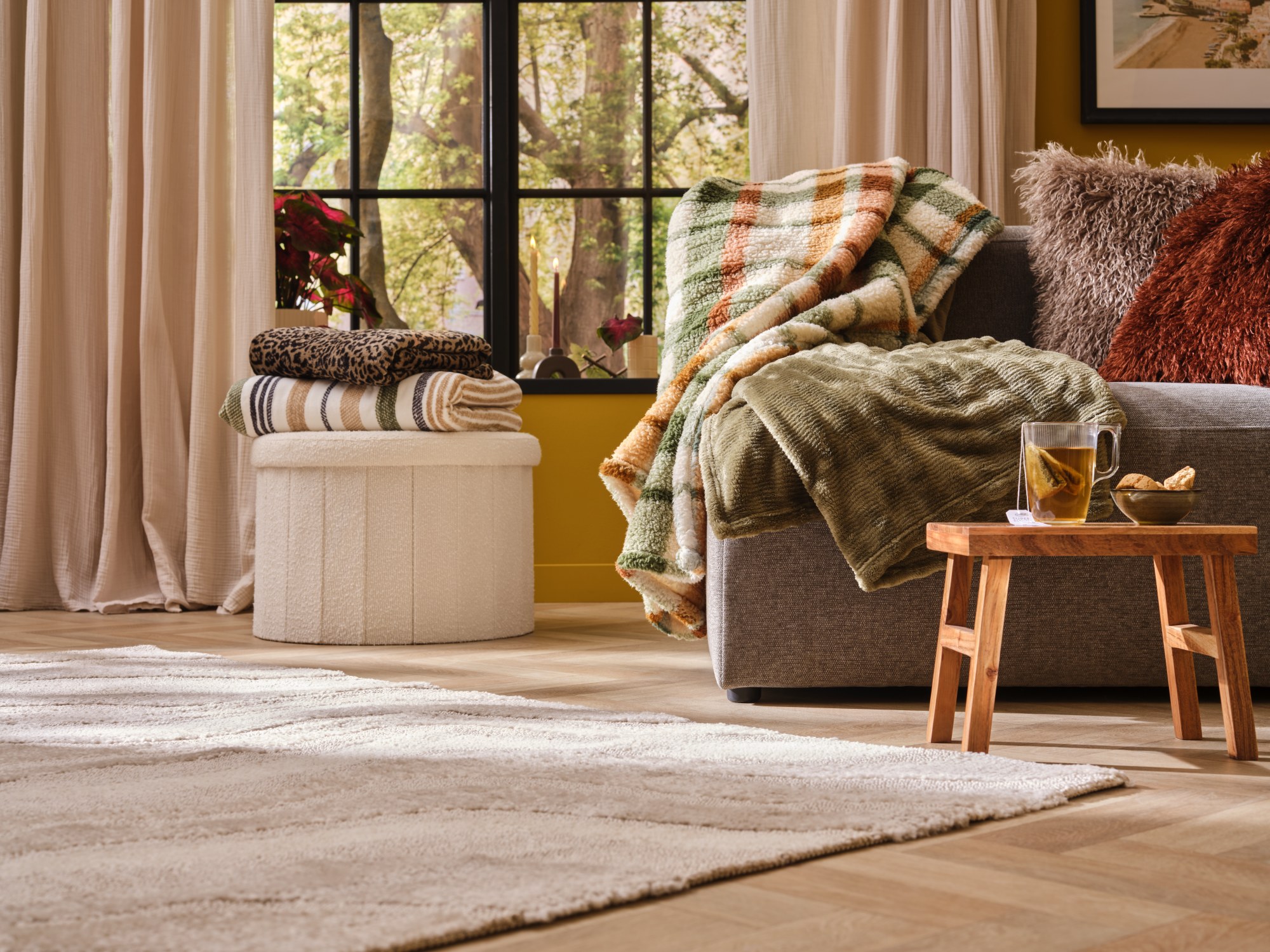
The Rule of Threes suggests coordinating three distinct elements: a well-structured pillow, a smooth one and a softly draped throw. This combination creates a balanced focal point without overloading the surrounding space.
To keep a fleece blanket smelling fresh without stiffening the microfibers, simply mist it from a distance with a solution of distilled water and two drops of lavender essential oil before folding it into a “pocket” or gently rolling it up for a living room nook. Before applying, always check that the solution is compatible with the fabric to avoid unsightly marks.
3 styling mistakes to avoid when arranging blankets and pillows on the bed
For an elegant, inviting bed, avoid excessive layering, overly uniform proportions and stiff folds. Three key adjustments will instantly improve the look:
- Piling on too many textiles: pillows and blankets stacked at random weigh the composition down. It is far better to limit the decorative pieces and leave at least part of the bedspread visible;
- Ignoring heights: placing all the pillows at the same level removes any sense of depth. Put the larger ones at the back and the smaller ones in front for a harmonious, tiered arrangement;
- Making folds too precise: a perfectly flat blanket can look unnatural and cold. A fleece blanket, light and versatile in the colder months, can be loosely folded at the foot of the bed with a relaxed, natural drop at the side.
How do you pair warm textile colors with neutral walls without weighing the room down?
The most effective solution is to combine muted fall colors with neutral backdrops, saving the most intense shades for a few statement details. A fall color palette for the living room might include beige, taupe and ivory, accented with terracotta, rust, sage green or caramel.
The 60-30-10 color rule helps distribute color with mathematical precision: 60% for the dominant shade, 30% for the complementary tone and 10% for decorative accents. Finishes also have a big impact on how a room feels: matte, tactile weaves diffuse light more evenly than glossy surfaces, creating a visually softer, more relaxing atmosphere.
The trick to an “effortless” drape: how to arrange a blanket over an armchair on the first try
An effortless drape is achieved by folding the blanket lengthwise and letting it fall asymmetrically over the back of the chair, with one end slightly longer than the other.
For a truly natural look, create a soft fold in the center and avoid lining up the edges perfectly. This simple trick shows off the texture of the fabric and gives that polished yet casual feel seen in the best interiors magazines. It is a very affordable way to refresh a reading corner without buying new furniture.
How do you do textile layering on a sofa for fall?
To layer textiles on a sofa for fall, start with a neutral base in smooth cotton, add pillows in different sizes and textures, and finish with a soft throw draped over the armrest or seat.
The result is a three-dimensional composition that is functional and easy to change over time. To keep costs down, reuse the pillow inserts you already have, replace only the covers and choose textiles that are easy to wash.
When it comes to care, many synthetic products can be washed at 30–40°C, but always follow the care label carefully: temperature and detergent must suit the fibers to preserve their softness and color.
Textile layering in interior design shows how a few well-coordinated accessories can transform the living room and bedroom, combining fall comfort, everyday practicality and savings.