Gaetano Pesce challenged for more than sixty years the idea that design should be uniform, neutral and perfectly repeatable. Architect, artist and designer, he worked with polyurethane, felt, resins and industrial processes, turning variation, error, colour and difference into design tools. The 1969 UP5_6 uses an armchair to convey a political message about the condition …
Gaetano Pesce challenged for more than sixty years the idea that design should be uniform, neutral and perfectly repeatable. Architect, artist and designer, he worked with polyurethane, felt, resins and industrial processes, turning variation, error, colour and difference into design tools. The 1969 UP5_6 uses an armchair to convey a political message about the condition of women; the Pratt Chairs experiment with different densities of the same resin; Nobody’s Perfect makes every piece deliberately different; and the Organic Building in Osaka extends this attention to plurality even to the façade. In Pesce’s work, material and form do not illustrate an idea that has already been defined: they take part in constructing it.
Gaetano Pesce: biography between architecture, art and design
Gaetano Pesce was born in La Spezia on 8 November 1939. He studied architecture at IUAV University of Venice and also attended industrial design courses; between the late 1950s and early 1960s, he came into contact with research into programmed and kinetic art developed around Gruppo N in Padua. Treccani places him among the leading figures of Italian Radical Design and highlights his inclination, already during his university years, to work across different languages, from architecture and theatre to cinema and product design.
In 1972, he took part in the Museum of Modern Art exhibition in New York, Italy: The New Domestic Landscape, one of the key events in the international recognition of the most experimental strands of Italian design. After a long period in Europe, he settled in New York in 1983, where he continued to work until his death on 3 April 2024. His works are now held in collections including MoMA, the Centre Pompidou, the Metropolitan Museum of Art and the Cooper Hewitt Smithsonian Design Museum.
Reducing Pesce to a designer of colourful furniture would, however, be misleading. His research spans architecture, art, industrial production, exhibition design and material culture, while maintaining a constant question: how can an industrial object speak about the time in which it is produced rather than simply solving a function?
Gaetano Pesce’s radical design is not a style
The term Radical Design is often associated with eccentric forms, bright colours and the provocations of Italy in the 1960s and 1970s. In Pesce’s case, the radicalism goes deeper.
Treccani explicitly identifies him as one of the protagonists of that period, while the Vitra Design Museum places him among the leading figures of experimental design. His challenge focused above all on the idea of standardisation as an absolute value, the disciplinary autonomy of design and the belief that industry must necessarily produce millions of perfectly identical objects.
This attitude was already evident in the project presented at MoMA in 1972. For The Period of Great Contaminations: Housing Unit for Two People, Pesce imagined a future archaeologist discovering the remains of an earlier society. MoMA interprets the project as an investigation into domestic space capable of revealing issues of isolation, resource exploitation, communication and the political conditions of living.
For Pesce, therefore, a piece of furniture could contain a social position, a lamp could become a comment on consumption and a material could call into question the very idea of industrial perfection.
Material as design: foams, resins and processes that leave traces
Material research is where Gaetano Pesce’s thinking becomes most recognisable.
The Cooper Hewitt describes his work as a continuous experimentation with thermosetting resins, urethane foams and polyesters, industrial materials that Pesce used to create deliberately expressive and non-standardised objects. Rather than being concealed, the production process remains visible in surfaces, edges, changes in density and poured material.
Colour follows the same logic. It does not necessarily act as a coating applied at the end, but can be incorporated into the liquid material, blend unpredictably or vary from one example to another.
The result introduces a highly productive contradiction: Pesce uses typically industrial materials to produce difference, irregularity and uniqueness.
UP5_6: when an armchair becomes a political statement
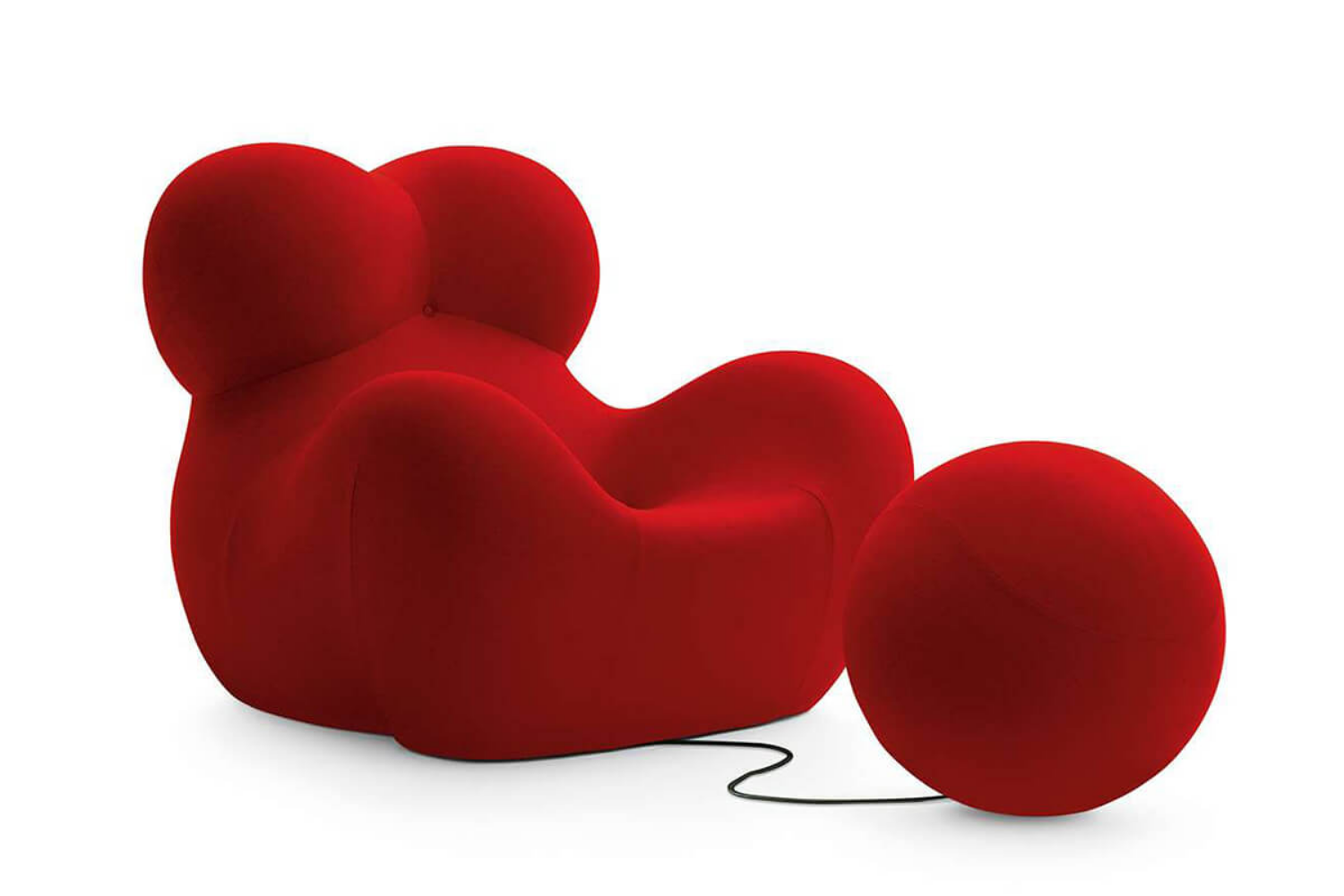
The UP5_6, designed in 1969 for C&B Italia, now B&B Italia, remains Pesce’s best-known work.
The UP Series emerged from the processing of expanded polyurethane and a system that allowed the seat to be compressed for transport and then recover its volume afterwards. B&B Italia recalls it as the first armchair in its production history to be packaged “under vacuum”.
But the technical innovation represents only half of the project.
UP5 has an anthropomorphic and strongly feminine form; UP6 is a sphere connected to the seat. B&B Italia directly reports Pesce’s interpretation: the armchair represents a woman, while the sphere recalls a prisoner’s ball and chain, transforming an image of comfort into a critique of the condition of women and the constraints imposed by society. The Design Museum has also explicitly linked the work to this interpretation.
There is therefore no need to retrospectively assign a political meaning to the design: that meaning belongs to the concept explicitly stated by the designer.
In 2022, the UP Series also received the ADI Compasso d’Oro Award for Product Career, a recognition that B&B Italia connects precisely to the combination of technological experimentation, formal research and civic engagement. In 2026, the collection remains part of the company’s production.
Golgotha: when resin records the production process
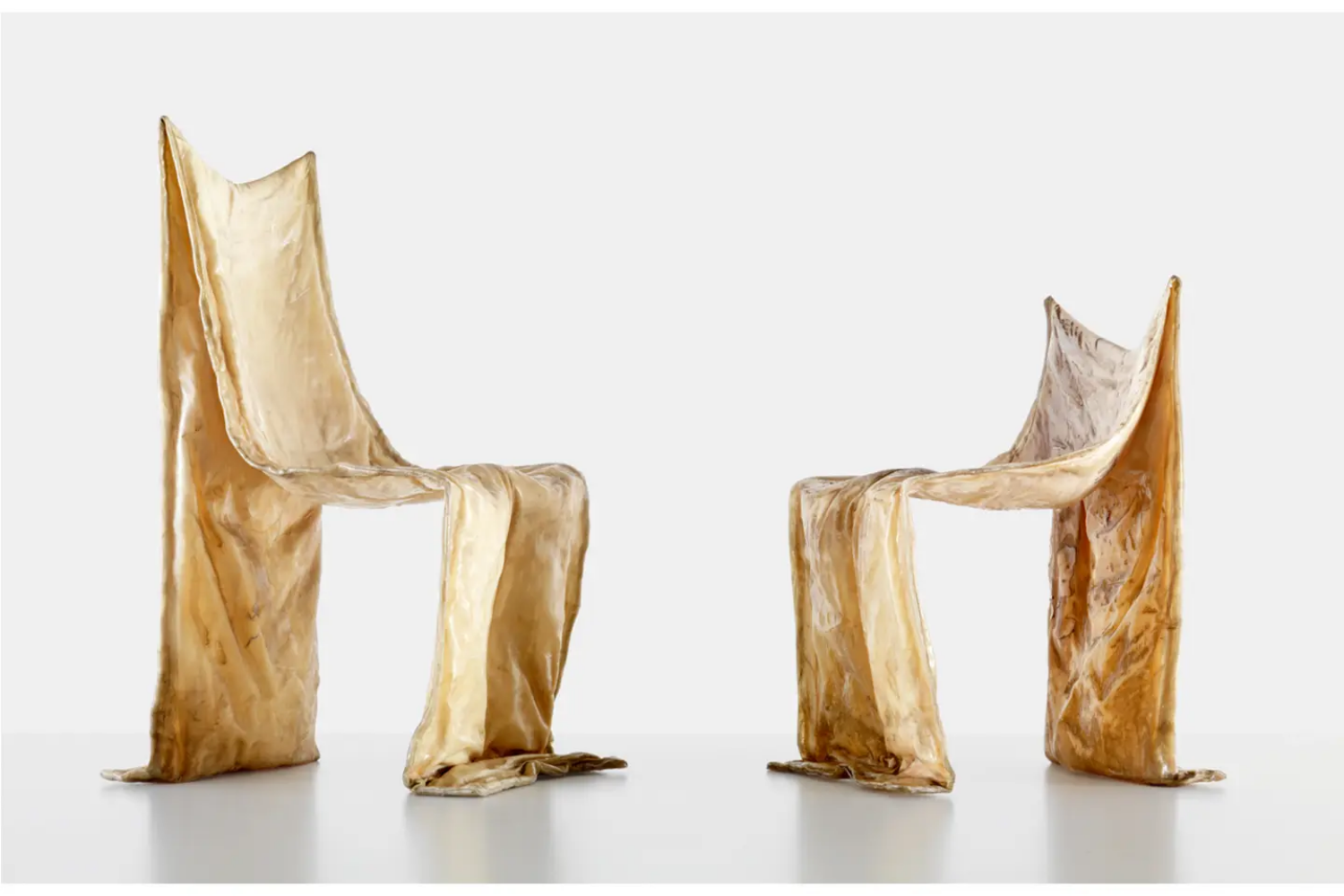
With the 1972 Golgotha Chair, the relationship between material and form becomes even more direct.
MoMA holds an example produced by Bracciodiferro and describes it as being made from fibreglass fabric impregnated with resin and padded with Dacron. The seat appears less like a shell designed according to rigid geometry and more like the result of a material being shaped and hardened according to its own behaviour.
Golgotha anticipates a fundamental part of Pesce’s later research: the manufacturing process does not necessarily need to disappear from the finished product.
A fold, irregularity or deformation can record how an object was made. What traditional industry might classify as a defect can instead acquire expressive value.
Pratt Chairs: nine chairs that only appear identical
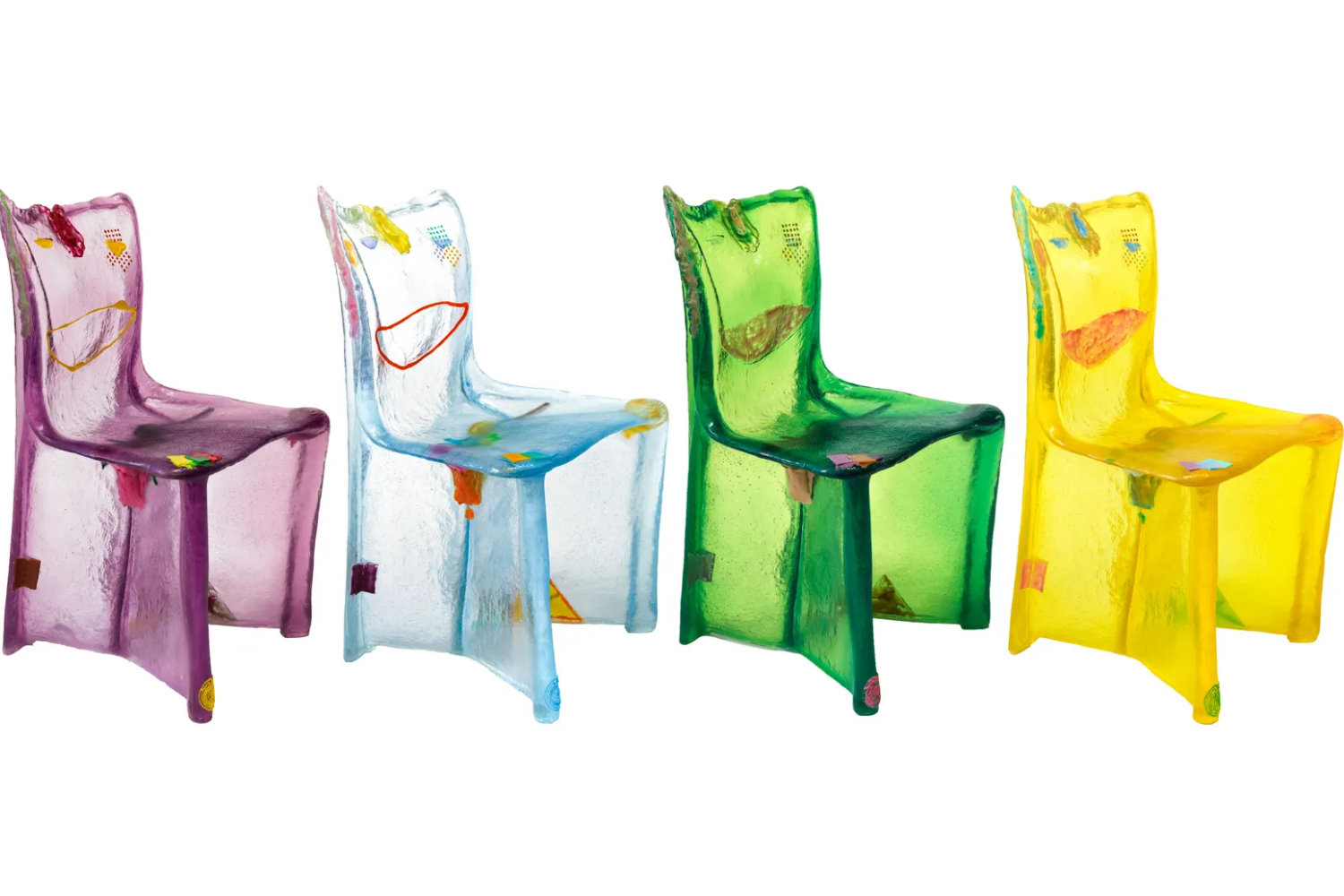
The Pratt Chairs, developed in 1984 as part of a project for Pratt Institute in New York, make this research almost didactic.
Pesce created nine chairs using the same mould but urethane resins with progressively different densities. MoMA explains that the first example is so soft that it cannot support its own weight; the third can carry only a limited load, while only the ninth achieves enough rigidity to support an adult.
The external form remains substantially the same, while the physical behaviour changes.
It is a particularly effective experiment because it dismantles the assumption that the same mould means the same product. Material introduces a second variable capable of changing function, posture and perception without necessarily altering the original design.
Nobody’s Perfect: industrial serial production can create difference
The Nobody’s Perfect project, developed in the early 2000s, takes this principle to its most explicit formulation.
The Cooper Hewitt holds a resin chair from 2001 produced by Zerodisegno, while the Philadelphia Museum of Art documents an example designed in 2002. Dates therefore vary between individual pieces and developments within the series, but both institutions agree on the underlying design logic.
The seats are cast by hand without pursuing absolute uniformity in colour and dimensions. The Philadelphia Museum also notes that the craftsperson involved in production signed a certificate associated with the piece, making their participation a recognised part of the process.
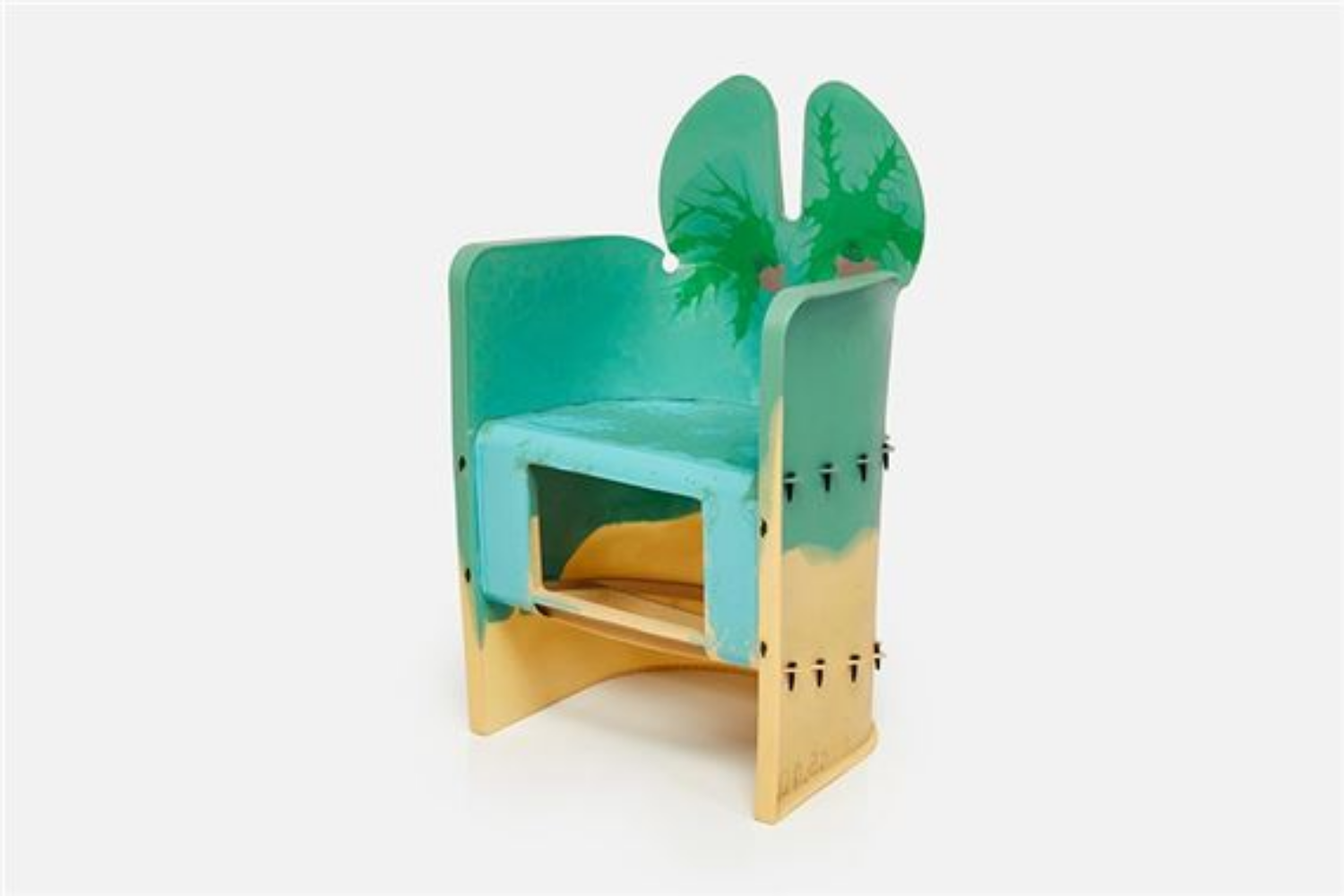
The title is more than an exercise in irony.
“Nobody’s Perfect” transforms imperfection into a design value and proposes what several sources discussing the project describe as differentiated serial production: the objects belong to the same family, yet each example retains its own identity.
The principle reappears in other resin works. The Metropolitan Museum, for example, describes the 2005 Black Rotation Vase as an object in which liquid resin is poured over a rotating mould, allowing gravity and flow to produce irregular edges and surfaces.
Here, chance does not replace design: it becomes a variable that the design deliberately chooses to accommodate.
Tramonto a New York and Feltri: furniture can tell a story
Pesce never abandons function, but he rejects the idea that function should exhaust the meaning of an object.
The Tramonto a New York sofa, designed for Cassina in 1980, transforms seating into an urban landscape: the upholstered volumes evoke skyscrapers, while the large red sun forming the backrest represents sunset over the city. Cassina describes the project as an object capable of moving beyond pure functionalism to become a tool for communicating ideas about the contemporary metropolis.
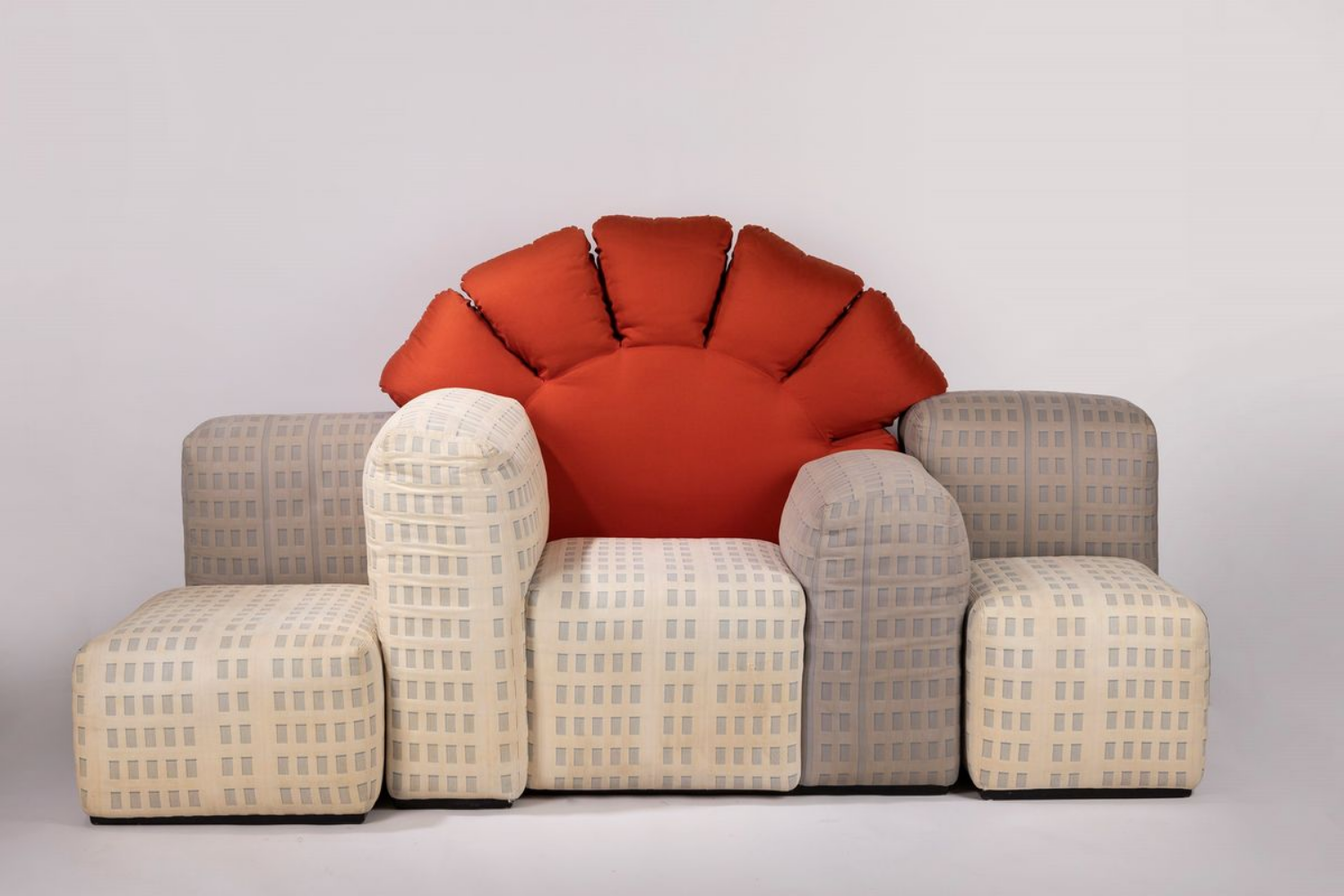
In 1987, with Feltri, Pesce explored another material. The armchair emerged from the Cassina Research and Development Centre and is made from thick wool felt; the lower sections are stiffened through treatment with thermosetting resin, while the upper part retains its flexibility. Cassina notes that the process also led to the development of a patented production technique.
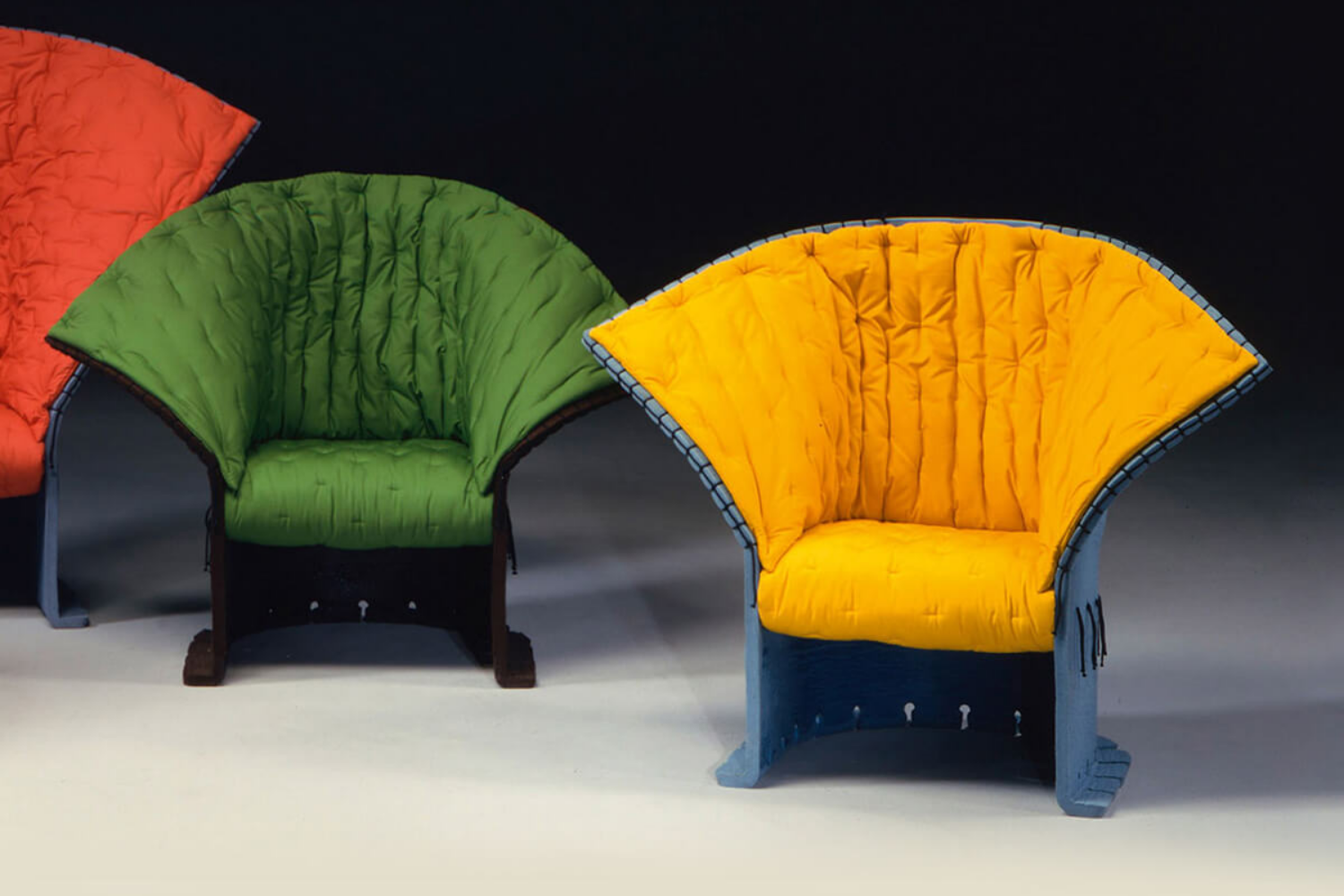
Once again, the image of the object derives directly from the behaviour of the material.
Difference, identity and the social dimension of design
The political dimension of Pesce’s work does not always coincide with an explicit message such as that of UP5_6.
In many works, it becomes a critique of the standardisation of the individual.
The Philadelphia Museum interprets Nobody’s Perfect precisely through the impossibility of achieving absolute perfection and through the involvement of the craftsperson in varying the individual piece. The Metropolitan Museum similarly emphasises Pesce’s interest in objects produced with industrial techniques but deliberately made non-identical.
This shift is essential.
In classical industrial design, a series theoretically tends towards identity between its individual examples. Pesce instead proposes a series in which belonging to a shared family does not eliminate individual difference.
Colour, error, human intervention and the behaviour of materials become tools for discussing plurality.
From object to architecture: the design remains plural
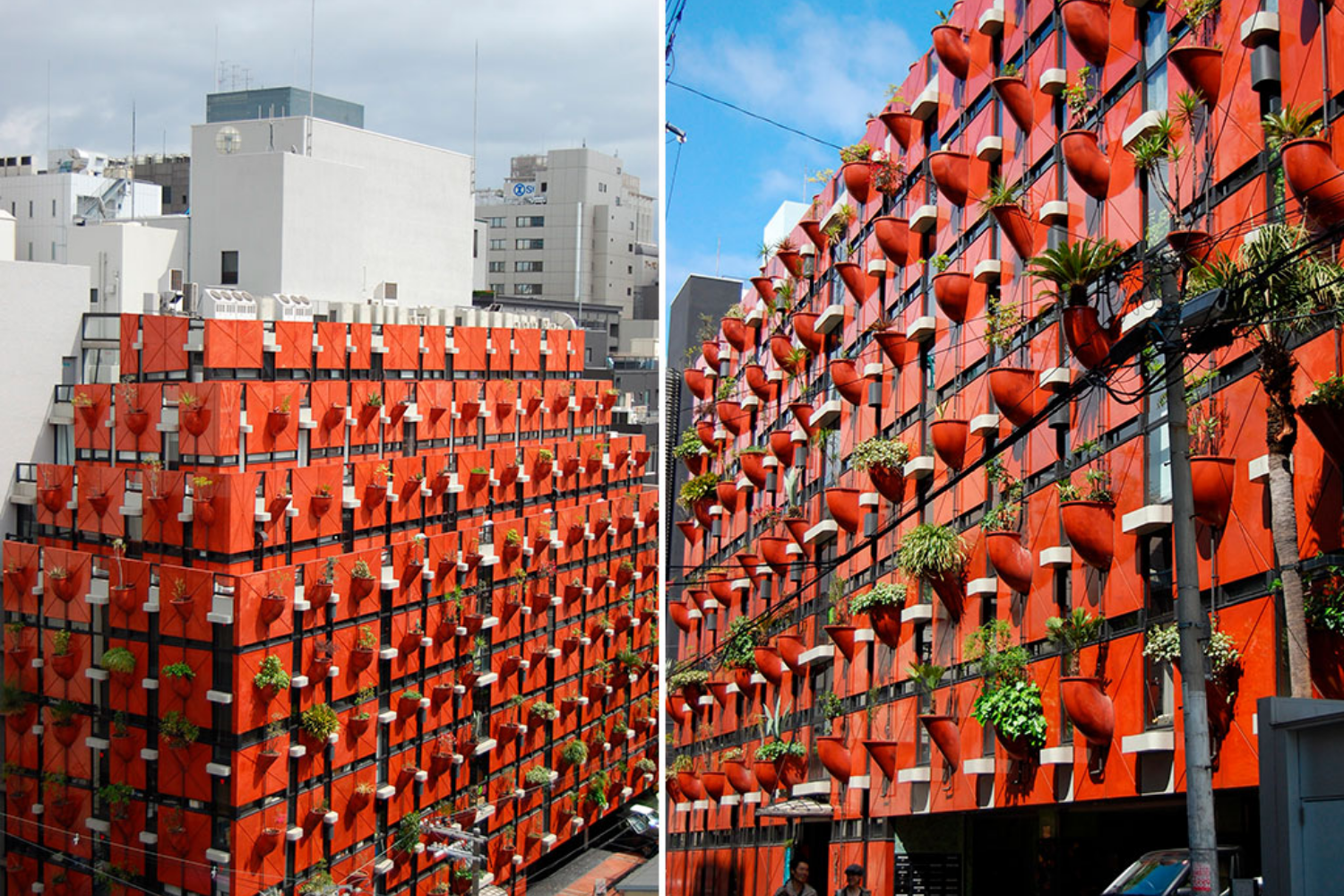
The same research appears when Pesce moves from furniture to architecture.
The Organic Building in Osaka, conceived between 1989 and 1993, is a nine-storey office building. The archive of the M+ museum documents a façade made from orange panels containing planters of different shapes, connected to a concealed irrigation system. Plants literally introduced variation and growth into the skin of the building.
In 1994, for the New York offices of advertising agency Chiat/Day, Pesce instead brought resins, colour and customised objects into a workplace conceived with more fluid spaces that were not rigidly assigned to individual desks. A reassessment published by the New York Times in 2026 brought renewed attention to the interior and its resin elements, from locker doors to tables.
Architecture does not therefore become more restrained simply because the scale increases. It continues to incorporate individuality, materiality, colour and behaviour.
Why Gaetano Pesce remains so relevant
Pesce’s relevance in 2026 does not depend on the possibility of associating his work with a new aesthetic trend.
His work remains current because it challenges questions that are still open: how uniform should an industrial product be? How much space can remain for the human gesture? Can a defect become information? Can a piece of furniture take a political position? Should technology produce only precision, or can it also be used to generate difference?
In 2025, MoMA included a Pratt Chair in the exhibition Pirouette: Turning Points in Design, using it to explore how material experimentation has changed the history of design.
The continuity between those experiments and Nobody’s Perfect makes it possible to read almost forty years of research without searching for a common stylistic language.
UP5_6 is soft and anthropomorphic. Golgotha appears to record a deformation. Pratt turns density into design. Nobody’s Perfect makes imperfection part of the series. Tramonto a New York constructs a figurative narrative. Organic Building brings diversity and vegetation onto the façade.
What connects these works is the conviction that design should represent the complexity of the present rather than erase it through formal perfection.
This is the most enduring radicalism of Gaetano Pesce: using industry, material and colour to defend difference, freedom and the ability of objects to communicate, allowing even a pour, deformation or chromatic variation to become part of design thinking.