Coin history from 1916 to today, including its department stores, Coincasa, ownership, product range and presence in Italian cities.
Coin history began in Veneto in 1916 and spans more than a century of change in Italian retail. From a street vendor’s licence to department stores in city centres, the company built an identity around fashion, beauty and the home. Coincasa, in particular, made textiles, tableware and decoration a recognisable part of the offer.
| A few interesting facts about Coin |
|---|
| Vittorio Coin obtained a street vendor’s licence in Pianiga in 1916. |
| The first shop opened in Mirano in July 1927. |
| Coin’s first full department store took shape in Trieste in 1957. |
| Coincasa brings together home textiles, tableware, decoration and accessories. |
| Stores are mainly located in urban centres and major shopping streets. |
| The recent relaunch has involved private shareholders, Invitalia and new commercial agreements. |
What is Coin today?
Coin is an Italian department-store chain focused on clothing, accessories, cosmetics and home products. Its model brings different categories together in one building, combining private labels, hosted brands and services. Customers can move from fashion to beauty and interior decoration without changing stores.
Its presence in city centres sets Coin apart from many chains developed around retail parks. Stores participate in the life of shopping streets and change format according to the available building, city and local audience. Coin’s official brand overview presents the same mix of fashion, beauty and home decoration.
The company also belongs to the wider history of iconic department stores: commercial buildings that shape an experience through windows, circulation, services and displays as well as selling products.

Coin history since 1916
The story starts in 1916, when Vittorio Coin obtained a street vendor’s licence in Pianiga, near Venice. A decisive step followed in July 1927 with the first shop in Mirano. Further openings came in Mestre-Barche in 1934 and Venice in 1946.
These milestones, documented by the Coin business archive, reveal gradual growth rooted in the region. Selling moved from the street into permanent spaces with broader assortments and a different relationship with customers. After the Second World War, recovering consumption created new opportunities for modern distribution.
Coin history therefore runs alongside urbanisation and changing family habits. Ready-to-wear clothing, homeware and personal-care products moved into stores organised by department, where comparison and choice became part of the visit.
Trieste 1957: the birth of Coin’s department store
According to the Treccani Dictionary of Economics and Finance, Coin inaugurated its first true department store in Trieste in 1957. It was more than a larger shop: the format assembled departments, products and services within one coherent route.
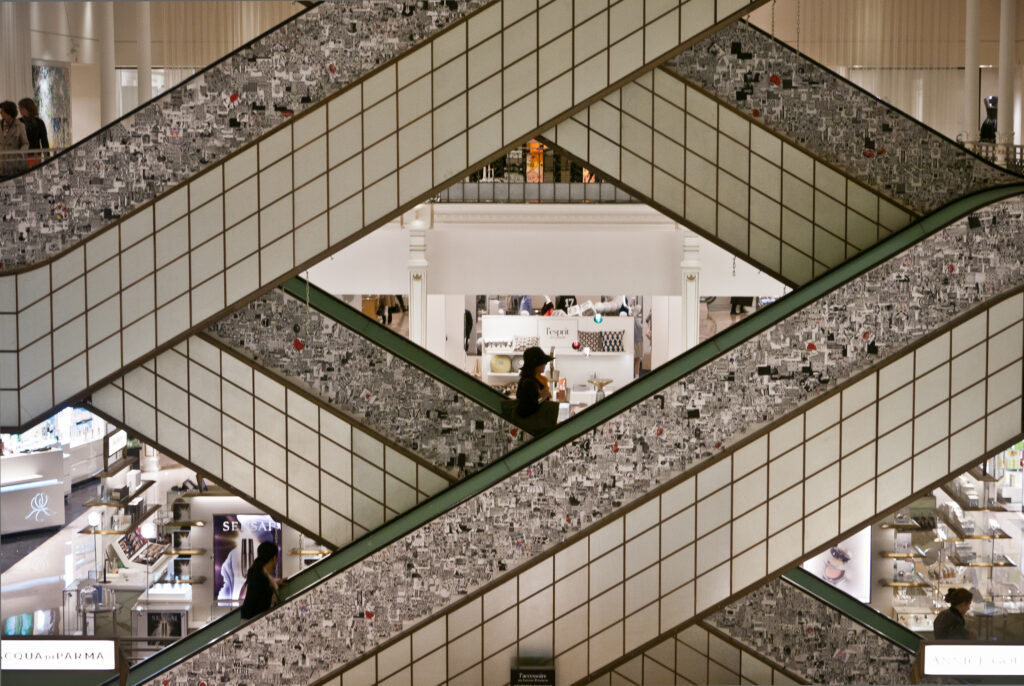
A department store makes very different categories understandable through floors, signs, windows and themed areas. Retail architecture becomes a tool for orientation and desire. Lighting, materials and displays must quickly communicate each department’s character while preserving the identity of the whole store.
Coin expanded its network over the following decades and secured a place in Italian retail. Formats and corporate structures changed, but the idea of an urban building where fashion, personal care and the home coexist remained recognisable.
Coincasa and the world of interiors
Coincasa is the part of Coin’s offer devoted to the home. It includes bed and bath linen, table textiles, tableware, kitchen accessories, home fragrance, decorations and small furnishings. Seasonal collections make it possible to refresh a room through colour, texture and detail without replacing its main furniture.
This approach helped spread a more accessible idea of domestic styling. A dinner service, throw or lamp can change the perception of a room and support personal combinations. Coincasa therefore sits between a homeware specialist and a department-store section.
Collections can vary between the website and physical stores, while availability depends on location. For a specific purchase, checking product details, composition, dimensions and local stock is useful, especially for textiles and objects intended for everyday use.

What does Coin sell?
The assortment falls into three main areas: fashion, beauty and home. Fashion includes clothing, underwear and accessories; beauty covers fragrance, cosmetics and treatments; home brings together Coincasa collections and other brands. The actual mix depends on the size and format of each store.
The model is a multi-brand container. Coin selects categories and labels, organises spaces and may place concessions operated by partners alongside its own departments. This flexibility allows the offer to respond to each location. A large urban flagship can include broader departments and dedicated services, while a compact store presents a tighter selection.
Interior design is essential to the experience. Clear circulation, product-appropriate light, fitting rooms, display surfaces and visual pauses influence the time spent in store. In homeware departments, room settings and laid tables help visitors picture objects in their own interiors.
Who owns Coin today?
Coin’s ownership structure has changed several times during its long history. Its recent recovery and relaunch involved private shareholders and Invitalia, Italy’s national development agency. In 2025, a €33.2 million capital increase was subscribed by Mia, Invitalia, Sagitta SGR, Joral and Hi-Dec, according to figures reported by ANSA.
In June 2026, Italy’s Ministry of Enterprises and Made in Italy referred to a further €30 million recapitalisation and a strategic agreement with Mango for retail spaces, mentioning around 1,300 employees. The MIMIT statement on Coin’s relaunch describes a still-changing phase. It is therefore more accurate to refer to a group of investors than to assign the company to a single owner.
Where are Coin stores in Italy?
Coin operates in numerous Italian cities, with locations of different sizes and assortments. Some occupy central buildings historically associated with urban shopping; others use more compact formats. Opening hours, departments and services can vary even within the same chain.
The most reliable way to find the nearest branch is Coin’s official store locator. It allows visitors to check addresses, contacts and available information before travelling, avoiding lists that may quickly become outdated.

Coin and Rinascente: what is the difference?
Coin and Rinascente both belong to the Italian department-store tradition, but their positioning differs. Coin generally offers a broader, more accessible selection, with a visible role for home categories and private labels. Rinascente focuses more strongly on premium fashion, beauty and design, particularly in its main locations.
The distinction is not absolute because assortments and services vary by city and format. The two brands are best understood as different interpretations of the same retail model. The history of Rinascente provides a useful comparison of their origins, buildings and strategies.
Why Coin matters in Italian retail history
Coin documents the transition from local trade to modern distribution and contemporary retail. Its development includes Vittorio Coin’s entrepreneurial start, the post-war rise of the department store and the ability to keep homeware alongside fashion and beauty.
The brand’s significance goes beyond longevity. Coin shows how assortment, space and an urban location can build a collective habit: entering one place, moving through different departments and finding ideas for both personal style and the home. Recent changes confirm how much this model must continue to adapt while preserving an identity built over more than a century.