Kartell’s story, from early plastic objects to Componibili and Louis Ghost, including its founders, designers, ownership, museum and stores.
Kartell turned plastic into a cultured, colourful and desirable material. Founded by Giulio Castelli in 1949, the Italian company brought industrial technology into the home and invited designers from different generations to explore form, transparency and new production processes. The result is a catalogue in which many everyday objects have become design icons.
| A few fascinating facts about Kartell |
|---|
| Giulio Castelli founded Kartell in Milan in 1949. |
| Its first product, launched in 1950, was the K101 ski rack for cars. |
| The household products division began in 1953. |
| Anna Castelli Ferrieri designed Componibili, presented in 1969. |
| Claudio Luti acquired the company in 1988 and expanded its international collaborations. |
| Kartell Museo was established in 1999 for the brand’s 50th anniversary. |
What is Kartell?
Kartell is an Italian furniture, lighting and accessories company best known for its innovative use of plastics. Its chairs, storage units, lamps, tables and smaller objects explore moulding, colour and transparency through a language that combines technical research with domestic culture.
Its importance does not simply come from using plastic early. Kartell treated it as a design material. Instead of imitating wood, glass or metal, the company emphasised lightness, repeatability, continuous surfaces and colour. That decision made complex forms more attainable and changed the perception of industrial furniture.
Several Kartell pieces belong to the story of Italian design because they express a period, an author and a technology at the same time. They show why an ordinary chair or storage unit can carry cultural meaning beyond its function.
Kartell’s history since 1949
Chemical engineer Giulio Castelli founded Kartell in Milan in 1949. Its first production object appeared in 1950: the K101 ski rack, designed with Roberto Menghi to attach skis to a car roof. The choice already revealed the company’s method—observe new behaviour and answer it with an efficient industrial product.
A household division followed in 1953. Kitchen tools, buckets, juicers and containers brought plastic into an environment still dominated by traditional materials. During the 1960s, Kartell expanded into furniture and worked on moulded seats and storage, solving questions of strength, joints and serial production.
The Kartell Museo timeline shows how objects and communications accompanied changes in the Italian home. In 1988, Claudio Luti, Giulio and Anna Castelli’s son-in-law, acquired the company and began a new phase. Collaborations multiplied, the catalogue became international and Kartell moved into the territory of contemporary design and attainable luxury.
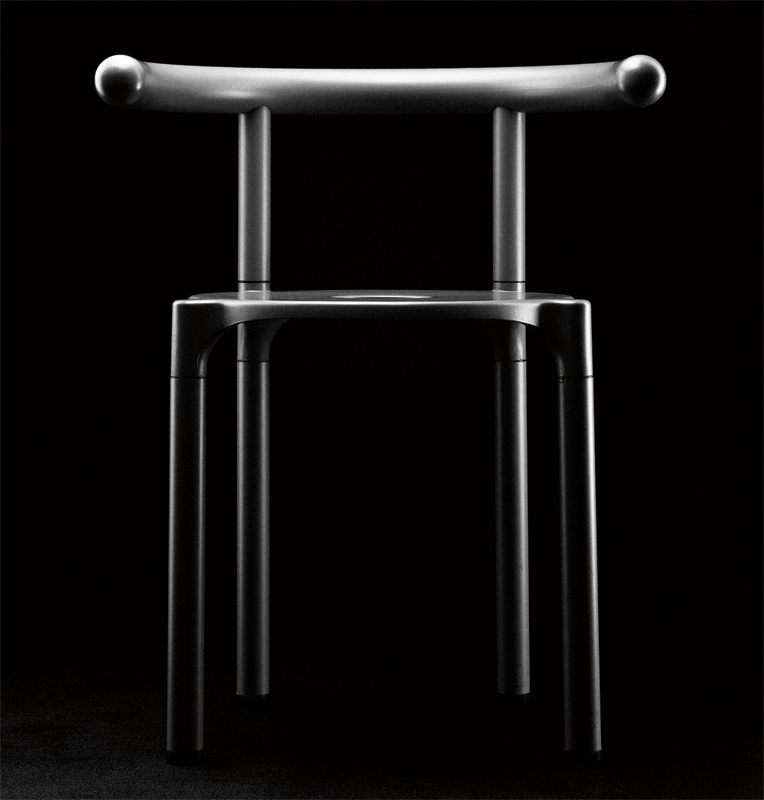
Giulio Castelli and Anna Castelli Ferrieri
Giulio Castelli brought scientific training to Kartell and believed that design should work directly with industry. Rather than applying decoration to a material, he began with production processes, cost and performance to define the object.
Beside him was architect and designer Anna Castelli Ferrieri, one of the first women to graduate in architecture in Italy and a central figure in the brand’s creative direction. Her work connected product, space and a modern culture of living. Componibili is the best-known expression of that vision: compact cylindrical modules that stack and adapt to different rooms.
The company therefore grew from the meeting of chemistry, architecture and manufacturing. This alliance explains why its historic catalogue is more than a collection of Pop forms; it is an archive of technical solutions.
The plastic revolution in furniture
After the Second World War, plastic promised lightness, hygiene and serial production, yet it was often perceived as cheap and temporary. Kartell worked to overcome that limit. It studied polymers, thicknesses, moulds and finishes, showing that an industrial material could produce durable and formally precise objects.
Injection moulding can integrate functions and reduce components. Corners, legs, backs and surfaces may become parts of one shell; colour and transparency enter the material instead of being applied later. Form develops with the manufacturing process.
Environmental concerns now demand stricter criteria. Recycled or bio-based content matters, but so do durability, repair, disassembly and end of life. The Kartell loves the planet platform presents the company’s material and process initiatives. These claims are best considered product by product rather than extended to the entire catalogue.
Kartell’s most iconic products
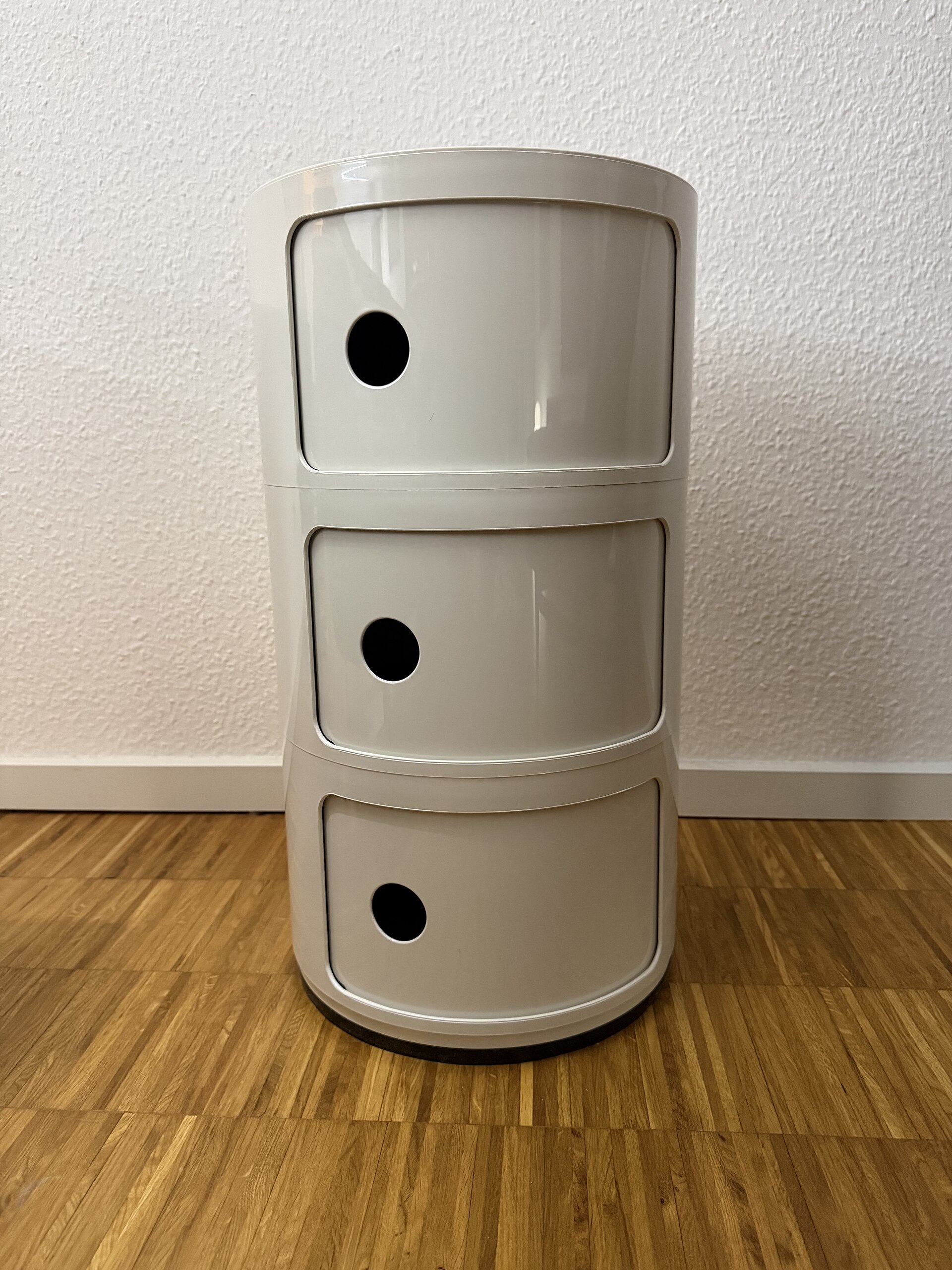
Componibili, designed by Anna Castelli Ferrieri and presented in 1969, are small modular cabinets with sliding doors. Their circular section removes the distinction between front and back, while the modules can be stacked. They belong to international museum collections and remain in production in different versions.
Louis Ghost, created by Philippe Starck in 2002, reinterprets a Louis XV armchair in transparent polycarbonate. Historical memory becomes a single stackable industrial piece. Our profile of Philippe Starck explains the provocative logic behind this move.
Bourgie by Ferruccio Laviani, from 2004, turns the baroque table lamp into a transparent composition with adjustable height. Masters by Starck and Eugeni Quitllet, launched in 2009, weaves the outlines of three twentieth-century chairs into its back. Ron Arad’s Bookworm bends a long shelf into free curves, while Maui by Vico Magistretti brings one versatile chair to homes, offices and collective spaces.
Designers who have worked with Kartell
Kartell’s catalogue is an atlas of international design. Joe Colombo, Marco Zanuso, Gae Aulenti and Richard Sapper belong to the pioneering period. Later collaborators include Philippe Starck, Antonio Citterio, Vico Magistretti, Ron Arad, Ferruccio Laviani, Patricia Urquiola, Piero Lissoni, Tokujin Yoshioka and Fabio Novembre.
The partnership works when a designer treats the brand identity as a productive constraint. Starck’s transparency, Arad’s flexibility and Laviani’s irony are not styles placed on a neutral material; they become possible through moulds and polymers developed with the company.
Where is Kartell furniture made?
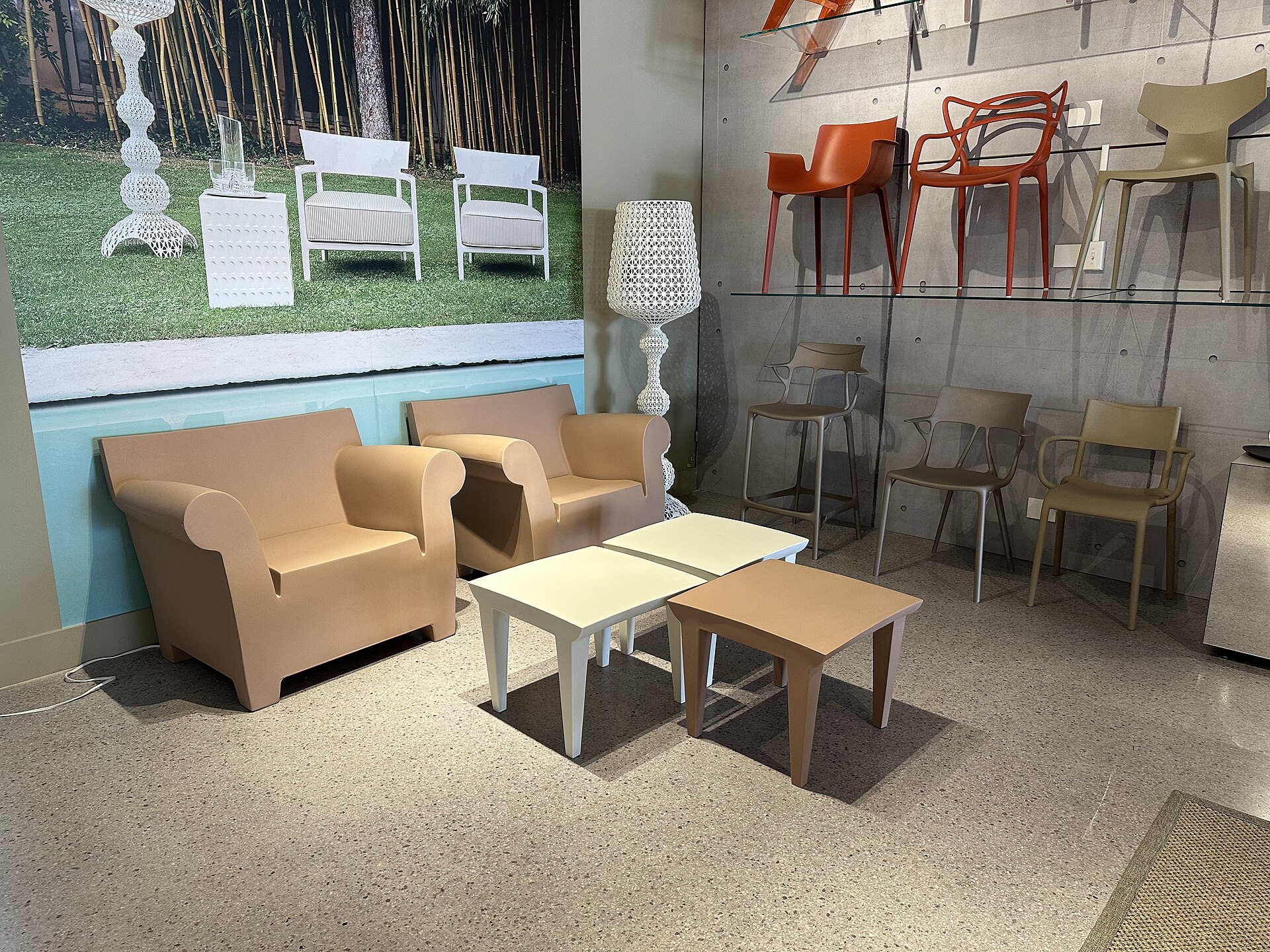
Kartell is based in Noviglio in the metropolitan area of Milan, where its headquarters and museum are located. The brand coordinates development, engineering and quality control through a specialised supply chain. Country and factory can vary by collection, material and supplier, so the origin of an individual piece should be checked on its product information or label.
This distinction matters because Kartell no longer works only with polymers. Its catalogue includes wood, textiles, metals, glass and composite materials. The general label “Italian plastic” cannot describe all contemporary production. The brand’s value lies above all in design direction and in industrial expertise built over decades.
Who owns Kartell today?
The Luti family has led Kartell since 1988. Claudio Luti acquired the company from his parents-in-law, Giulio Castelli and Anna Castelli Ferrieri, and directed its international revival. Members of the third generation now take part in management, preserving family continuity.
Kartell’s official company profile connects this continuity with growth in retail, collaborations and the move from the Pop culture of plastic toward a broader catalogue.
Kartell Museo: what it preserves
Kartell Museo was established in 1999 for the company’s 50th anniversary, inside the Noviglio headquarters. Its collection includes products, prototypes, moulds, photographs, drawings and communication material documenting the relationship between business and design.
Ferruccio Laviani’s exhibition design organises the visit by themes and periods. The museum reveals more than famous objects: tools, tests, advertising and changes in domestic habits explain how each product reached its final form. Visiting information is available on the official museum page.
Where to find Kartell stores
Kartell sells through flagship stores, monobrand shops, authorised retailers and e-commerce. The network changes over time, so the official store locator is the reliable way to find a nearby location and confirm its contact details.
Why Kartell still matters
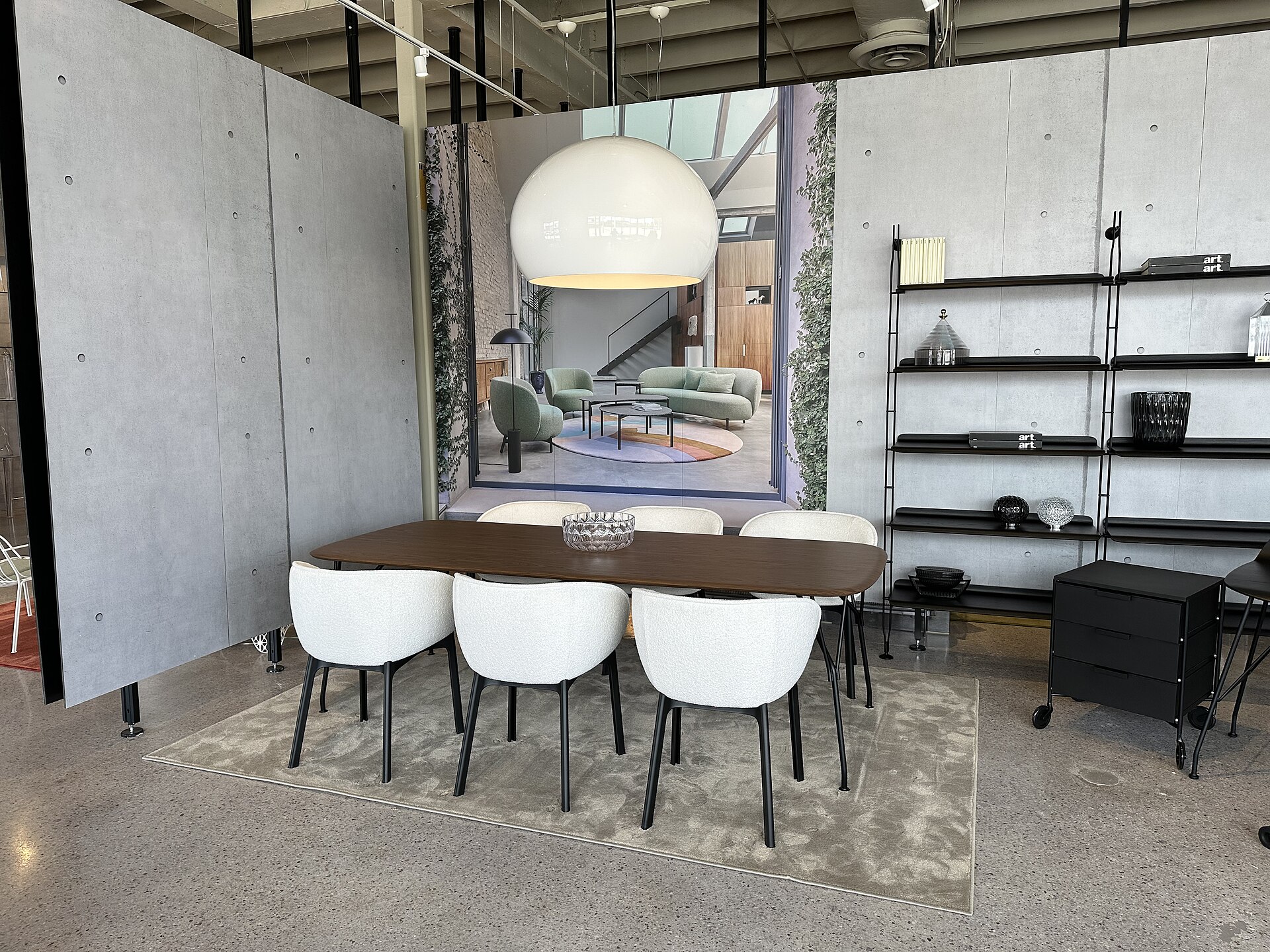
Kartell demonstrated that technical innovation and visual culture can develop together. It changed a material associated with inexpensive production into a tool for exploring typology, colour and transparency, working with designers who turned limitations into opportunities.
Icons make the brand recognisable, but its deeper legacy is a method: understand the industrial process, give design a real problem to solve and create objects that remain clear even as fashions change.