In Verona from 22 to 25 September, natural stone takes shape through processing, finishes and applications. These are the questions to bring to the fair.
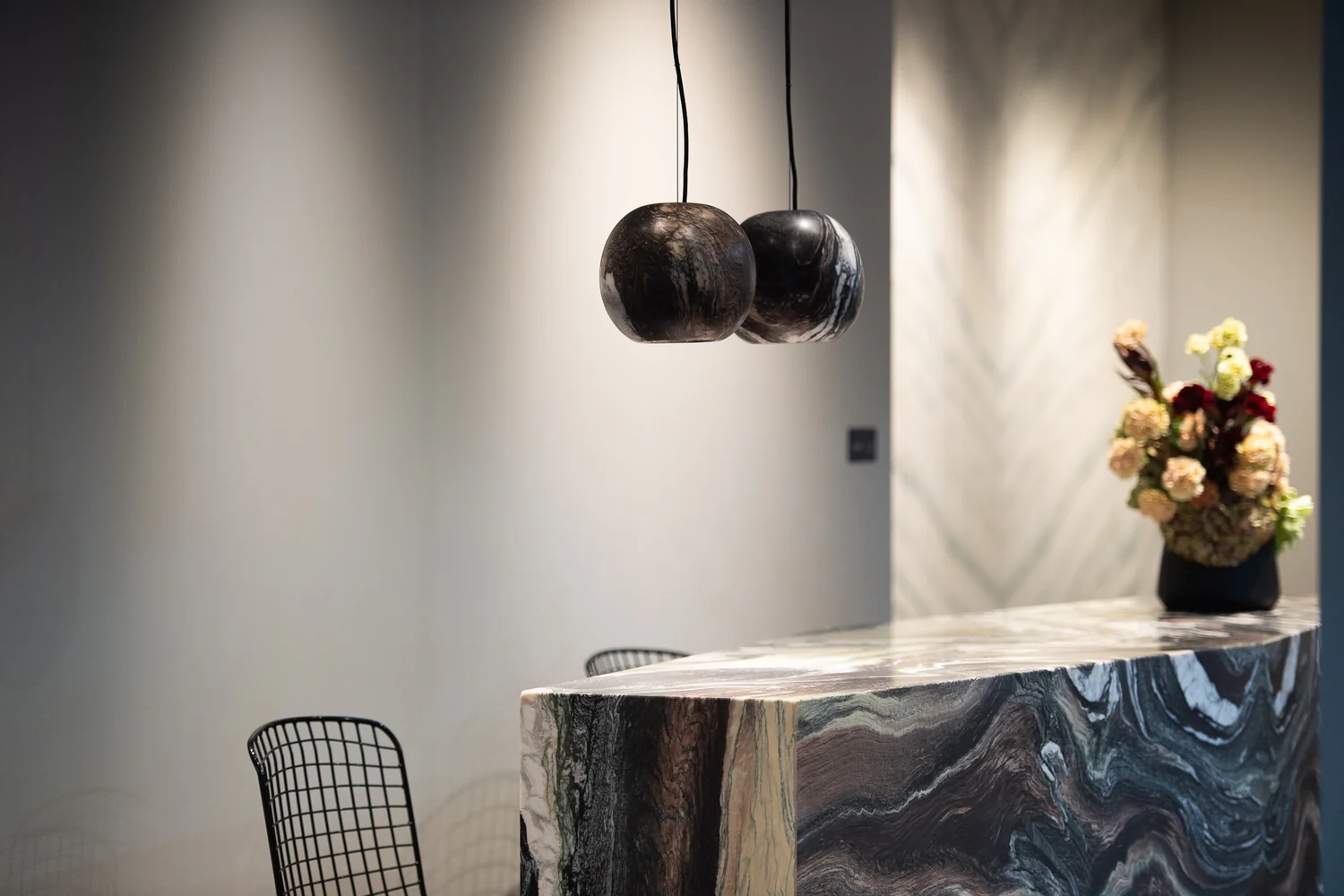
Marmomac 2026 returns to Verona from 22 to 25 September. The natural stone event brings together materials, fabrication and technology. For architects and interior designers, the most useful question is not simply which marble to choose, but how a slab becomes an element that belongs in a particular space.
The Verona tourism portal confirms the dates and sixtieth edition. Prepared before the opening, this guide suggests topics to examine and questions to ask. It is not a report on products already seen or a definitive forecast of trends emerging from the fair.
Move from the slab to the complete design
Stone that looks convincing in a small sample can appear very different across an entire wall. Ask to see images and availability of the actual slabs. Vein scale, inclusions and colour variation need to be considered alongside cuts, openings and viewpoints within the room.
For a table or bathroom top, examine what will be visible in profile: edges, bonded sections, supporting structure and junctions. Design does not stop at the main face. At the fair, photograph a construction detail alongside the overall piece, keeping the material name connected to the images.
Ask what technology makes possible
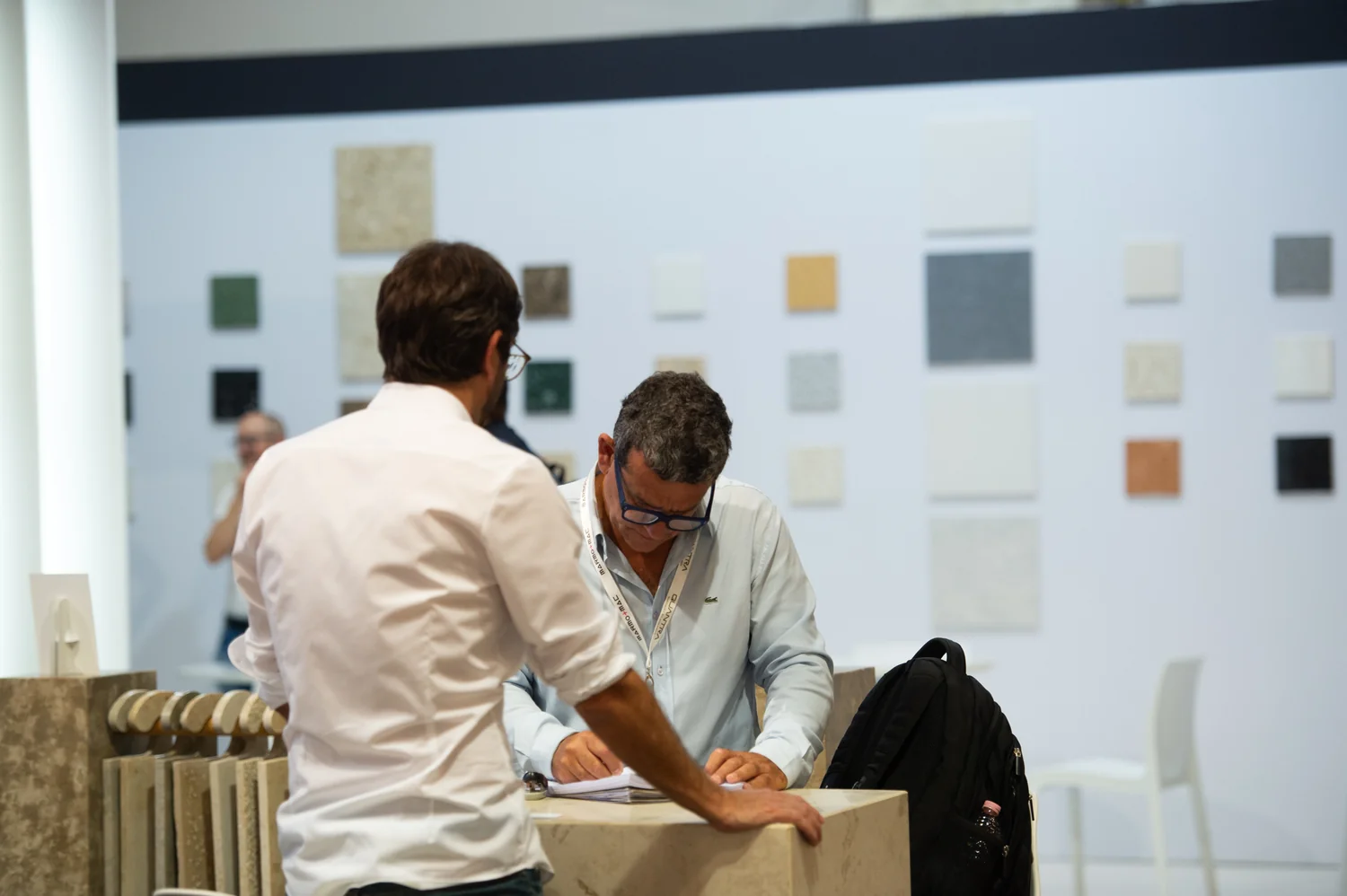
Digital fabrication becomes relevant when it provides geometry, repeatability or precision appropriate to the purpose. Choosing the most complicated form is not necessary to benefit from technology. A simple curve, joint or carefully resolved edge may make more sense in a home than a piece designed primarily to impress.
Ask how a feature is produced, which tolerances it requires and which stages remain manual. Time, waste and repair possibilities also belong in the discussion. The useful question is whether the process improves the element’s function or introduces complexity that the project does not need.
Finish changes the character of stone
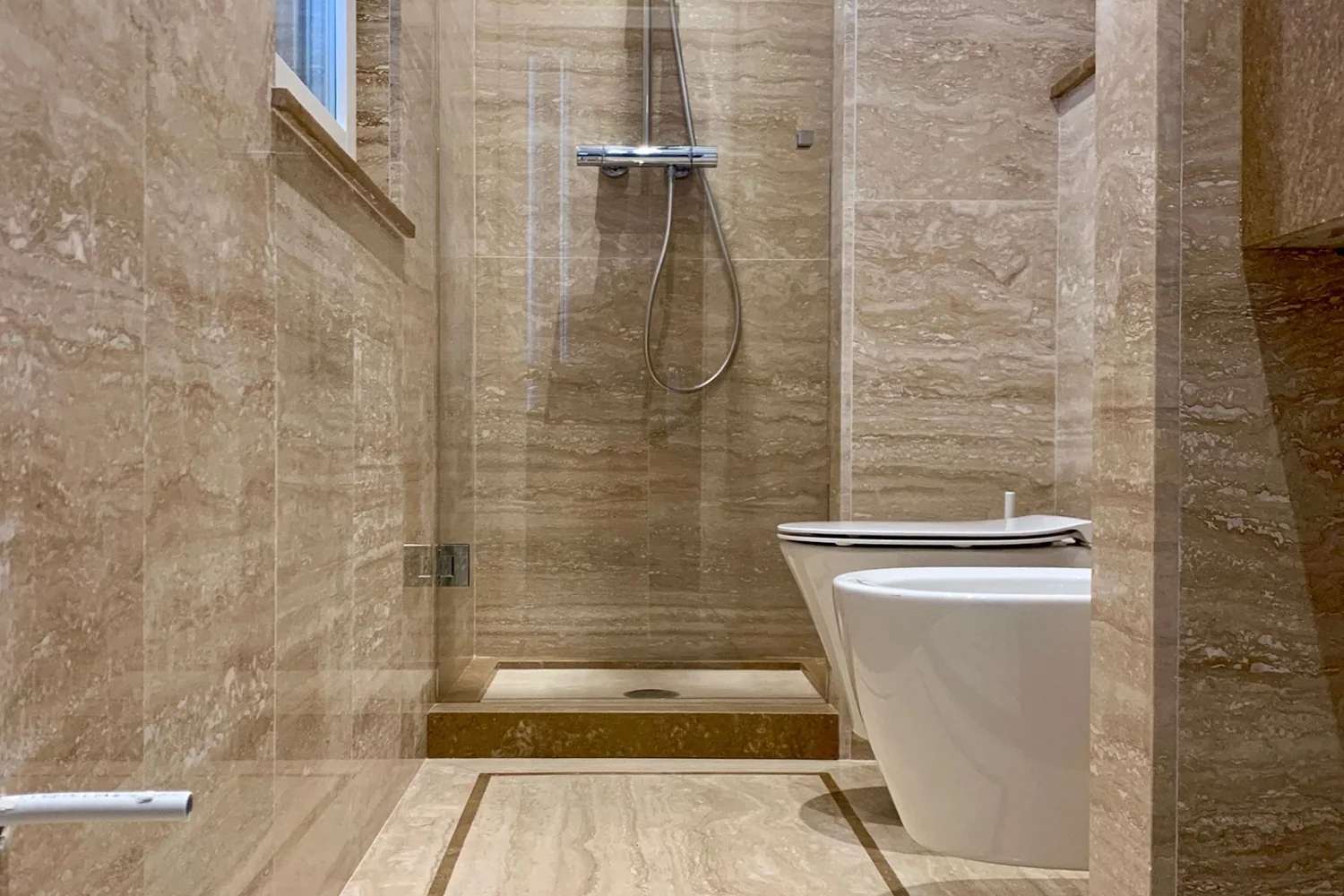
Polished, honed and textured surfaces create different readings of the same material. Assess samples under raking light and in relation to the intended use. A texture that works beautifully on a wall is not automatically convenient on a surface requiring frequent cleaning.
Our guide to Ceppo di Gré in interiors introduces a stone with a distinctive visual structure. The Bergamo Chamber of Commerce documents its origin and characteristics. Commercial names should be accompanied by precise information rather than treating every decorative stone as marble. A specification needs the actual material, origin and proposed finish.
Strong colours and natural patterns
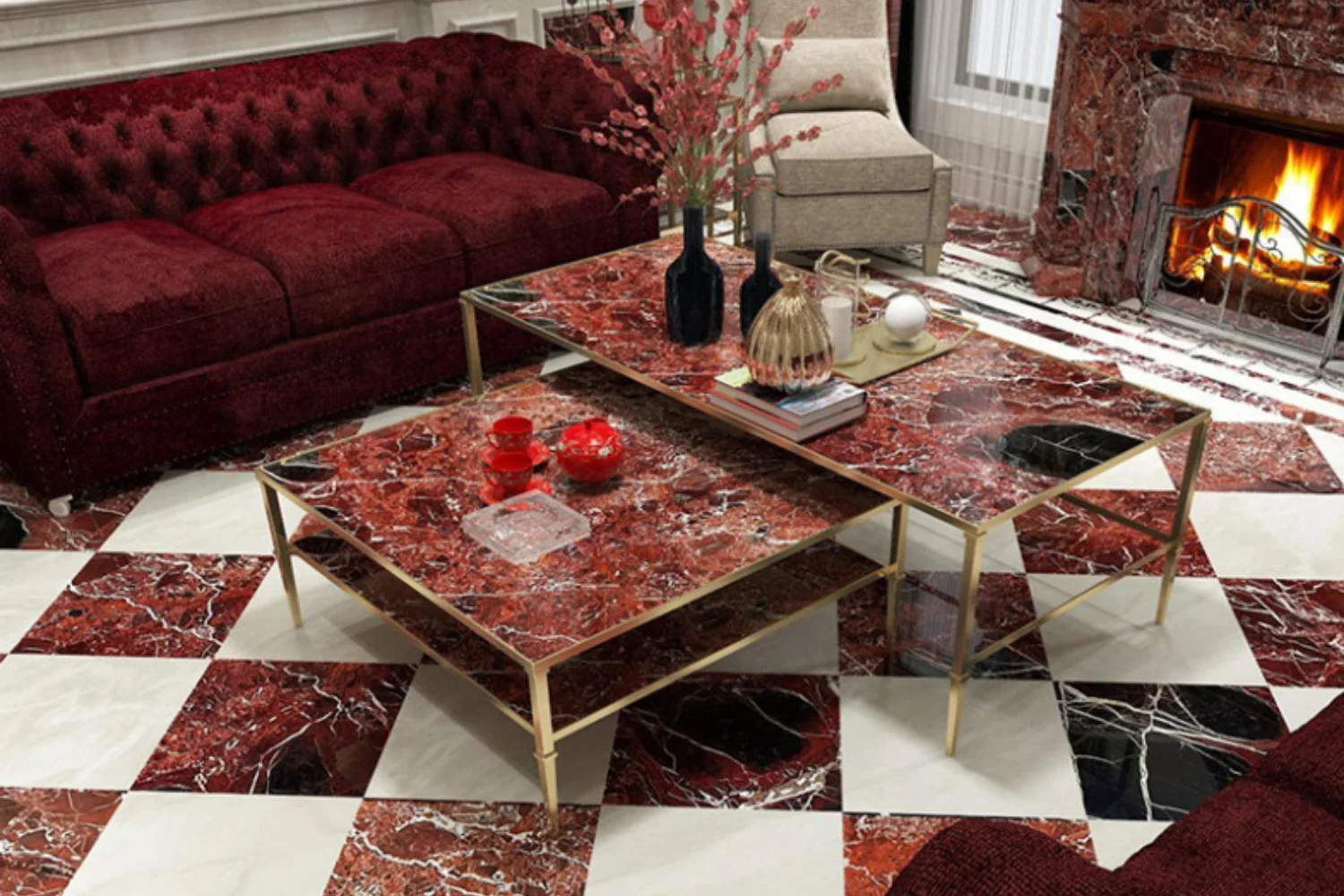
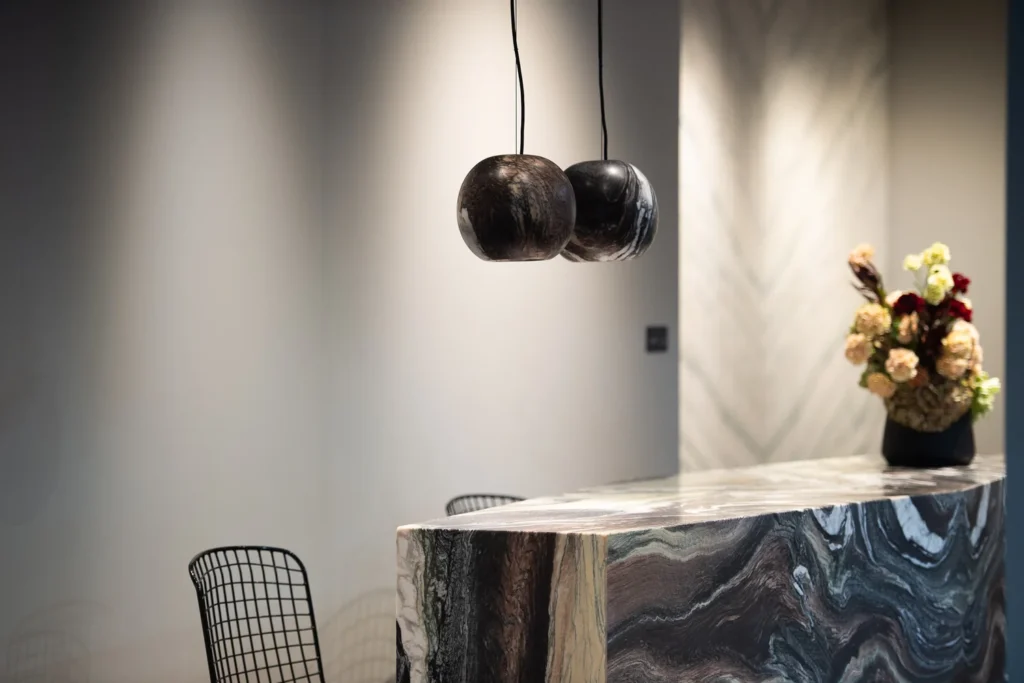
Dark or richly veined stones can become the focal point of a room. Rosso Levanto provides a reference for thinking about surfaces with a strong presence. Their neighbours also need room to work: walls, metals and textiles do not all have to compete with the slab’s pattern.
Compare alternatives at the same scale. A small uniform sample is not equivalent to a photograph of a heavily veined wall. If a bookmatched arrangement is planned, request a layout based on available slabs and examine how the pattern will meet across joints. Confirm the actual selection before approving fabrication.
Sustainability and traceability beyond “natural”
Natural origin alone does not describe the impact of a finished element. Extraction, processing, transport, quantity used and expected service life all contribute. Ask for documentation relating to the specific material and process, separating verified information from a producer’s general intentions.
Consider slab utilisation too: dimensions and cutting layouts can influence offcuts. Asking whether suitable remnants could become secondary details is a design question, not an automatic guarantee of lower impact. Reused pieces still need to be appropriate for their intended function and properly fabricated.
Four questions for a domestic project
First, is the stone suitable for its intended application, and what limitations should be understood? Second, what routine care will it require? Third, how will edges, joints and replaceable parts be handled? Fourth, does the price include measuring, fabrication, transport and installation as well as material?
These answers make quotations more comparable. A price per square metre rarely describes an entire bespoke worktop project. When considering colour relationships, compare stone with the proposed interior paint finishes. A background can support the material without exactly matching one of its veins.
Organising a productive visit
Divide time between material discovery and fabrication discussions. Bring essential dimensions and photographs, while leaving part of the day for an unplanned discovery. After each meeting, record unresolved questions and requested documents before material names start to blend together.
Back home, select a few alternatives to develop through actual samples and conversations with the project team. Recheck details in the intended room and make sure every approved sample can be traced to the corresponding quotation. The future of natural stone in interiors depends not only on possible forms, but on decisions that connect material, use and long-term care.
Images and credits. Photographers and rights holders can contact redazione@archieinteriors.com about image credits or requests to amend or remove an image. Please identify the article and the image concerned.