Choose bathroom furniture by checking basin dimensions, clearances, materials and useful storage. Compare wall-hung and freestanding vanity units.
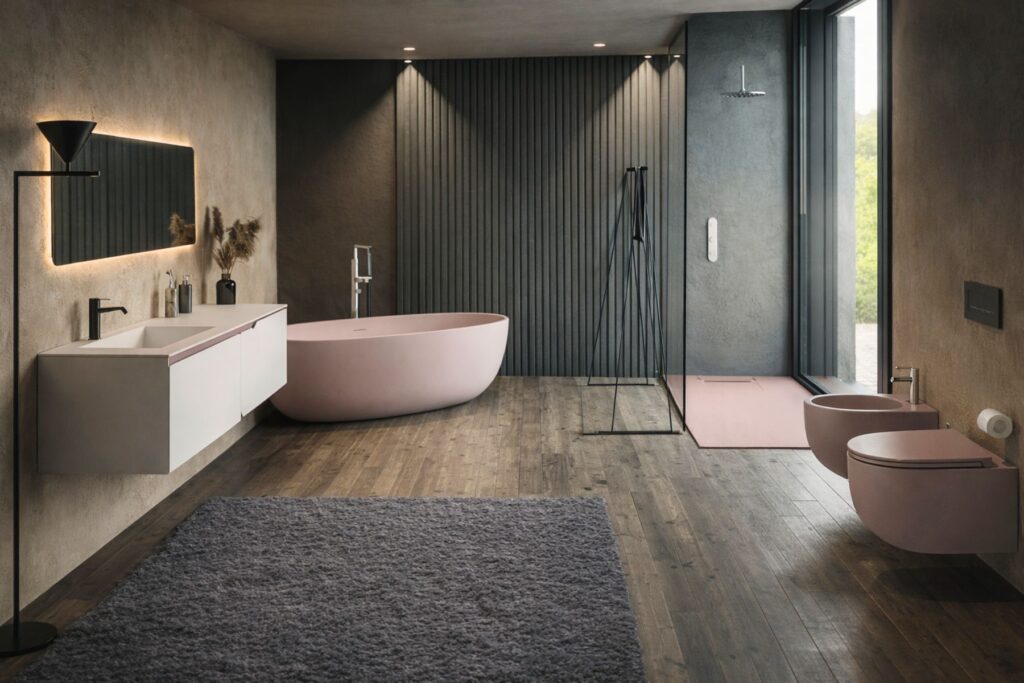
Bathroom furniture should be chosen around the space in front of the basin, the position of plumbing and the things it needs to store. Wall-hung units reveal the floor; freestanding furniture gives the room a more grounded silhouette. Useful drawer space and protected edges matter as much as the finish.
A successful vanity is not simply a cabinet filling a gap. It brings the mirror, tap and surrounding surfaces into a coherent composition. Timber can soften a compact tiled room, while a long low unit can make a larger bathroom feel more domestic. Start with an accurate survey, before choosing a collection.
Bathroom furniture dimensions: what to measure
Record wall width, available depth, door swing, sockets and pipework. Check the complete assembly: the basin, handle and worktop may project beyond the cabinet dimensions. Drawers also need room to open while somebody is standing at the basin.
Mark the footprint with removable tape and rehearse everyday movements. A shallow unit can protect a narrow route, but only if its basin remains comfortable to use. Accessibility requirements need a project-specific assessment; a catalogue measurement is not a substitute.
Wall-hung or freestanding vanity units?
Wall-hung furniture keeps the floor visible and makes cleaning underneath easier. Its fixings must be appropriate for the wall, basin, cabinet and expected load. Lightweight partitions may need reinforcement.
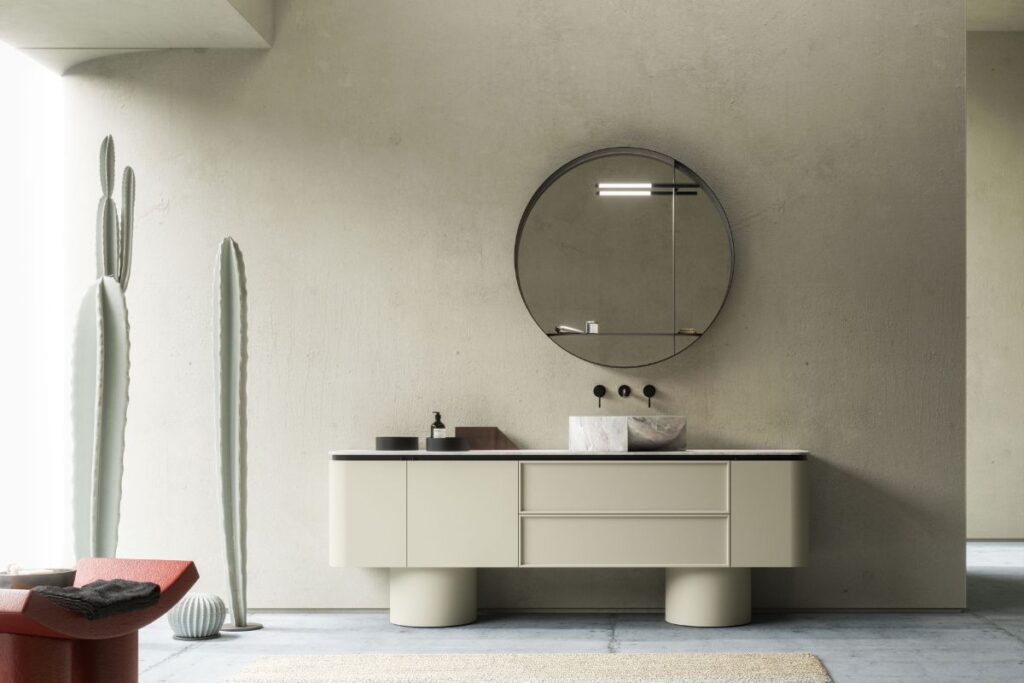
Freestanding units can offer a continuous storage volume. Legs introduce air beneath the cabinet; a plinth creates a solid mass. Check how the lowest edges are protected from splashes and cleaning products.
| Option | Best reason to consider it | Decisive check |
|---|---|---|
| Wall-hung | An uninterrupted floor | Wall construction and fixings |
| Freestanding | A grounded furniture-like volume | Protection near the floor |
| Shallow cabinet | A narrow circulation route | Basin usability and capacity |
| Tall cabinet | Separate towels and spare products | Door swing and stability |
Integrated or countertop basin?
An integrated basin creates a quieter surface, but cleaning still depends on material, joints and drainage details. A countertop bowl makes the basin a visible object and leaves the worktop more expressive. Its contact edge adds another area to maintain.
For a tall bowl, recalculate the cabinet height: the usable height is the basin rim, not the worktop. Match tap projection to the basin so that the stream lands appropriately. The waste trap may reduce drawer capacity substantially.
Materials: look beyond the label
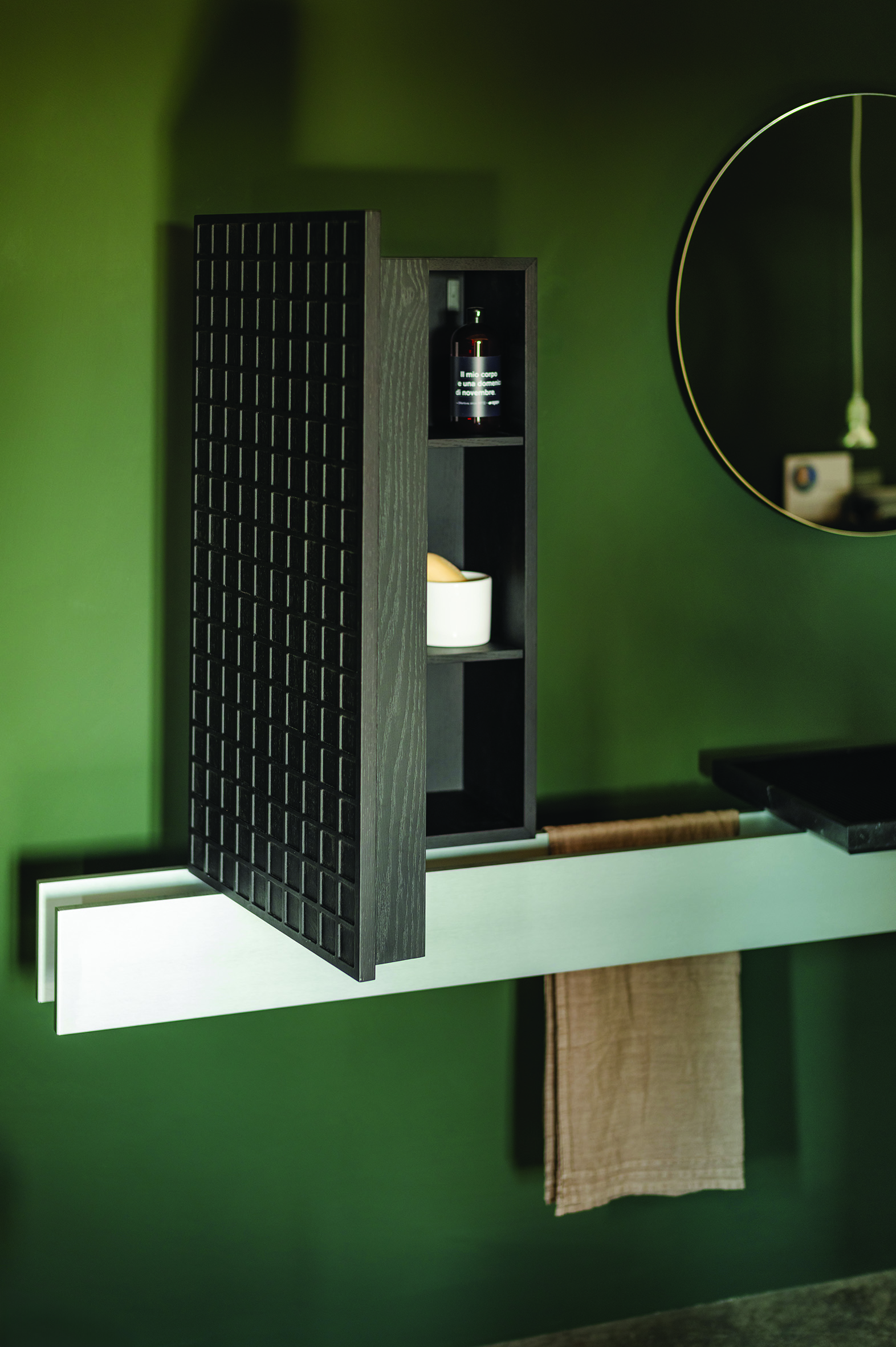
Timber, veneer, laminate and lacquer can work when the product is designed for bathroom conditions. Substrate, edging, finish and joints determine performance. Moisture-resistant does not mean that a cabinet can remain wet indefinitely.
View samples beside the actual tiles and mirror lighting. A mineral or ceramic top can complement timber fronts; a painted unit can continue the wall colour. Texture and reflectivity change the apparent weight of the composition.
Organise storage by frequency of use
Separate daily essentials, towels and spare products. Frequently used items belong within easy reach; deeper drawers benefit from dividers rather than layers of small bottles. Check internal dimensions around plumbing.
In a compact bathroom, one organised vanity and one vertical cabinet often read more clearly than several wall cupboards. Leave some worktop visible. A mirror cabinet can release this surface, but its depth must suit the basin and lighting.
Mistakes to avoid
Do not sacrifice circulation to a larger cabinet, buy a basin without checking the tap, or judge capacity from external dimensions alone. Keep finishes in a clear hierarchy and allow for ventilation and routine maintenance.
The same balance between essential furniture and useful space informs our 70-square-metre apartment project. The aim is a room that works before it becomes a photograph.
For material and colour relationships, explore our modern Mediterranean interiors and interior colour combinations.
Frequently asked questions
How deep should bathroom furniture be?
Deep enough for a usable basin while retaining comfortable circulation. Check the complete assembly against the room plan.
Can timber be used in a bathroom?
Yes, when the product and finish are suitable, ventilation is effective and splashes are removed promptly. Pay particular attention to edges and joints.
Does wall-hung furniture always hold less?
No. Useful capacity depends on internal dimensions, drawer organisation and plumbing rather than the mounting style alone.
Opening image: Agape.