Four plasterboard brands, with practical guidance on specialist boards, humid rooms, hanging loads, complete wall assemblies and an example material cost.
A new partition can separate bedrooms, create a home office or form an illuminated niche. Plasterboard, often called drywall in North America, supports many different projects. The result depends on what lies behind the finish: boards, framing, insulation, fixings and workmanship.
Our shortlist of plasterboard brands covers Knauf, Saint-Gobain Gyproc, Siniat and Fassa Bortolo’s Gypsotech system, using documented Italian and European ranges. It is a guide to comparing solutions rather than an editorial laboratory ranking. Names, board formats and local system specifications may differ between markets.
Define the wall before choosing the brand
A room partition, a lining against an existing wall and a recessed niche do different jobs. Establish whether your priorities are space division, sound insulation, impact resistance, support for hanging loads or suitability for a humid room.
Boards, layer count, studs, spacing, insulation and joint treatment make one assembly. Required performance belongs to the documented configuration, beyond the name printed on the board.
Four plasterboard brands to compare
| Brand | Board to consider | Useful comparison |
|---|---|---|
| Knauf | Diamant 12.5 mm | Mechanical resistance and versatility |
| Saint-Gobain Gyproc | Habito Forte Hydro 13 | Loads and humid conditions |
| Siniat | LaDura Plus BA13 | Dense fibre-reinforced core |
| Fassa Bortolo | Gypsotech GypsoLIGNUM | Coordinated dry construction system |
Knauf: standard boards and Diamant
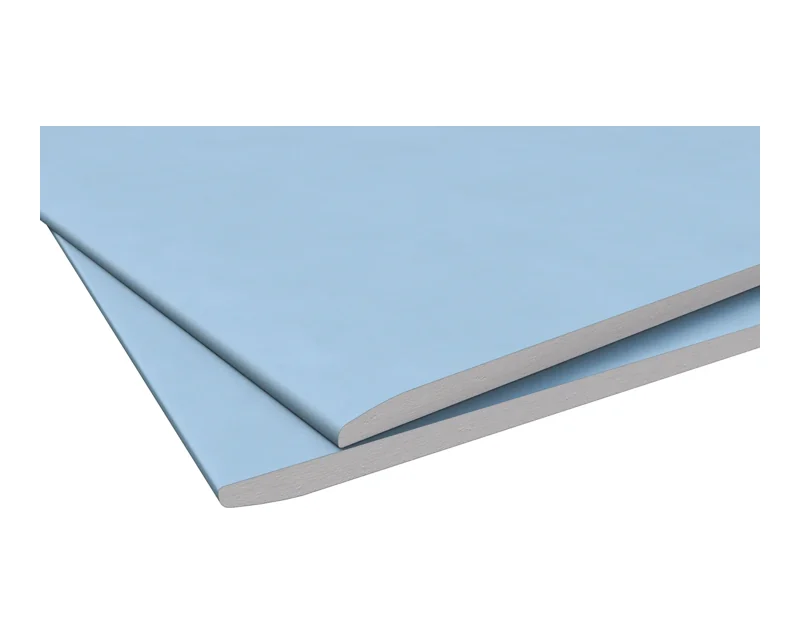
Knauf provides a useful comparison between standard and specialist boards within complete systems. The 12.5 mm Diamant DFHIR board has a gypsum core reinforced with mineral fibres and blue facing. The manufacturer describes high mechanical resistance and a treatment limiting moisture absorption.
Consider it where the wall needs more than a basic lining. Identical thickness does not make it equivalent to a standard board. For shelves, cupboards or televisions, have the fixings and any reinforcement specified for the actual load.
Saint-Gobain Gyproc: Habito Forte Hydro
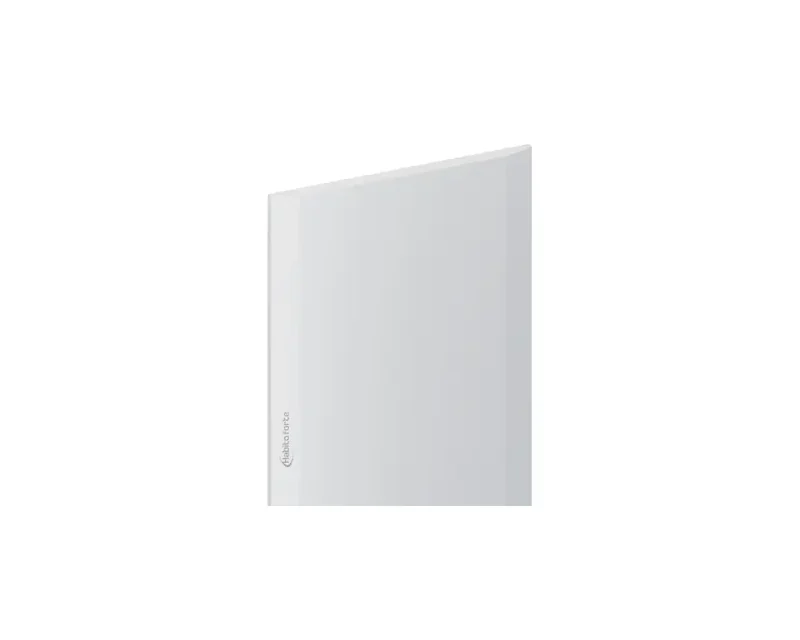
Habito Forte Hydro 13 is faced gypsum board with an increased-density core and glass fibres. It is 12.5 mm thick, classified DFH1IR, and has reduced water absorption. Gyproc presents it for partitions and wall linings where robustness and load support matter.
The exposed face is white. For loads, the specified fixing data are more useful than a general kilogram claim: screw, fixing count, load projection and wall need to work together.
Siniat: LaDura Plus and high-performance assemblies
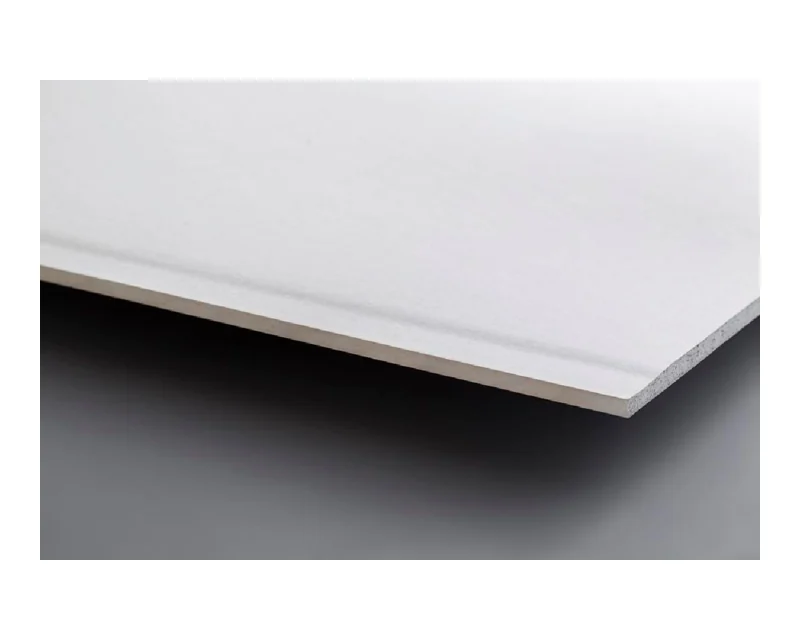
LaDura Plus BA13 is a 12.5 mm board with a dense core reinforced with wood and glass fibres. Its declared classification is DEFH1IR. Siniat lists applications including partitions, linings and other assemblies requiring mechanical performance and impact resistance.
The range also distinguishes humid-room products from solutions for more demanding water exposure. If the project includes a shower, do not stop at a moisture-resistant board name: specify the substrate, waterproofing and junctions around drains and fittings.
Fassa Bortolo: Gypsotech GypsoLIGNUM
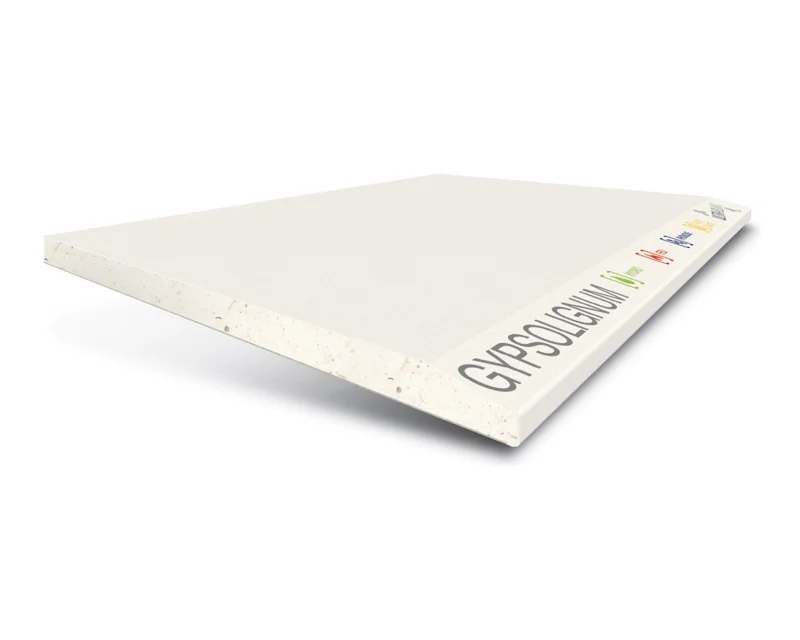
Fassa Bortolo’s Gypsotech offering covers boards and dry construction solutions. GypsoLIGNUM DEFH1IR combines a density above 1,000 kg/m³, improved mechanical resistance, reduced water absorption and improved core cohesion under fire exposure.
The manufacturer lists partitions, wall linings and ceilings. It is a reference when specifying a coordinated assembly with the necessary components and installation manual. Relate each product feature to the intended use rather than treating an individual board’s characteristics as the specification of a complete wall.
Moisture, acoustics and fire: separate checks
Moisture-resistant does not mean waterproof. A bathroom needs an assessment of water-exposed zones and the waterproofing system. Boards from the same brand are not all suitable for the same conditions.
Sound insulation concerns the entire assembly, including junctions, doors and service penetrations. A denser board cannot close every sound path. It is also distinct from absorption, which reduces reverberation within the room.
For fire performance, the material’s reaction-to-fire classification differs from the wall assembly’s fire resistance. Do not convert a board classification into an automatic number of resistance minutes for a partition. The designer needs to select an appropriate documented assembly.
How much does plasterboard cost?
BigMat Imbriaco listed standard Knauf GKB, 1,200 × 2,000 × 12.5 mm, at €7.17 including VAT. Across 2.4 m², that is approximately €2.99/m² for the board alone. The indicative reference needs reconfirming and does not price Diamant, other specialist boards or an installed wall.
A partition measuring 20 m² on each face, with one board layer per side, needs a theoretical 40 m² of board: at least 17 boards of 2.4 m² before cutting, waste and detailing. At the example price, that is €121.89 for standard boards alone. More layers change the quantity.
A complete wall quotation should also identify framing, insulation, screws, tapes, jointing compounds, reinforcement, labour and the finish level. Establish whether painting, services, doors and waste removal are included. Board area and quoted partition area are different measurements. This Italian offer is not an international installed-cost benchmark.
Where to buy and questions for the installer
Merchants, dry construction distributors and home-improvement stores supply boards and accessories; a specialist can deliver the complete assembly. Code, dimensions and availability identify special products, with suitable access and handling needed for large boards.
- Assembly: board type and layers per face, profiles, stud spacing, height and finished thickness.
- Loads: locations of cupboards, televisions, wall-hung sanitary fittings and other equipment, with specified fixings or reinforcement.
- Performance: system documentation for acoustic, moisture and fire requirements.
- Services: penetrations, boxes and access panels, including their effects on the assembly.
- Finish: joint treatment and preparation appropriate to the paint and grazing light in the room.
- Price: inclusions and the method used to measure the quoted area.
For integrated storage, our guide to plasterboard niches discusses how depth, display space and lighting can work together.
Common buying questions
Can I choose a board by its colour?
No. Colour is a visual clue, but check the type, code and technical data. Similar colours across manufacturers do not guarantee identical characteristics.
Can a wall cupboard be hung on plasterboard?
It depends on the wall assembly and fixings, as well as the cupboard’s weight and projection. Identify loads before the frame is closed so that the installer can provide the required support.
Which plasterboard brand is best?
Choose a brand offering an appropriate documented system, available with its necessary components and installed correctly. Compare two or three proposals with equivalent requirements and finish levels. A specialist board still needs sound design and workmanship.