How to choose an extending dining table that seats everyone at Christmas: 60 cm per guest, 300 x 100 cm for twelve, clearance from walls, mechanisms, legs or central base and the Italian benchmarks.
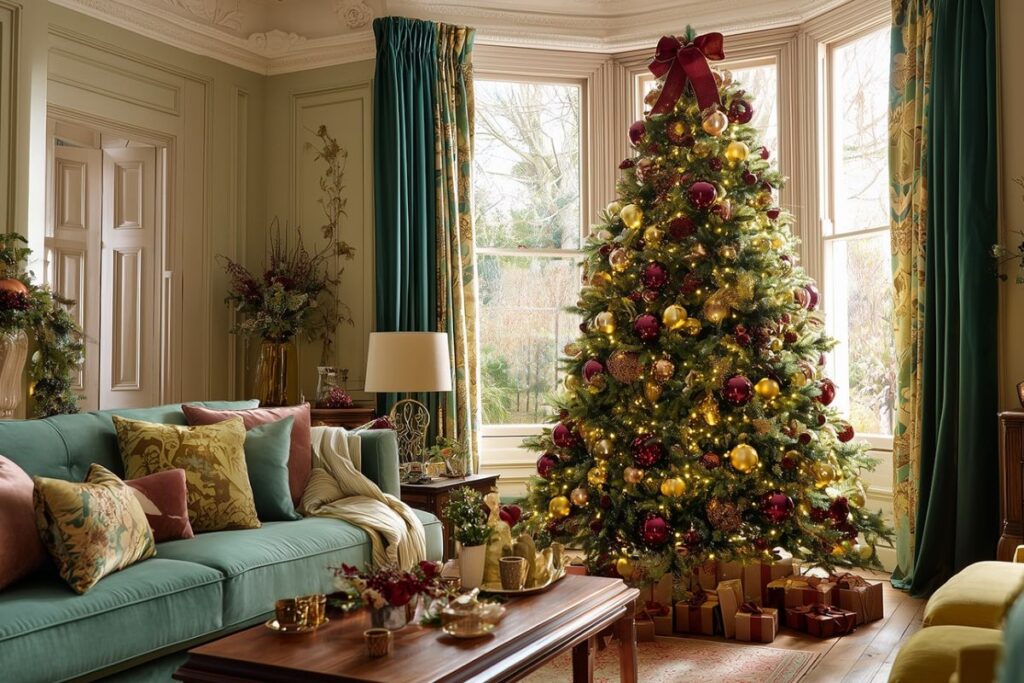
At Christmas the dining table stops being a piece of furniture and becomes infrastructure: it has to grow without losing its proportions, seat twelve without anyone eating sideways, and shrink back to size on 7 January.
The extending dining table is the most underrated piece in the house for eleven months of the year and the most indispensable in the twelfth. Christmas Eve, Christmas lunch and the New Year’s Eve dinner concentrate almost a whole year of hospitality into a few days, and the table that looked perfect in October suddenly shows its limits: a leg in the wrong place, a leaf too heavy to fit, ten centimetres missing for the last chair. Choosing well means thinking like a designer, tape measure in hand before catalogue.
Our view is simple. In today’s homes, smaller and more open, the table that changes size has replaced the dining room. There is no longer a room kept for special occasions, only a living space that turns into a reception room for a few days a year. That is why the mechanism matters as much as the design, and why a good extending table should be judged twice: closed, in everyday life, and open, on the evening when everyone arrives.
How much space does each guest need?
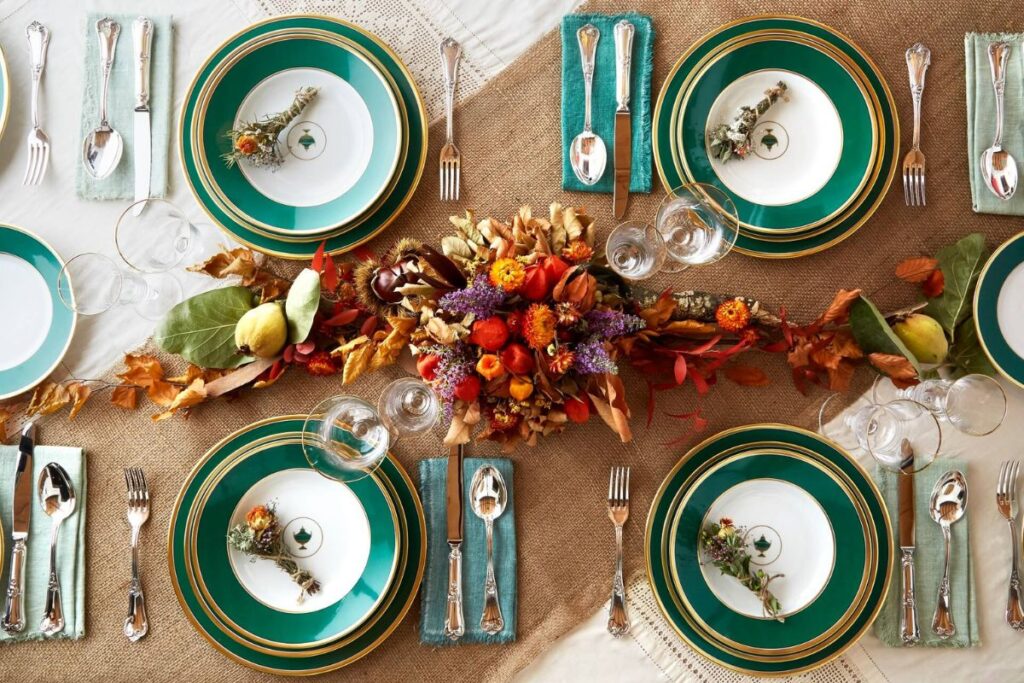
Each guest needs around 60 centimetres of table edge to eat comfortably, with elbows free and the glass where it belongs. It is the standard reference for a place setting: 55 centimetres works for a casual supper, below 50 it feels cramped. A setting is also around 40 centimetres deep, so 80 centimetres is the minimum for two rows facing each other, while 90 or 100 centimetres leave room for a centrepiece, serving dishes and bottles.
From there, the Christmas lunch maths follows. For an extending table for 12, the classic answer is a rectangle of 300 by 100 centimetres: five settings per side, because five times 60 makes 300, plus one at each end. At 240 centimetres you seat ten, four per side and two at the ends. A round table follows its circumference instead: a 120 centimetre diameter gives about 377 centimetres of edge, which means six comfortable places.
| Open top (100 cm deep) | Comfortable settings | Recommended minimum room |
|---|---|---|
| 160 cm | 6 | 340 x 280 cm |
| 200 cm | 8 | 380 x 280 cm |
| 240 cm | 10 | 420 x 280 cm |
| 300 cm | 12 | 480 x 280 cm |
| Round, 120 cm diameter | 6 | 300 x 300 cm |
How much clearance should you leave between the table and the walls?
Allow at least 90 centimetres between the table edge and the wall, or the nearest piece of furniture, so that guests can push back their chairs and stand up without disturbing their neighbours. At 75 centimetres you can still sit down, but nobody can walk behind a seated guest. If someone has to circulate with plates behind the chairs, which is exactly what happens at Christmas, the right figure rises to 110 or 120 centimetres on at least one side.
Always calculate with the table open, not closed. A 300 by 100 centimetre top needs a room of at least 480 by 280 centimetres, that is 300 plus twice 90 and 100 plus twice 90, and this is where many plans come unstuck: the table fits, the people do not. Our advice is to mark the perimeter on the floor with masking tape, set out the real chairs and try walking round.
Which extension mechanism should you choose?
The best mechanism is the one you use without hesitation: if opening the table takes two people and half an hour, at Christmas you will end up pushing a folding table alongside. There are three main families. End leaves, pull-out or folding, attach at either end and are often stored under the top: on its Boma model, for instance, Calligaris offers a 60 centimetre folding leaf, exactly one extra setting per side.
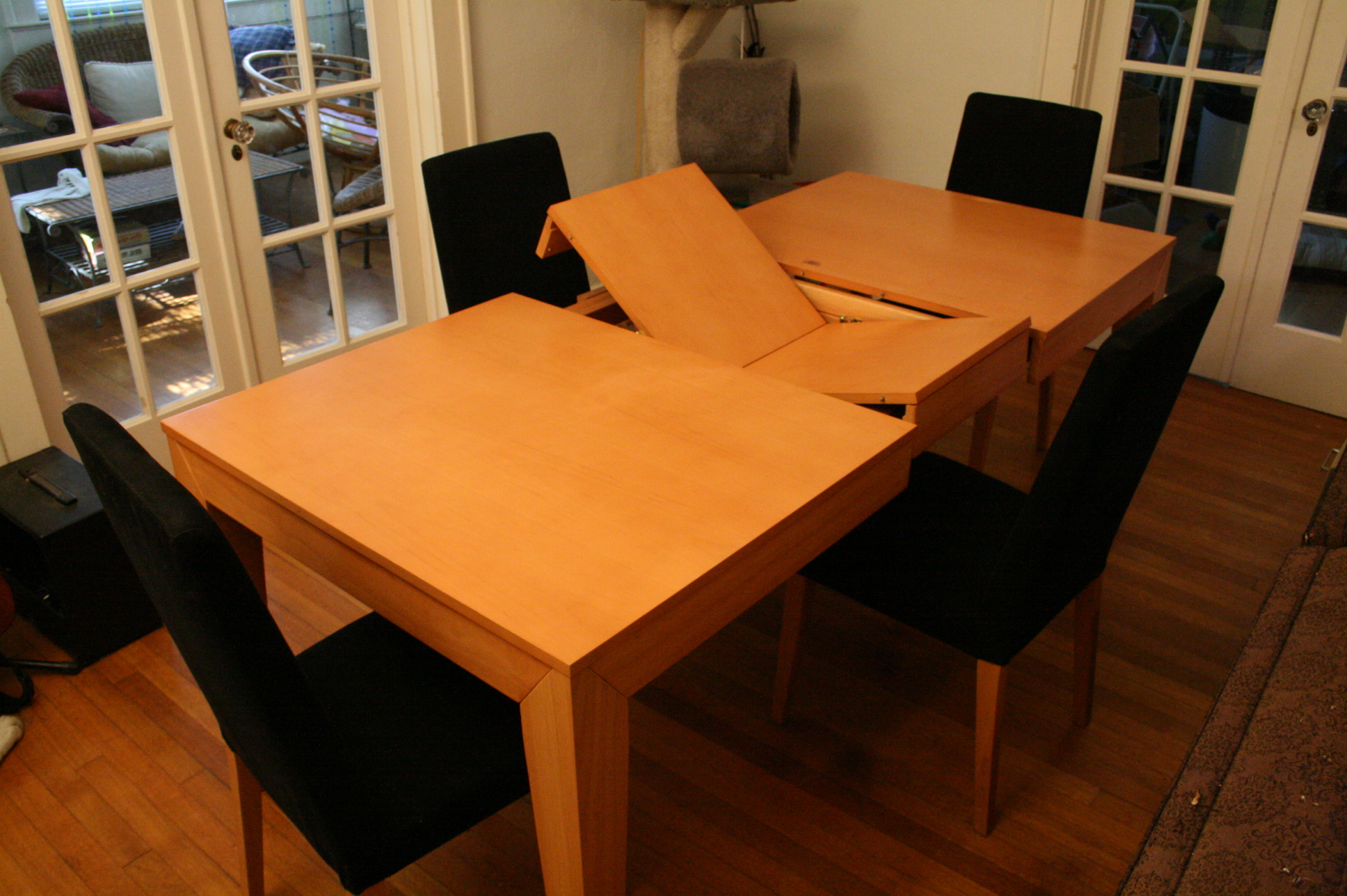
Central leaves, by contrast, require the top to part in the middle to make room for a section that rises from the frame, a solution that keeps the table symmetrical and leaves the legs where they are. The most refined versions synchronise the movement: on the Orbital by Calligaris, designed in collaboration with Pininfarina, two leaves slide out from beneath the elliptical top and the table seats up to ten. Finally, some mechanisms change the very geometry of the top, such as round tables that become oval: Calligaris’ Cyclone moves from round to oval with a patented mechanism and seats up to eight.
One detail to check in the showroom is that the surfaces sit flush: with the table open, the joins should be level, with no ridges to catch glasses and tablecloths. The quality of the runners matters too, because a metal frame sliding on runners ages better than a wood on wood system, which tends to stick in damp winter weather.
Corner legs or a central base: what difference does it make?
A central base frees the perimeter and lets people sit anywhere, corners included, while corner legs give stability but fix the places. With four legs at the corners, settings must be counted along the usable length between the legs, not the length of the top: a few centimetres of leg at each end can cost you a chair. On a very long table, some models also add a central support, which is worth checking before you buy.
A central base has its own rules, though. It must be broad and heavy enough to hold the open top steady when someone leans on one end, which is why on the best models the structure spreads from the centre towards the sides, as on the Eliot Drive by Cattelan Italia, from 2015, with a steel base and marble effect ceramic tops. It is the most elegant solution for an open plan living room, because the table reads as a single floating surface.

Which Italian extending tables have become benchmarks?
The 4×4 by Ozzio, designed by Giulio Manzoni, is perhaps the most radical case: its tops slide along a precise geometry and the table grows in length and width at once, from 100 by 200 to 138 by 254 centimetres. On paper, with four settings per side and two at each end, it seats twelve; in practice, allowing for the corner chairs, we would call it a comfortable table for ten. The base is a metal cross with adjustable feet, and the tops come in wood, concrete finish, Marble Glass or ceramic.
The Big Table by Bonaldo, designed by Alain Gilles and launched in 2009, turned its legs into a graphic statement: laser cut steel elements in geometric shapes and combinable colours. It also comes in an extending version reaching 300 centimetres with a depth of 100, precisely the size of a table for twelve. The top can be veneered in walnut or oak, or made in ceramic or marble, and for anyone who wants a table that opens up at Christmas and works as a collector’s piece for the rest of the year, it is a consistent choice, best completed with pieces from the best design homeware brands.
Which material copes best with a Christmas dinner?
Ceramic is the most forgiving surface: it resists hot dishes, cutlery scratches and wine stains, which is why many manufacturers offer it on extending models too, such as the Keramik versions by Cattelan Italia. Marble is beautiful and porous: citrus, vinegar and red wine mark it, so it needs sealing and the protection of a tablecloth or chargers.
Wood calls for extra care precisely on extending models. The leaves spend most of their life folded away in the dark, while the main top takes the light every day: over the years the colour can change unevenly, and the first time the table is opened for the holidays the difference in tone shows. Our advice is to open it now and then out of season too, so that the leaves age along with the rest.
A long top then needs dressing without crowding. The ideas in our guide to the Christmas table and our suggestions for a low, elongated Christmas centrepiece keep the conversation flowing from one end to the other, and the same table, with a change of palette, is ready for an elegant New Year’s Eve table.
Frequently asked questions about extending tables
How long should an extending table for 12 people be?
Around 300 centimetres when open, with a depth of 100: five people sit along each side and one at each end, allowing 60 centimetres per setting.
How much space do you need around the table?
At least 90 centimetres from the edge to the wall so guests can stand up easily. Where people need to pass behind the chairs, allow 110 to 120 centimetres.
Is a central base or four legs better on an extending table?
A central base lets guests sit at the corners and suits households where numbers vary; four legs are steadier but reduce the usable length.
Which material is best for a table that gets heavy use over the holidays?
Ceramic is the most resistant to heat, scratches and stains. Marble is sensitive to wine and citrus, and wood is warm but the leaves may take on a different tone from the top.
Can a round table work for festive gatherings?
Yes, if you choose a model that extends from round to oval. A 120 centimetre diameter seats six, and some models seat eight when open.