Twelve Christmas centrepiece ideas drawn from the work of floral designers and set designers, with the rules on height, width and light that keep conversation flowing.
A Christmas centrepiece is not an ornament placed on the tablecloth: it is a small landscape designed to sit forty centimetres from your guests’ faces, and like any design project it is measured in heights, proportions and light.
The Christmas centrepiece is the element that sets the character of the whole festive table, and it is also the one most likely to spoil it. The mistakes, from towering arrangements to scented candles and branches creeping into the place settings, are nearly always about scale, not taste. So we have gathered twelve ideas drawn from the work of floral designers and set designers, people who build compositions meant to be looked at up close and photographed from above, and translated them into rules that work on a table at home.

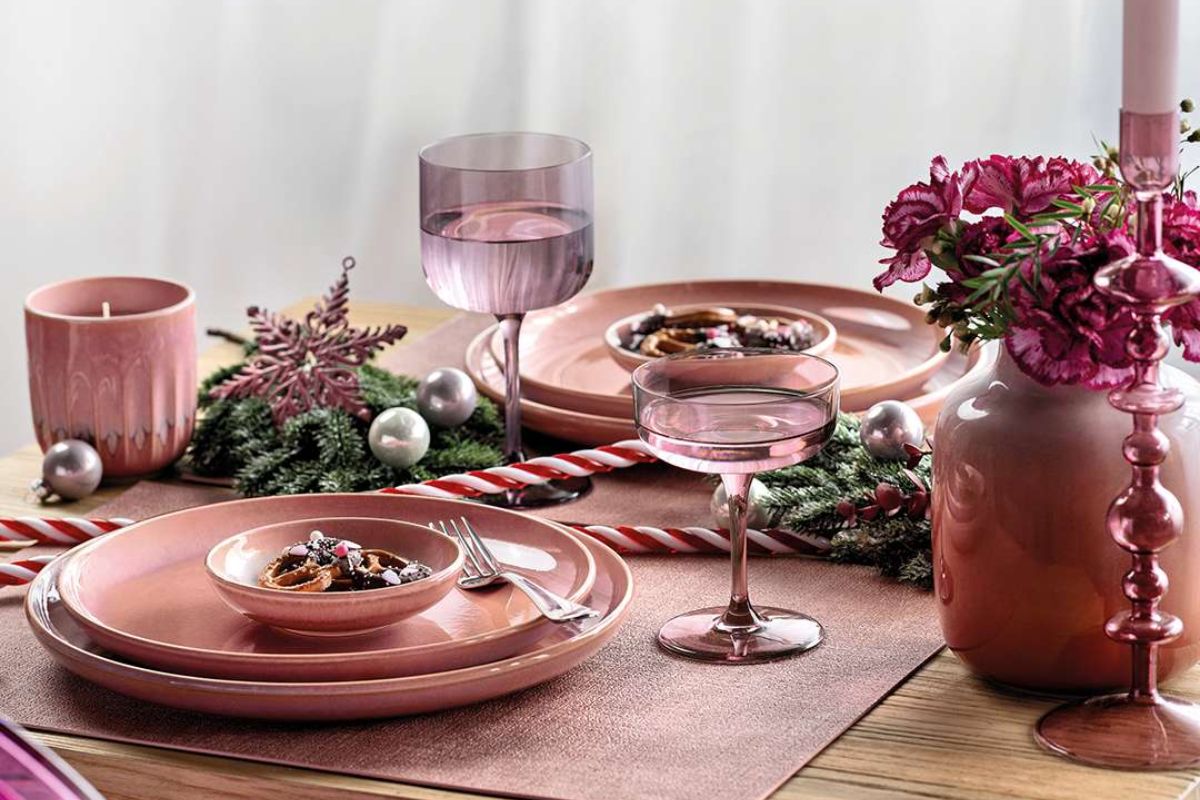
Our argument is simple. After years of tables piled high with objects, the centrepiece is becoming a piece of minimal architecture again: real materials such as branches, seasonal fruit, glass, wax and metal, a few carefully controlled heights, warm and low light. It is a shift in perspective that says a great deal about how we live the holidays now, with less spectacle to display and more intimacy to share around the same table. For the full place setting, from plates and cutlery to linen, see our guide to Christmas table styling and ideas for an impeccable place setting; here we focus on the centre of the table.
What are the rules of proportion for a Christmas centrepiece?
The first rule is that a centrepiece should never block the line of sight between two people sitting opposite each other. In practice that means staying below 30 centimetres from the tabletop, or going higher only with slender, transparent elements the eye can pass through. The no go zone is the band between 30 and 60 centimetres, exactly where seated guests’ eyes fall.
The second rule concerns width: a centrepiece should take up no more than a third of the table’s width, leaving room for plates, glasses and serving dishes. The third concerns length, which on a rectangular table works best at between half and two thirds of the top, leaving the ends clear. Our reference measurements are in the table below.
| Table | Typical size | Recommended centrepiece |
|---|---|---|
| Rectangular, seats 6 | 160 x 90 cm | A linear arrangement 80 to 100 cm long, no more than 30 cm wide |
| Rectangular, seats 8 to 10 | 220 to 260 x 100 cm | A continuous runner or two or three repeated clusters, no more than 30 cm wide |
| Round, seats 4 to 6 | 120 to 140 cm diameter | A single low central cluster about a third of the diameter |
| Square, seats 4 | 90 x 90 cm | One bowl or cake stand, or small scattered elements |
| Narrow or kitchen table | Less than 80 cm wide | No centre at all: small details beside each place setting |
On a table extended for the holidays, two or three clusters repeated at regular intervals work better than a single central piece, which looks lost on a long top. We cover this in our guide to the extending table for the festive season.
Which materials work best for a design led Christmas centrepiece?
The best materials are those that hold up to close inspection: real branches, foliage with a readable texture, seasonal fruit, glass, natural wax, metal with a patina. We would steer clear of fake snow, glitter and plastic imitations of nature: forty centimetres from your face, anything fake is obvious at once, and kitsch.
Among greenery, fir, pine, cypress, eucalyptus, olive and bay last for days out of water and smell pleasant without competing with the food. Among flowers, hellebore, known in Italy as the Christmas rose, amaryllis, ranunculus and anemones have just the right scale for a table. For the species that last all season, see our guide to Christmas plants.
What are the best Christmas centrepiece ideas from floral designers?
Floral designers work with living material: flowers that open over dinner, scents you only notice as you lean in. Here are the six ideas we think work best.
1. A low meadow of moss and hellebores
A low rectangular container in zinc, raw ceramic or wood, filled with moss and planted with potted white hellebores and a few sprigs of fir. It stays under 15 centimetres, you water it like a houseplant, and after the holidays the hellebores can go out into the garden or onto the balcony.
2. A wreath laid flat
The wreath does not have to hang on the door: lay it on the table as a ring of eucalyptus, olive and pine, with a candle at its centre or a row of low candles inside. It works particularly well on round tables, where the circle echoes the shape of the top and leaves the place settings free.
3. Single amaryllis stems in glass bottles
Stems of white or deep red amaryllis, one per bottle, in clear glass of varying heights lined up along the length of the table. Flower above eye level, slender stem, clear glass: this is the right way to bring height to a table without building a wall between your guests.
4. Bare, sculptural branches
Branches of birch, corkscrew hazel or wild apple, chosen for their line, in a heavy and stable vase. Place them at the ends of the table or on a nearby console, never in the middle, where their spread would get in the way of conversation.
5. A still life of winter fruit
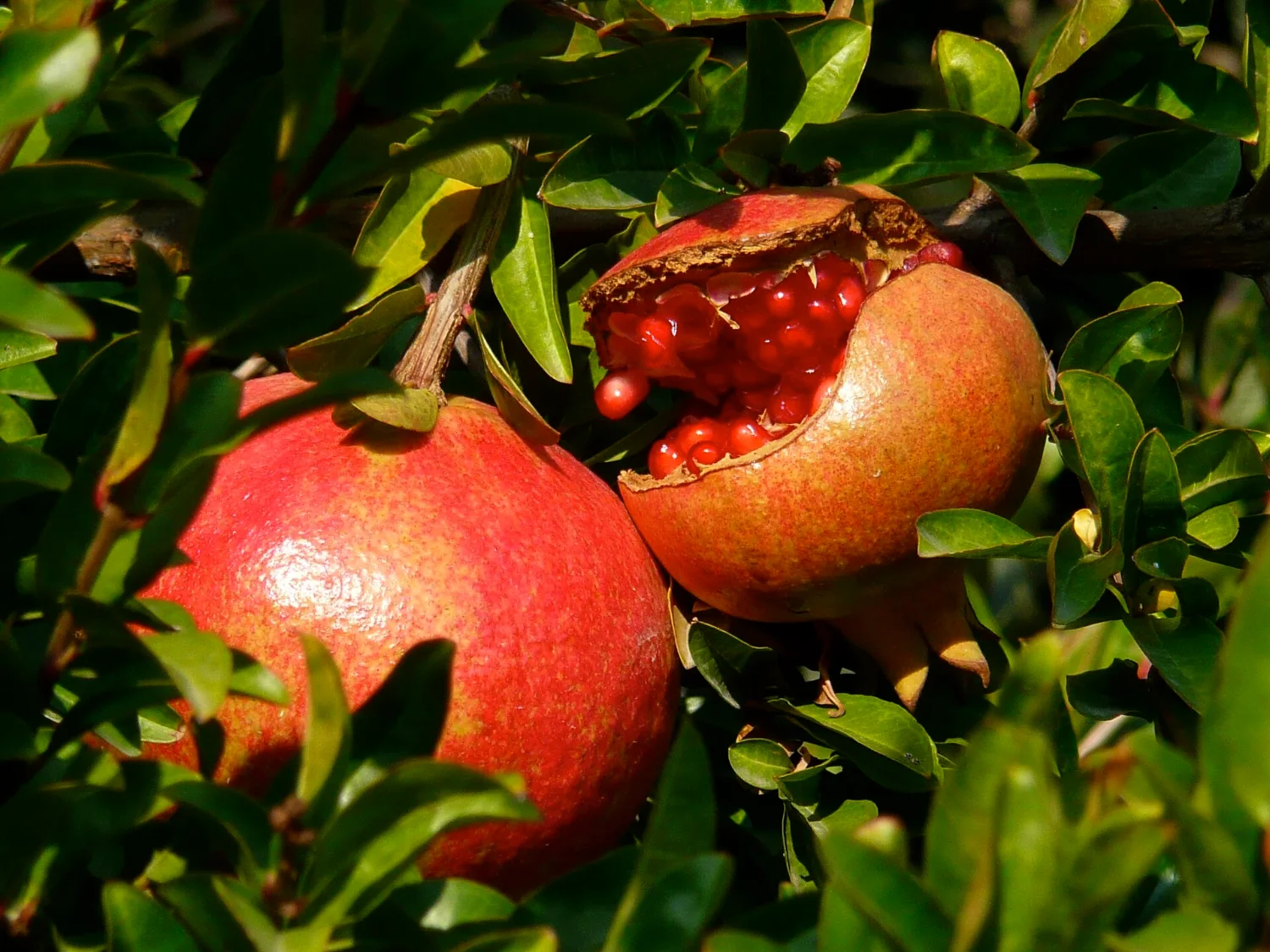
Split pomegranates, persimmons, quinces, pears and clementines with their leaves, arranged on a cake stand or straight onto a bed of greenery running down the table. The idea goes back to the fruit garlands of Italian painting, and it has a practical advantage: when dinner is over, the fruit gets eaten.
6. A row of single bud vases
Instead of one large arrangement, a line of small vases, each holding a single ranunculus, an anemone or a sprig of berries. Repeating the same gesture at regular intervals gives the table rhythm, and the length of the centrepiece can be adapted to any number of guests.
Which Christmas centrepiece ideas come from set designers?
Set designers think like exhibition designers, working with objects, reflective surfaces, light and empty space, and building the centrepiece as a scene viewed from above.
7. A runner of glass
A sequence of clear vases, bottles and candlesticks of different heights, some empty, others holding a single branch. A signature piece can serve as the focal point: the Fazzoletto vase by Venini, designed by Fulvio Bianconi and Paolo Venini in 1948, is an icon of Murano glass that holds the table even when empty, like a sculpture.
8. A mirrored base
A mirrored tray or panel beneath the candles doubles the light and multiplies the reflections of the glasses. A long, narrow surface with four or five candles of different heights is all it takes: the table looks lit from below, as if on a photo shoot.
9. All white
White ceramic, hellebores, ivory candles, cotton stems or silver eucalyptus. A serving platter from the Antico Doccia collection by Ginori 1735, white porcelain with a profile inspired by late Baroque Florentine silverware, makes an ideal base. A monochrome centrepiece works because it leaves all the colour to the food and the glasses.
10. Light without a flame
Next to dried branches, or on tables where children are playing, a portable rechargeable lamp is safer than a candle. The Battery lamp by Kartell, designed by Ferruccio Laviani, comes in a gold Metal version shaped like a small classic table lamp and brings a warm, steady light to the table for several hours.
11. The centrepiece that becomes dessert
Glass cake stands of different heights holding clementines, candied fruit, torrone and small festive sweets. The Alzate collection by Ichendorf Milano, in three diameters, lets you build a small stepped architecture that turns into the dessert course at the end of the meal.
12. The scattered centre
On narrow tables the best solution is to give up on the centre altogether. A sprig of fir tied to each napkin, a small candle beside every glass, a clementine with its leaf on each plate: the centrepiece spreads along the table and frees up space for serving dishes.
How should you use candles in a centrepiece?
Candles on the table should always be unscented, because at dinner fragrance competes with the food and the wine. We suggest combining no more than three heights, with low, wide candles in the centre and a few taller, slimmer ones towards the ends, and keeping every flame at least 15 centimetres away from branches, dried leaves and ribbon.
The colour temperature of the light matters too. Real candles give a warm glow that flatters faces and food; if the room has other light sources, dim them and choose warm bulbs, as we explain in our guide to Christmas lights at home. For objects and decorations that will outlast the season, our selection of the best Christmas decoration brands is a good place to start.
Frequently asked questions about Christmas centrepieces
How tall should a Christmas centrepiece be?
Under 30 centimetres from the tabletop, so it never blocks the line of sight; anything taller should be slender and transparent.
How wide should a centrepiece be in relation to the table?
No more than a third of the table’s width: on a table 90 centimetres wide, keep within 30.
Can you use scented candles on a Christmas table?
Best not, because fragrance interferes with food and wine: keep scented candles for the living room.
How do you make a Christmas centrepiece that lasts all season?
Use living plants instead of cut flowers, such as potted hellebores on moss, with hardy greenery like fir, olive and eucalyptus.