At Porro, furniture has always had an architectural vocation. A bookcase, a wardrobe, a living room system or a partition does not stop at its function: it becomes part of the grammar of space, regulating solids and voids, proportions, passageways and thresholds within the home. It is a design culture built on measure. Measure as …
At Porro, furniture has always had an architectural vocation. A bookcase, a wardrobe, a living room system or a partition does not stop at its function: it becomes part of the grammar of space, regulating solids and voids, proportions, passageways and thresholds within the home.
It is a design culture built on measure. Measure as formal control, as attentiveness to the room, as the ability to create continuity without weighing things down. In Porro’s language, essentiality is not a cold act of subtraction but a search for balance: removing the superfluous so that the quality of detail, industrial precision and an almost artisanal sensitivity can come through in every system.
In this interview for Archi & Interiors, Maria Porro describes a vision of living in which the product becomes part of a larger design. The contemporary home is fluid, crossed by overlapping functions: living, working, hosting, storing, displaying, protecting. Porro responds to this complexity with systems that can adapt over time, from Glide partitions and floor-to-ceiling compositions to made-to-measure solutions where the line between furniture and architecture almost disappears.
The result is a recognizable world, quiet and precise, where every element helps build the space without imposing itself. The Load-it bookcase, a long-seller since 1995, speaks to the ability to stand the test of time; the Origata console, designed with Nao Tamura and awarded an Honorable Mention at the ADI Compasso d’Oro, Italy’s leading design award, shifts the conversation to material, design gesture and waste reduction.
Through furniture systems, material research and close relationships with architects and interior designers, Porro defines an idea of an evolved Made in Italy: design culture, manufacturing reliability, international outlook and attention to detail. A measured position, but anything but neutral.
Below is the full Maria Porro interview.
Systems, measure and interior architecture: the Maria Porro interview
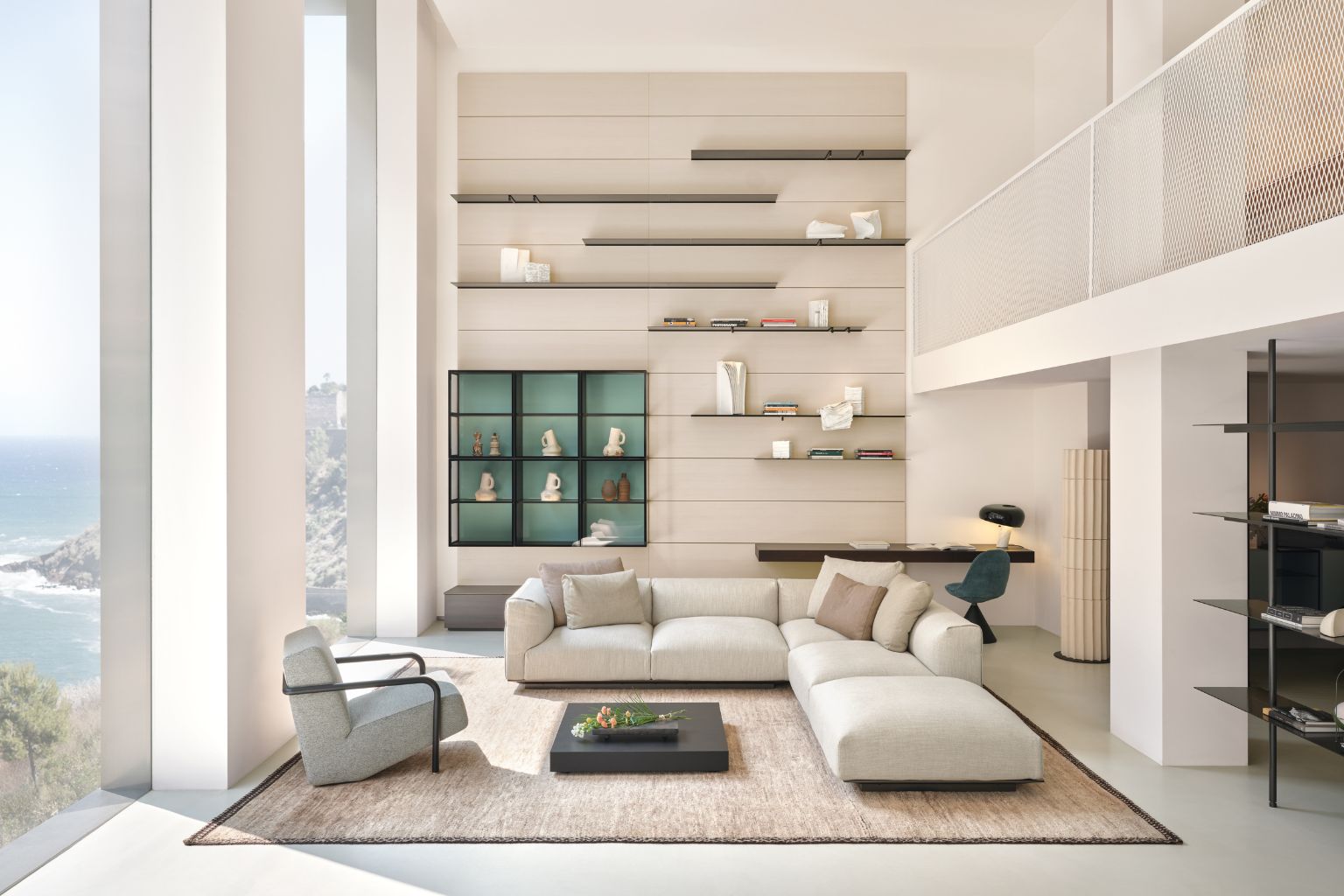
For a long time, furniture was described through individual products: a bookcase, a table, a storage unit, a bedroom system. Today, interior design calls for something broader: relationships between space, function, architecture and everyday life. Where does Porro stand in this shift?
“For Porro, the focus has never been the single piece of furniture, but the way elements help build space. We have always worked on systems that engage with architecture and keep pace with how people live.
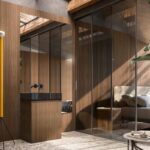
“In recent years, this path has brought us even closer to spatial design. The Glide partitions go in this direction: they allow rooms to be configured flexibly, adapting them to needs that change over time.”
Porro is often associated with an essential, measured, recognizable language. But essentiality, when it is genuine, is never cold subtraction: it is balance, proportion, the ability to leave room. What does working on the essential mean to you?
“Yes, that’s true. Essentiality has always been part of Porro’s language. It is an approach that leads us to seek balance and clarity, without adding anything that does not have a function or a meaning.
“This apparent simplicity is often the result of very complex research and design work. The goal is to create products that last, not only because of their quality, but also because they stay relevant and can work in very different settings.”
Systems are central to your identity. It is not only about storing or organizing, but about creating visual continuity, solids and voids, surfaces and passageways. When does a furniture system truly become interior architecture?
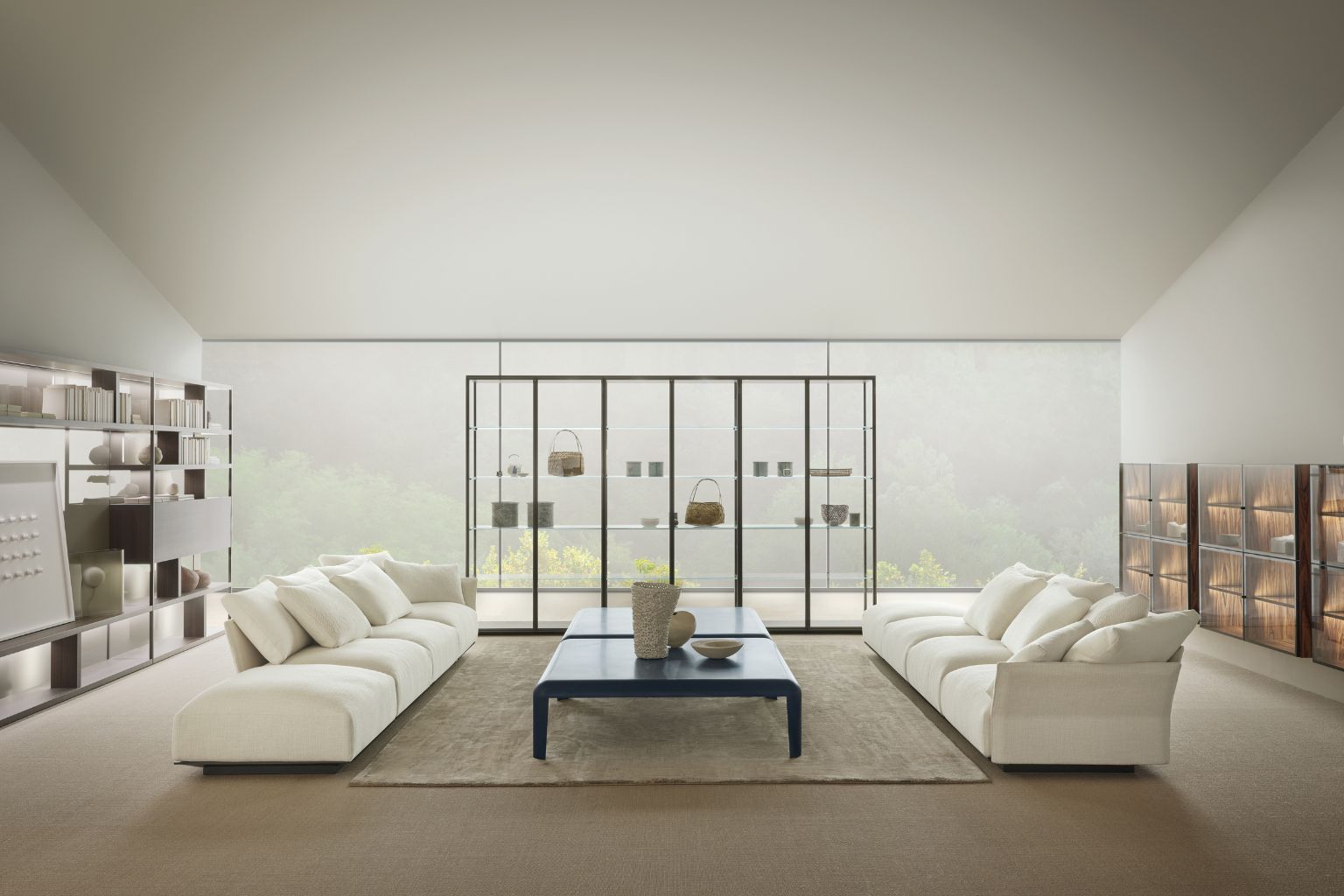
“When it manages to change the way spaces are used. For us, a system is not simply a set of elements that combine with each other, but a tool for interpreting different and constantly evolving needs.
“It becomes interior architecture when it does not just occupy a space but helps define it, creating connections, separations, pathways and new possible uses. This approach is part of Porro’s history and continues to guide the way we design.”
The contemporary home is less and less divided into rigid functions and increasingly shaped by different needs: living, working, hosting, storing, displaying, concealing. How does Porro interpret this idea of a more fluid home?
“Functions are no longer as separate as they used to be, and they often coexist in the same space. The home has become a more dynamic place that has to adapt to different needs and different moments of the day. Our job is to interpret this complexity through systems that are flexible and able to adapt over time. It is an ongoing challenge, because the way we live is changing quickly, but it is also one of the most stimulating aspects of contemporary design.”
In your work, measure seems to have almost cultural value: measure as proportion, as control, as listening to a space. How important is it to read a room before furnishing it?
“It is extremely important. Every one of our projects starts from the space it will be placed in. Since we have always worked on systems, dialogue with the architecture and the specific features of each room is an integral part of our approach.
“Since 2018 we have taken this logic further by making our production completely flexible. We don’t start from standard modules to be adapted, but from the project itself: production follows the shop drawings, which allows us to respond precisely to the needs of each space.
“You can see this especially in floor-to-ceiling and wall-to-wall compositions, where the systems integrate with the architecture to the point that the line between furniture and architecture almost disappears. It is a way of working that combines industrial capability with artisanal care, aiming for a result that feels as natural as possible and consistent with its context.”
Made to measure is a widely used, often overused, term. In Porro’s case, though, it seems to point to a deeper quality: interpreting a space without losing coherence, customizing without giving up identity. What does made-to-measure design really mean to you?
“For us, made to measure does not mean offering endless options, but finding the most suitable solution each time for a space and the people who live in it, while keeping design coherence.
“Our strength lies precisely in combining freedom and identity. On the one hand, we offer great flexibility in dimensions, configurations and finishes; on the other, there is a precise language, made of proportions, details and quality, that makes every project recognizable.
“I think people who choose Porro are looking for both: the chance to express their own taste and needs, knowing they can count on a solid design vision and on quality that comes from years of research and from working with designers who share our approach.”
A well-designed home is often recognizable not only by what it shows, but by what it manages to solve: order, circulation, storage, the relationship with light, proportions, everyday gestures. How much does this quiet, invisible side of design matter?
“A great deal. The quality of a project is often measured precisely in its less obvious aspects, the ones that contribute to everyday well-being without drawing attention to themselves.
“I’m thinking of technology integrated into the systems, the care taken over proportions, the way light is studied and guided within the compositions. These are elements you often don’t notice right away, but they make all the difference in how a space is experienced.
“For us, a project truly works when everything feels natural and simple, even if there is a huge amount of research, development and attention to detail behind it.”
Porro’s catalog includes living room systems, bedroom systems, wardrobes, storage units, bookcases, tables and accessories. Rather than describing individual products, we are interested in what holds them together. What is the design thread that makes the Porro universe recognizable?
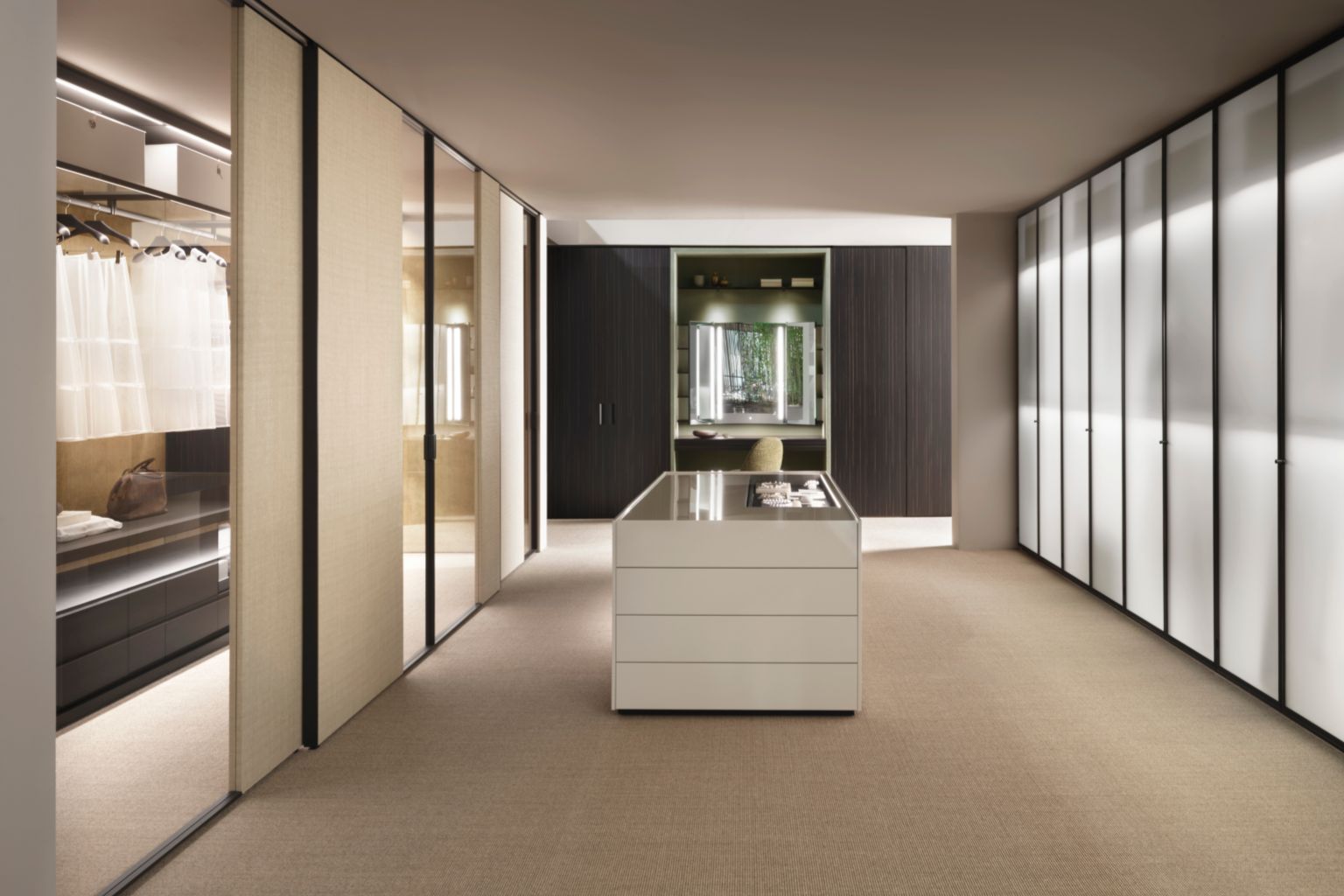
“Rather than in a single element, the thread that holds the Porro universe together lies in the way we approach design: attention to proportion, research into materials and a constant relationship between industrial precision and an almost artisanal sensitivity.
“It is this balance that makes our work recognizable across different product categories. Whether it is living room systems, bedroom systems or storage, the underlying idea is always the same: to build spaces that are coherent and essential, but never cold.
“Perhaps that is also what you sense when you walk into a Porro interior: a certain continuity, a calmer rhythm, where the elements don’t impose themselves but build the space together.”
Your furniture often has a discreet yet very strong presence: it defines space without invading it. Is this ability to be present without showing off a deliberate design choice?
“Absolutely. For us, durability is central. A piece of furniture is not ephemeral but something that accompanies everyday life over time.
“That is why we work on pieces that can resist trends and relate to one another even if they were designed at different times. The idea is to build a coherent language that can evolve without losing its identity.
“Take, for example, the Load-it bookcase from 1995, which is still a long-seller today: a design that has stood the test of time while staying relevant and fitting into very different settings.”
Materials and finishes have become a key language in contemporary interior design. They communicate not only taste but atmosphere, durability, tactility and depth of space. Which directions in material research do you find most interesting today?
“Materials and finishes are central to our work, because they help define not only the aesthetics but also how a space is perceived, its atmosphere and its tactile quality.
“In our latest projects we have explored different directions. With the Ryo bookcase by Nao Tamura, the Ferro table and the Modern system, we worked on metal finishes, particularly polished aluminum, which brings a precise, contemporary material quality.
“For wardrobes, we introduced Tecno Suede, a technical fiber that is soft to the touch and designed with sustainability in mind, certified OEKO-TEX Standard 100 Class 1.
“Glass, used in the Glide partitions and in some wardrobe solutions, is interpreted through surfaces such as satin or clear reeded glass, which filter views without closing off the space.
“Alongside these experiments, wood remains a fundamental material for Porro: in new finishes such as brown-stained full-grain elm, the material is celebrated in its natural character.
“Rather than a single direction, it is a set of research paths that enrich our language every year.”
If you had to choose a product, system or detail that particularly represents Porro’s identity, which would it be and why? We would also like to share what usually stays behind the scenes: the initial idea, the design process, technical choices, prototypes or production details.
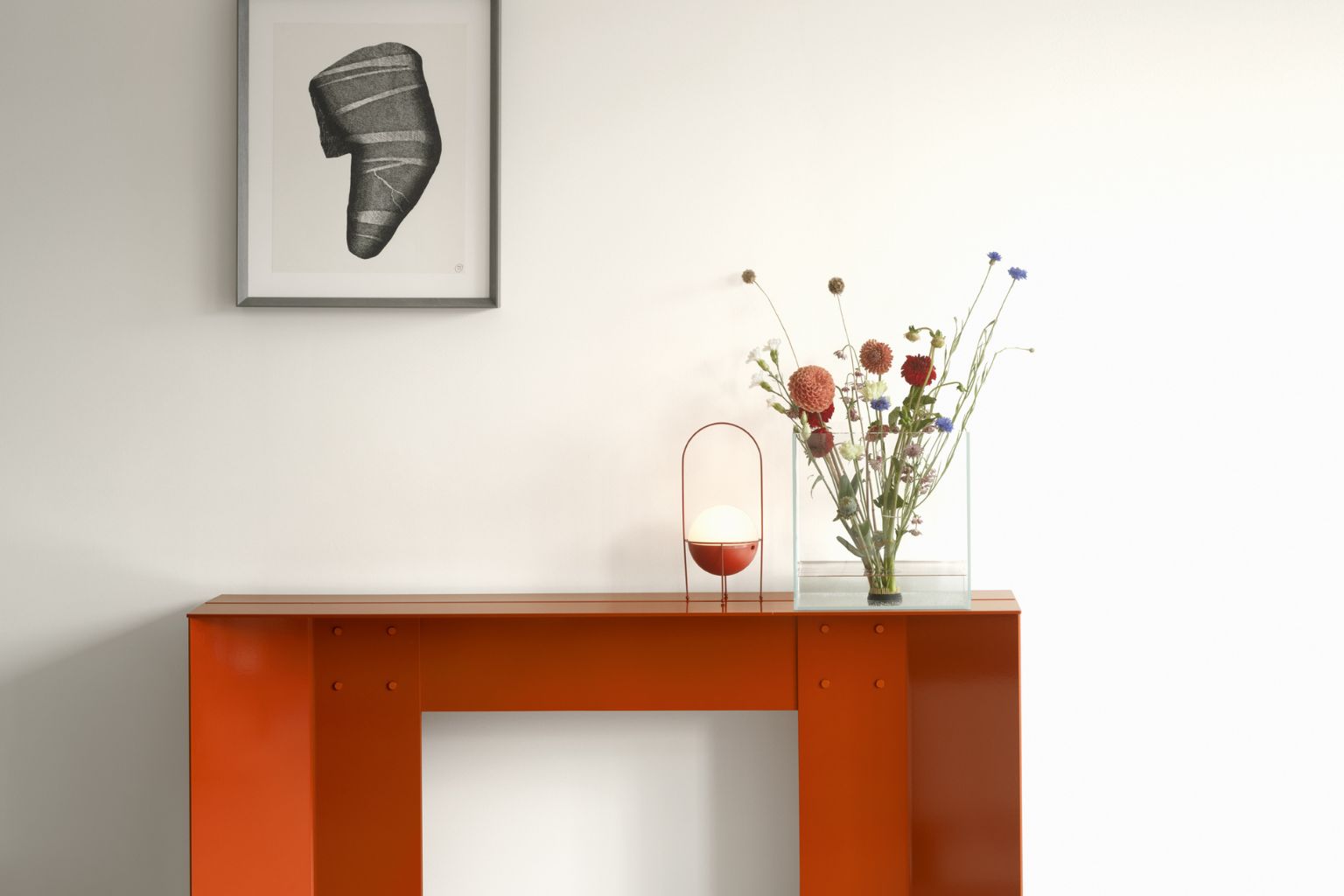
“One of the projects that best represents Porro’s identity is the Origata console, designed with Nao Tamura. It is a project I feel particularly close to, because it came from a dialogue between different sensibilities that share the same way of thinking about design.
“The idea takes its inspiration from the way kimonos are cut, where the fabric is worked to keep waste to a minimum. The same principle was applied to the aluminum sheet from which the console takes shape.
“It is a simple, very essential object, but precisely for that reason it demands great design and technical precision. We are delighted that the project received an Honorable Mention at the 29th ADI Compasso d’Oro Award. With this recognition, given to projects that stand out for design quality, research and innovation, Origata has become part of the ADI Compasso d’Oro Historical Collection.”
Porro has always worked with architects, interior designers and specifiers. In these professional relationships, the product is only part of the story: reliability, flexibility, technical tools, support and the ability to read a space matter too. What do designers ask of a company like Porro today?
“Quality is certainly the first thing. Designers turn to Porro because they recognize solid design, a coherent language and a constant focus on innovation in materials and solutions.
“Alongside that, there is a broader question of reliability that covers the entire process: from design and technical support to installation and long-term service. Today people don’t just want a product, but a partner able to follow the project through all its stages.
“In this sense, our international network and our close work with architects and interior designers become an integral part of the project itself, not just an add-on service.”
The relationship with designers is one of the most important elements in the history of Italian furniture companies. How do you choose who to work with? Do you look for a similar sensibility, technical expertise or a perspective that can open up new directions?
“Starting new collaborations is not easy, because for us the relationship with designers is a process that takes time and mutual listening.
“A shared sensibility matters, but so does a different perspective that can open new directions. That is the case, for example, with Nao Tamura and Yabu Pushelberg, with whom we recently began working.
“At the center there is always the human relationship: a product is the result of a long journey that develops over time and is built through constant dialogue. That is why the ability to work together openly and constructively is essential.”
In high-end furniture, Made in Italy can no longer be just an aesthetic image. It has to become a method, a culture of detail, reliability, manufacturing capability and dialogue with designers and international markets. What does representing an evolved Made in Italy mean for Porro today?
“For us, Made in Italy is not just an image but a way of working. It means design culture, attention to detail and manufacturing capability.
“Today this also translates into a strong international outlook and an ongoing dialogue with designers, schools and local communities. No company can think of itself in isolation anymore: working as a network has become part of what keeps you competitive.
“In this sense, representing an evolved Made in Italy means continuing to invest in product quality, but also in relationships and in the ability to innovate the process as a whole.”
It’s 2036. If you imagine Porro ten years from now, what would you want to have remained intact in the company’s character, and what would you like to see transformed more boldly?
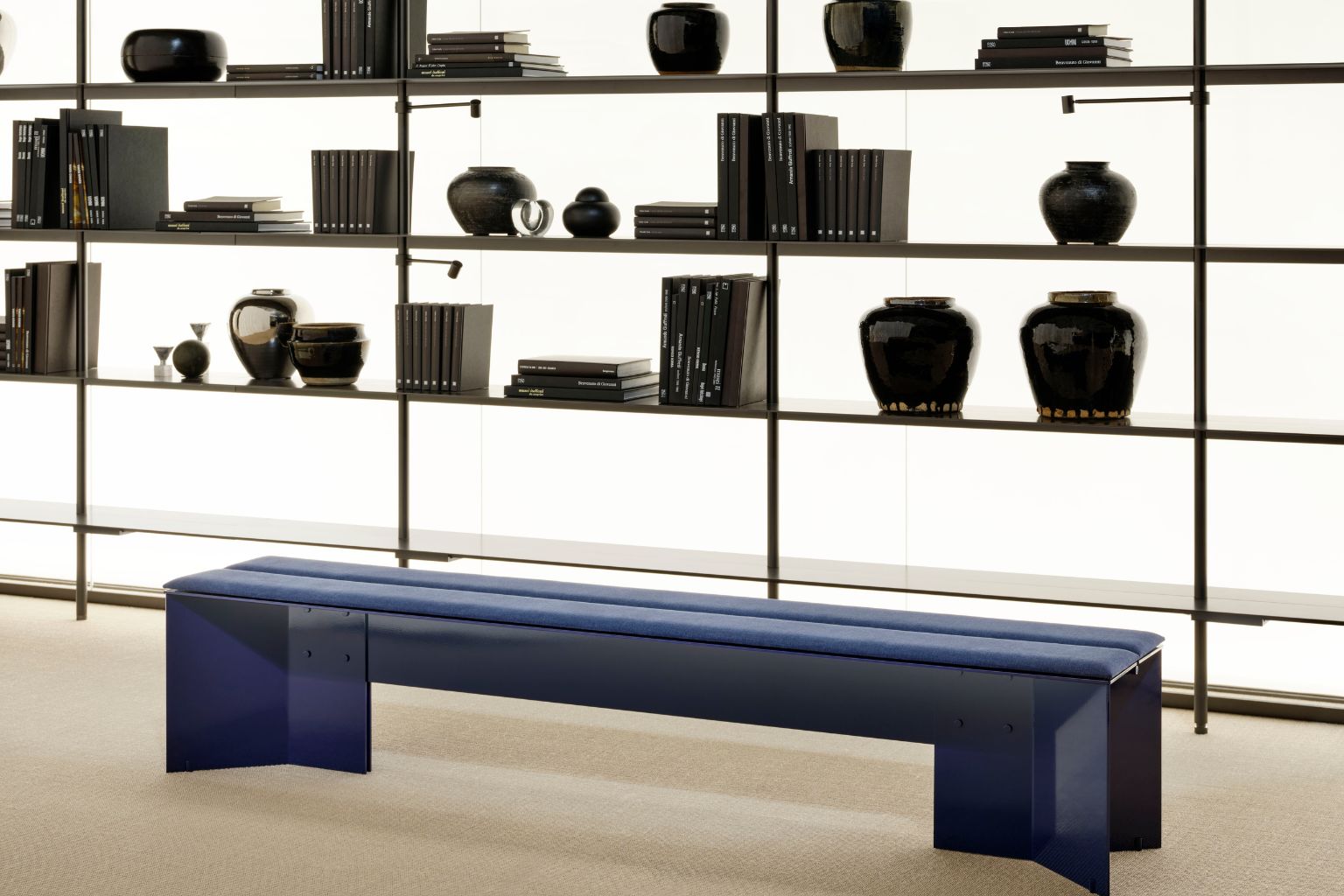
“Over more than a hundred years of evolution, Porro has changed enormously, but what has remained intact is our approach to design and our care for every detail.
“It is hard to predict exactly what will happen in the next ten years, but I believe these will remain the cornerstones of the Porro of tomorrow.”