Discover what colour terracotta is, find its HEX code and explore four palettes for walls, furniture and terracotta floor tiles.
Terracotta is a warm, earthy colour between burnt orange and muted red, with brown undertones. The shade takes its name from fired clay and can lean towards dusty pink, brick red or ochre. If you are wondering what colours go with terracotta, start with ivory and oak for a light palette, sage green for a softer contrast, or cobalt blue for a stronger one. In a room with terracotta floor tiles, look at the floor in daylight first. Its undertones can guide everything from the wall paint to the upholstery.
What colour is terracotta? Shades, HEX and RAL
Terracotta belongs to the family of warm earth tones. Brick red generally looks redder, while rust has a stronger orange cast in the comparison below. Real terracotta tiles can vary across the same floor. Look at several tiles together and include the grout in your comparison, since it can make the same clay look either lighter or deeper.
| Shade | Reference HEX | Where to use it |
|---|---|---|
| Light terracotta | #D39B86 | Soft and pink-leaning. Try it on a large wall or in a bedroom with pale furniture. |
| Terracotta | #B86A52 | A muted, warm shade with a recognisable balance of red, orange and brown. |
| Burnt terracotta | #9B4F3F | Deeper and browner. Use it to bring out an alcove or the back of a bookcase. |
| Rust | #A94C2A | More orange in this comparison. Works on a small piece of furniture or an accent textile. |
The terracotta HEX code used in this guide is #B86A52 (RGB 184, 106, 82). Paint brands use the name for different shades, so treat it as a digital reference. For a lacquer in the same family, compare RAL 8004 (Copper brown) and RAL 8023 (Orange brown) in the RAL Classic chart. Check both samples beside the finished floor or furniture and look at them under your evening lights.
What colours go with terracotta? Four palettes
Terracotta, ivory and natural oak
Terracotta #B86A52 · Ivory #F3EDE0 · Natural oak #B78E63
Use ivory on larger surfaces and reserve terracotta for the wall behind a bookcase or a single alcove. Natural oak can bridge the two colours in the flooring or a sideboard. If your oak already has a golden finish, try a less yellow ivory near the skirting board so the timber and paint remain distinct.
Terracotta, sage green and sand
Terracotta #B86A52 · Sage green #A3AD98 · Sand #D8C8AA
In a kitchen, sage green cabinets sit comfortably above a terracotta floor or beside clay-toned backsplash tiles. Use sand for curtains or open wall space. With a particularly red floor, compare a grey-toned sage with a yellower one directly against the tiles. The difference is easier to see there than on a paint card.
Terracotta, cobalt blue and cream
Terracotta #B86A52 · Cobalt blue #0047AB · Cream #F5E8D2
Against a cream backdrop, use cobalt blue for an armchair, a side table or a lamp base. Let terracotta take the wall behind it or carry through from the floor. When both colours cover large surfaces, a pale linen curtain or a cream rug gives the eye a place to rest.
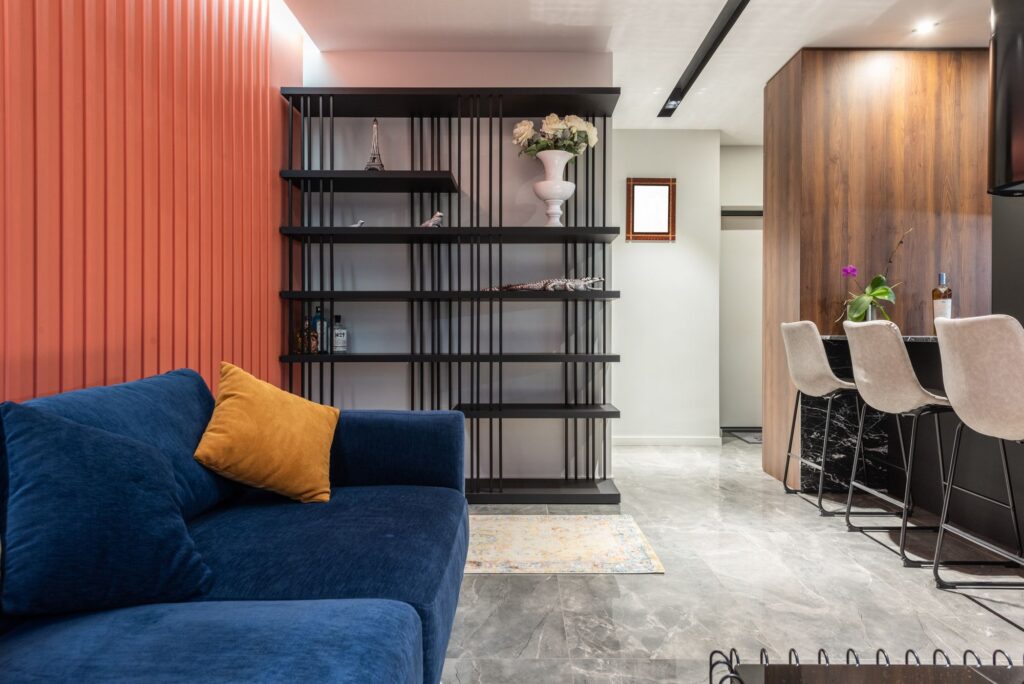
Terracotta, burgundy and dusty rose
Terracotta #B86A52 · Burgundy #6D3445 · Dusty rose #BE9394
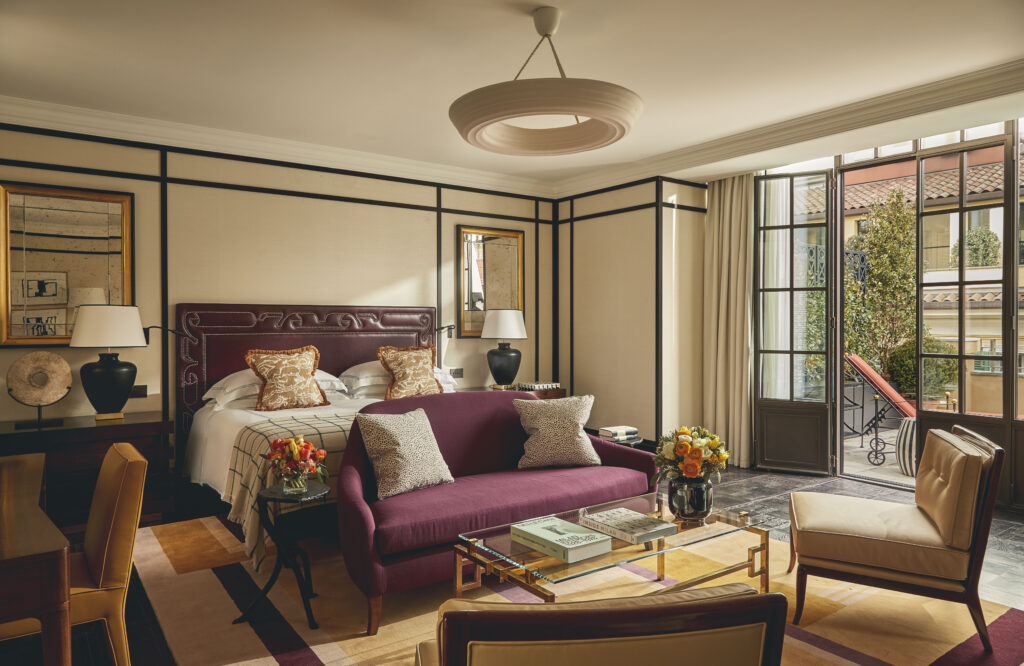
A burgundy sofa gains depth against a terracotta wall. Dusty rose picks up the pink undertones across the palette, especially on a cushion or a lighter chair. In a dim room, use burgundy on one standout piece and test a paler terracotta on the walls. See our Neo Deco interiors guide for an example of the deeper pairing.
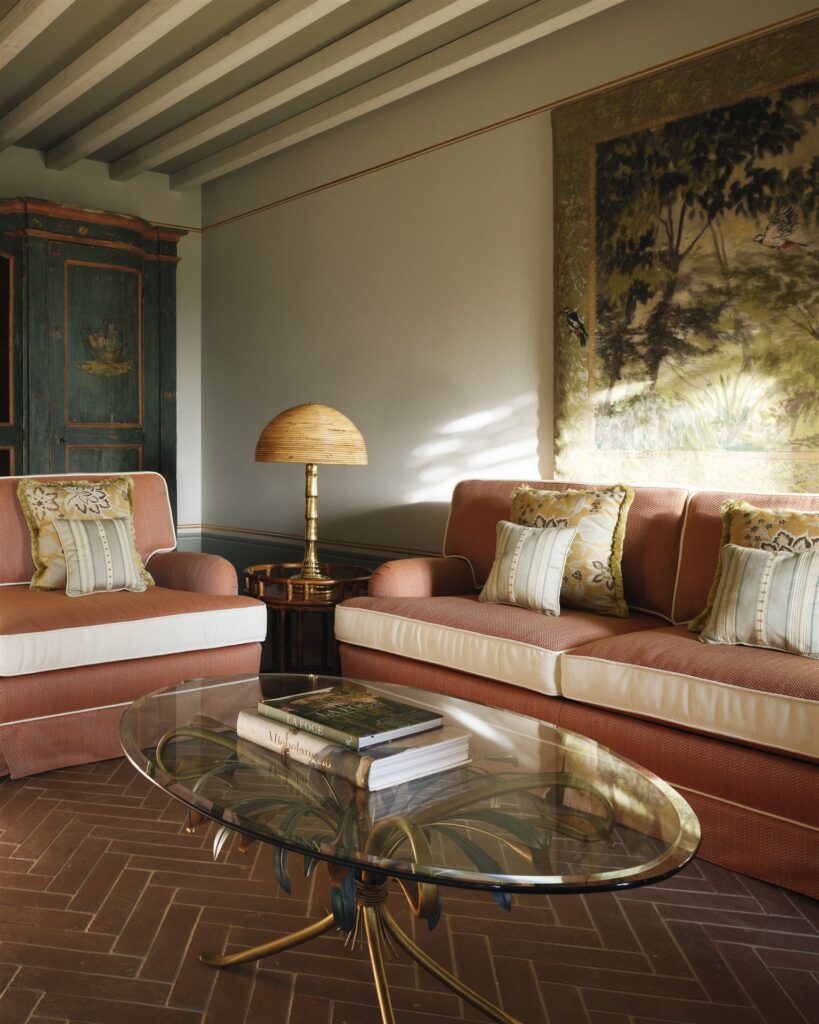
How to use terracotta in each room
Terracotta walls in living rooms and bedrooms
In a living room, terracotta paint can anchor the seating area or frame a built-in bookcase. A matt finish gives a broad wall a more even appearance. Check it from the side, where daylight brings out the wall texture. In a bedroom, try a pink-leaning terracotta behind the headboard and pair it with ecru linen. Put the paint sample beside the bedding and turn on the bedside lamp before deciding.
Terracotta kitchens and bathrooms
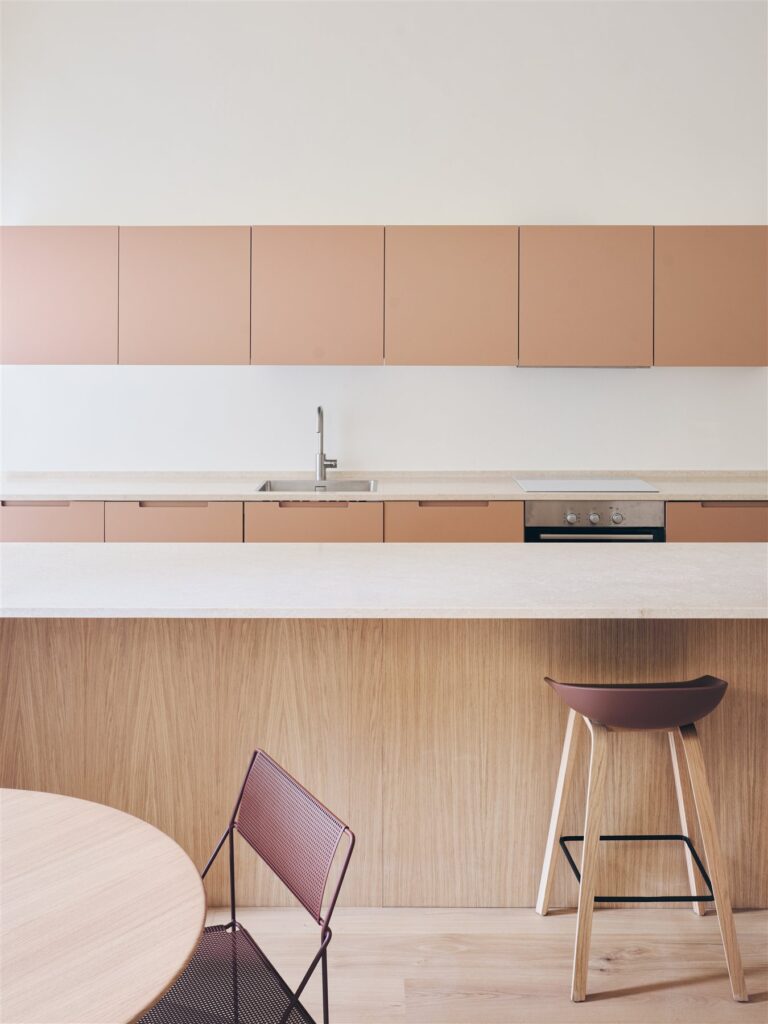
In the kitchen, bring in terracotta through island cabinetry, glazed backsplash tiles or a painted wall. If the worktop is veined stone, compare the paint, stone and hardware side by side. In the bathroom, try terracotta tiles in the shower recess or behind the mirror. Lay out at least four tiles with a grout sample. Pale grout highlights the tile pattern, while a close colour match gives the surface a more continuous look.
What wall colours go with terracotta floor tiles?
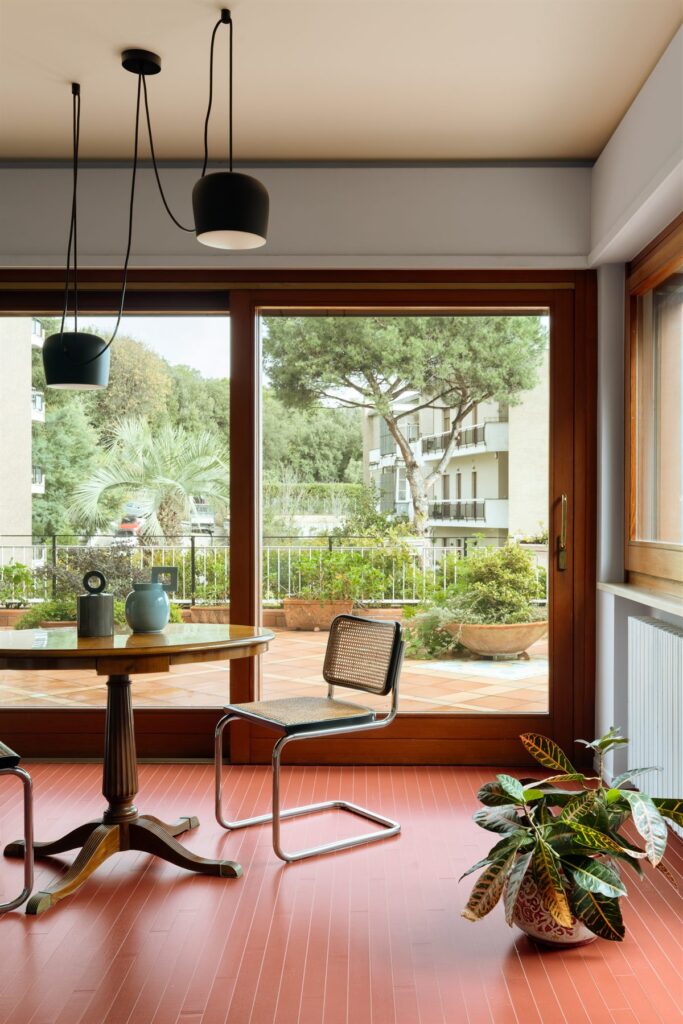
Start with soft ivory or sand beige for a dark or red terracotta floor. If the tiles lean more orange, try a muted sage green. For an earthy palette throughout the room, choose a terracotta wall colour lighter than the floor and add a large neutral surface, such as a linen curtain or a pale sofa.
Put two paint swatches near the base of the wall, then move them up to eye level. Near the floor you can judge how their undertones interact with the tiles. Higher up, you get a better sense of how light or dark the walls will feel.
Pros and cons of terracotta in interiors
- It adds warmth to simple spaces. A clay-toned finish can make an alcove or a large piece of furniture stand out in a pared-back room.
- You can introduce it gradually. A ceramic lamp, a throw or an armchair lets you see how the colour shifts in your own light.
- Dark shades can weigh down a room in shadow. If the space already contains reddish woods and deep browns, compare a lighter terracotta before painting all the walls.
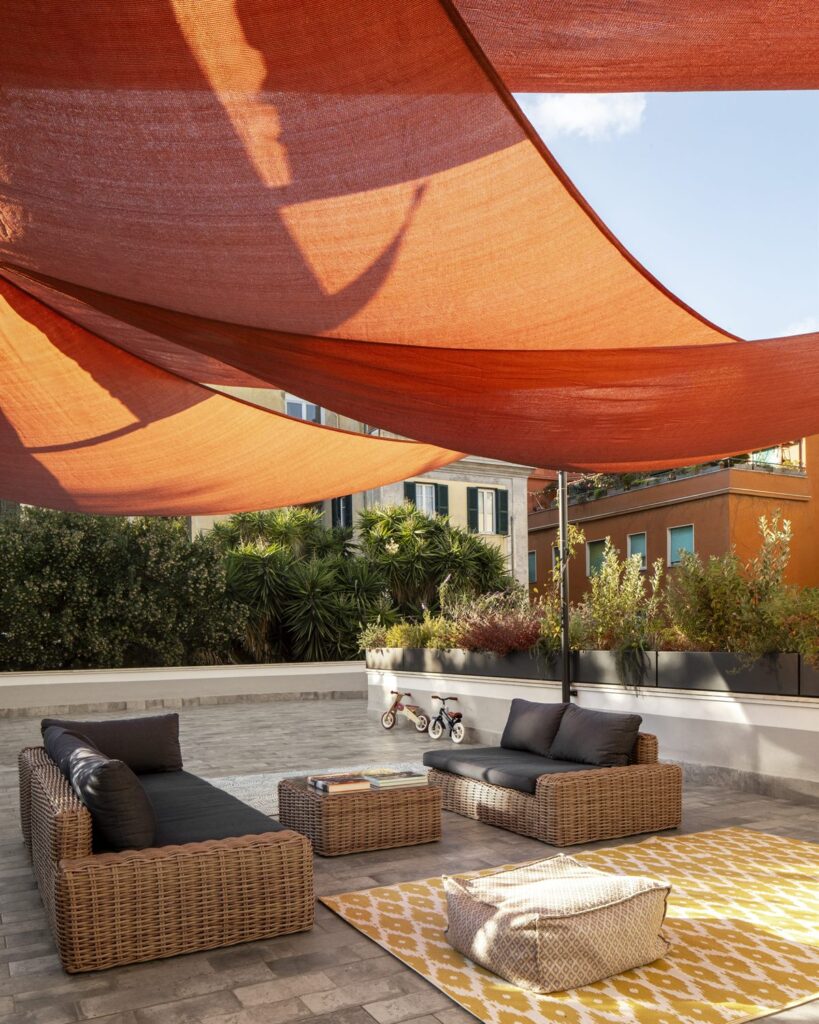
Frequently asked questions about terracotta
Does terracotta work in a small room?
Yes. Use terracotta on the shorter wall, inside an alcove or on a low cabinet. A pale ceiling helps draw attention to the colour. For a more enveloping effect, test a light terracotta on two adjoining walls.
What is the complementary colour of terracotta?
It depends on the undertone. Blue gives orange-leaning terracotta a crisp contrast, while a muted green can balance a more red or pink-leaning shade. Compare paint and fabric samples under the same light to see which pairing suits your room.
Are terracotta and rust the same colour?
They are related earth tones. In the palette above, rust is deeper and more orange, while terracotta is softer and slightly pinker. Paint brands may use the names differently, so compare physical samples before ordering.
This guide is part of the Archi&Interiors Home Colour Dictionary.
Cover photo. The circular room at Hotel Trame in Rome, designed by Valeriano Boragina. Photo by Serena Eller.