Eataly history: its name, founder Oscar Farinetti, Investindustrial ownership, store concept and locations in Italy.
Eataly grew from Oscar Farinetti’s idea of bringing a market, restaurants and food culture together in one place devoted to Italy. Its first location opened in Turin in 2007 inside the former Carpano vermouth factory. The brand then carried its “eat, shop, learn” model to major cities in Italy and around the world.
| A few interesting facts about Eataly |
|---|
| Oscar Farinetti sketched the first Eataly concept on paper in November 2002. |
| The name blends the English words “eat” and “Italy” and evokes “eating Italian”. |
| The first Eataly opened at Torino Lingotto on 27 January 2007. |
| Market, restaurants and education share the same space. |
| Investindustrial has been Eataly’s controlling shareholder since 2023. |
| Several locations occupy converted buildings, from the Carpano factory to the Teatro Smeraldo. |
What is Eataly?
Eataly is an Italian company that combines food retail, restaurants and education. Fresh-food counters, grocery shelves, kitchens, restaurants, cafés, workshops and classes meet under one roof. Size and services vary by location, although the principle remains recognisable: visitors can often buy what they taste and learn about the origin, producer and method behind what they buy.
This overlap separates Eataly from both a conventional supermarket and a restaurant. A visitor can shop, stop for a meal, watch some foods being made and join a lesson. The Eataly Manifesto sums up the idea as “Eat. Shop. Learn.” and places quality, knowledge and conviviality at its centre.
What does the name Eataly mean?
Eataly blends the words eat and Italy. The official explanation renders it as “Eating Italian”: an invitation to understand the country’s food culture, the variety of its regions and the ways its products are prepared. The word works across languages and immediately communicates food and place.
Before launch, the idea also appeared as “Eat Italy”. The contracted form Eataly turns two familiar words into a short, easily pronounced brand. Its simple logo and highly visible signs then help people navigate complex interiors where several functions coexist.
Eataly history since 2002
The official Eataly history begins in November 2002, when Oscar Farinetti sketched the concept on a piece of paper. Five years of research and producer scouting followed, supported by Slow Food. The project sought to make quality food accessible, celebrate Italian biodiversity and create an informal place in which people would want to spend time.
Eataly Torino Lingotto opened on 27 January 2007 in the former Carpano factory. Bologna followed in 2008 with a formula joining books and food. The first store outside Italy opened in Tokyo in 2009, while the brand reached New York’s Flatiron district in 2010.
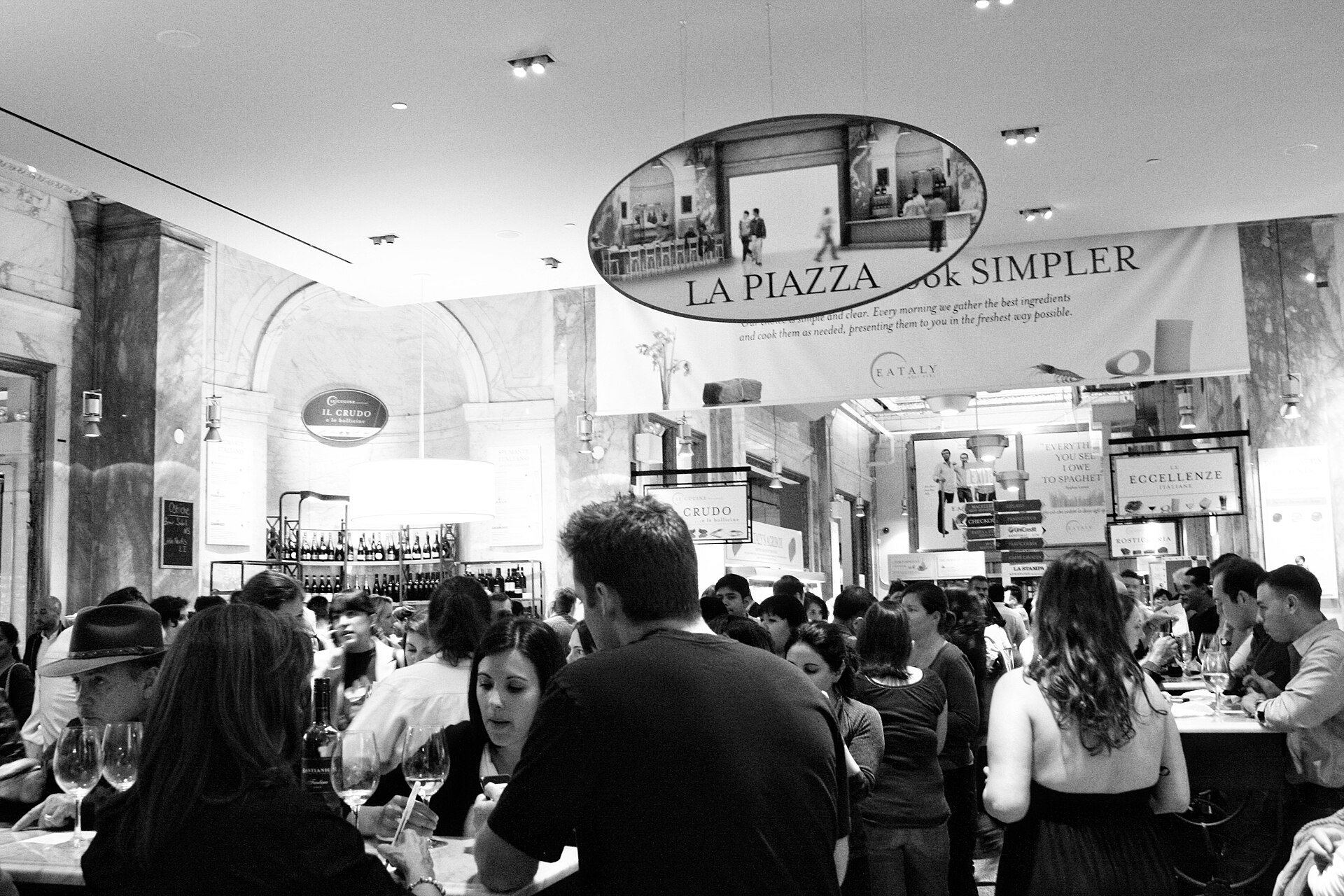
Roma Ostiense opened in a former air terminal in 2012, and Milano Smeraldo occupied the historic theatre facing Piazza XXV Aprile in 2014. The network later spread across Europe, North America, the Middle East and Asia through directly managed locations and franchises.
Who is Oscar Farinetti, the founder of Eataly?
Oscar Farinetti is an entrepreneur from Piedmont. Before Eataly, he developed the family business UniEuro into a major electronics retailer and sold control in the early 2000s. His new venture changed sector while retaining a clear logic: a large format, an understandable selection and a strong identity for the experience.
Farinetti envisioned more than a distribution channel for Italian products. His model connects producers, restaurants, communication and education. The brand consequently became a platform for explaining food beyond its packaging, using a direct voice and a constant layer of signs, maps and written stories throughout its interiors.
The Eat, Shop, Learn model
Eat means tasting food in restaurants and at counters; Shop means buying ingredients and products; Learn means understanding origins, processes and recipes. Each action supports the others. A kitchen makes an ingredient easier to understand, the market lets visitors take it home and education adds context.
The space must therefore handle different flows: someone making a quick purchase, a guest with a restaurant booking, a student attending a class and a visitor treating the store as an urban destination. Open counters, working laboratories, low shelves, blackboards and department signs create a landscape reminiscent of a covered market. Archi&Interiors’ selection of Florence restaurants where food and interiors meet shows how light, acoustics, seating and circulation also shape the perception of a meal.
Architecture and adaptive reuse
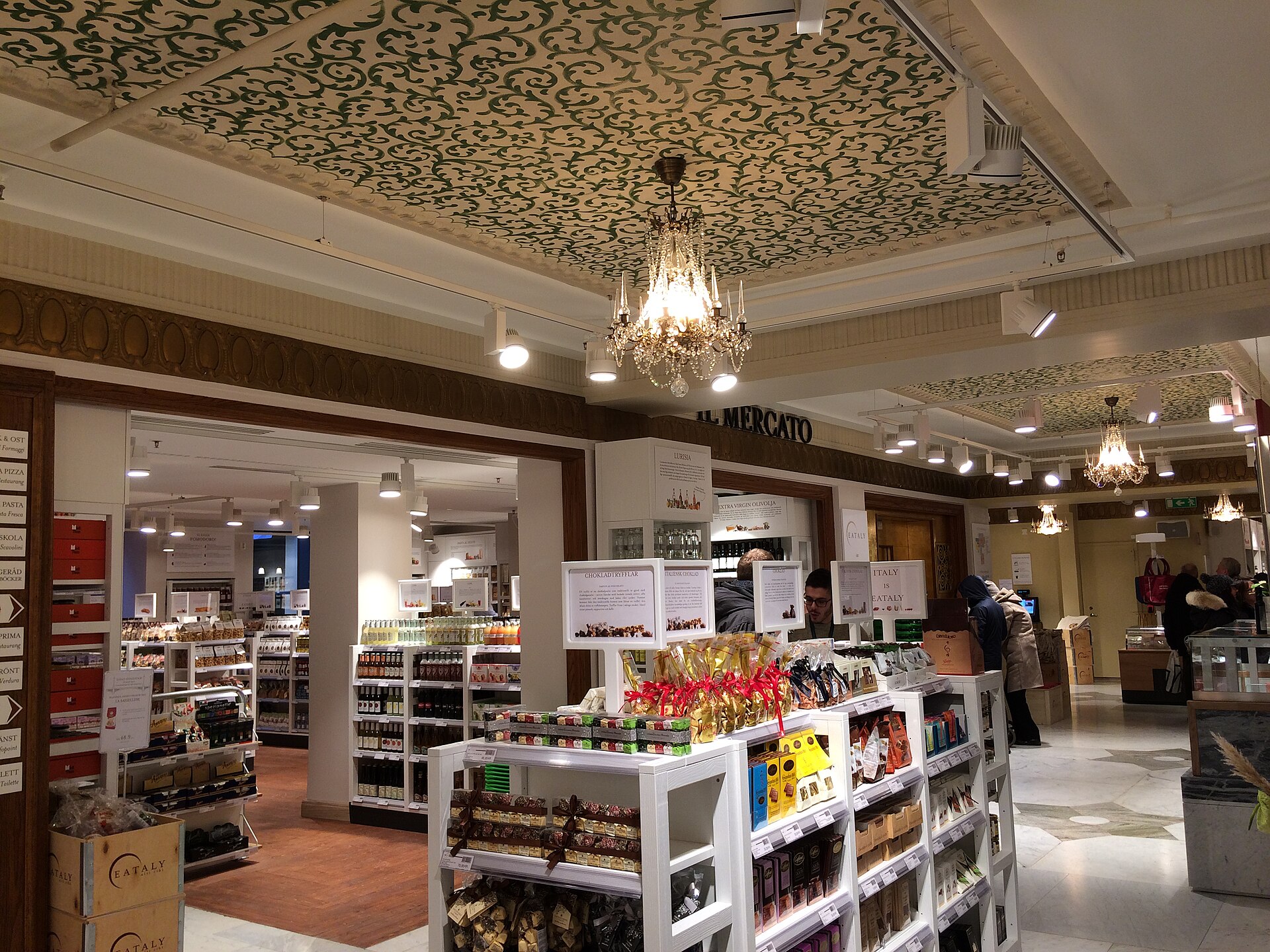
Several major Eataly locations reuse buildings with an earlier life. Torino Lingotto occupies the former Carpano factory, Roma Ostiense a terminal connected to travel, Milano Smeraldo a theatre, and Stockholm the old Röda Kvarn cinema. The identity of these places is not erased: generous volumes, structural elements, stages and decoration become part of the commercial route.
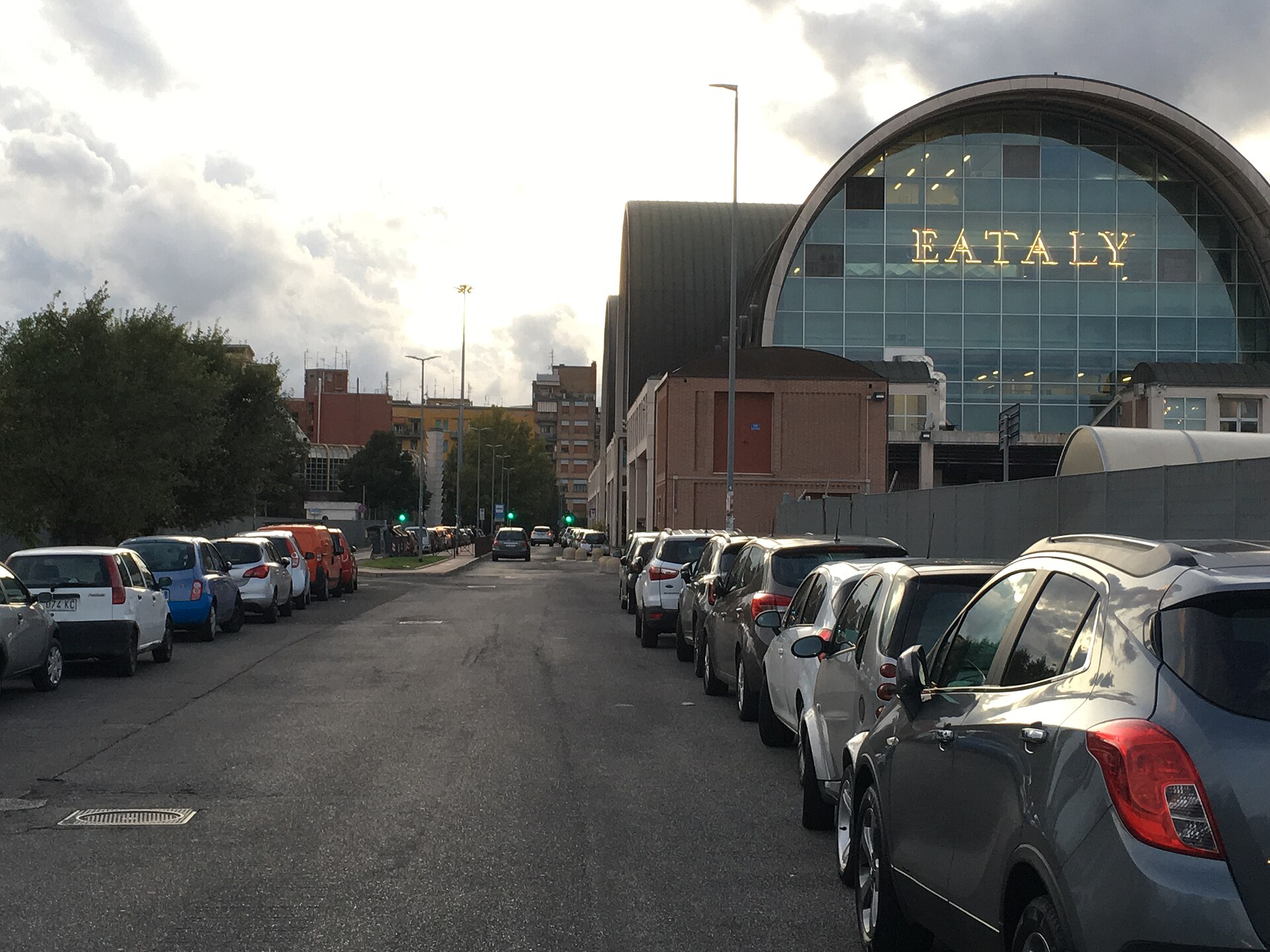
Conversion gives a location character and visibility, but it also poses a challenge: services, kitchens, cold storage, logistics and public circulation must be inserted without sacrificing clarity. This is the same potential found in converted industrial spaces, where height, daylight and the existing structure become design resources.
Who owns Eataly today?
Oscar Farinetti founded Eataly, while corporate control now belongs to Investindustrial. The transaction announced in 2022 and completed in 2023 involved a €200 million investment and a 52% stake for the fund. The remaining 48% stayed with existing shareholders: the Farinetti family’s Eatinvest, the Baffigo and Miroglio families, and Clubitaly, in which Tamburi Investment Partners participates.
Eataly’s presence in the current Investindustrial portfolio confirms that control. The distinction matters: Farinetti remains the figure associated with the birth of the concept, while ownership and operations follow the group’s corporate structure.
Where are Eataly stores in Italy?
The Italian network includes major urban locations at Milano Smeraldo, Torino Lingotto, Roma Ostiense, Genoa, Trieste, Piacenza, Florence and Bologna, alongside Torino Lagrange, Monticello d’Alba and Pinerolo. Additional formats operate in airports, railway stations, shopping centres and motorway service areas, including Rome Fiumicino, Rome Termini, Milan Linate and Turin Caselle.
Not every address offers the same departments, restaurants or classes. The official Eataly store directory is therefore the best place to check openings, hours and services.
Eataly’s international expansion
Growth outside Italy adapts the format to its setting. The market continues to prioritise Italian products and recipes, while adding regional suppliers, local urban habits and the character of each building. The Stockholm location, for instance, turns a historic cinema auditorium into a food piazza.
Investindustrial’s 2024 Annual Review separates directly operated locations from franchises, which are especially prominent in Asia and the Middle East. This structure helps explain why size, assortment and services differ from country to country.
How to assess the Eataly offer
Eataly selects products, explains territories and makes the supply chain visible, but the brand does not replace assessment of an individual food. Label, origin, ingredients, certification, season and value remain practical criteria. In a restaurant, execution, service and consistency between ingredient and dish also matter.
Eataly’s most recognisable contribution is its transformation of food retail into a spatial and cultural experience. Market, table and school share one environment, while converted buildings and graphic signs make the story visible. This combination, more than store size alone, explains Eataly’s history and international success.