Everything you need to know about layout, geometry and materials to make the most of your outdoor spaces. Faced with a large plot, the temptation is often to fill every empty space, piling up furniture without a clear plan. True elegance lies instead in bringing order to the space and finding the right balance between …
Everything you need to know about layout, geometry and materials to make the most of your outdoor spaces.
Faced with a large plot, the temptation is often to fill every empty space, piling up furniture without a clear plan. True elegance lies instead in bringing order to the space and finding the right balance between natural greenery and the lines of the house. So the first rule of large garden design is to think of the outdoor space as a continuation of the interiors.
A well-designed garden works as a natural extension of the living room. To achieve this, you need to carefully assess the position of the sun throughout the day, the shaded areas, the prevailing winds and the view you’ll have when looking out of the windows. Choosing the right outdoor furniture, made from materials specifically designed to withstand the weather, will then let you enjoy the outdoors to the fullest at any time of day and in every season.
Geometry and space: structuring a designer garden
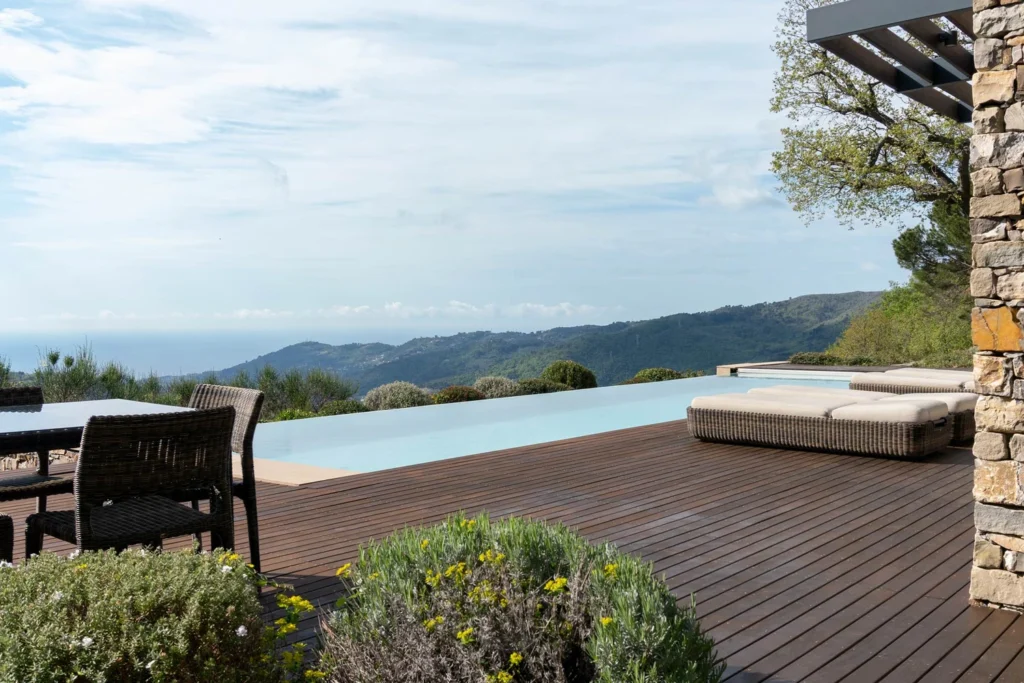
To move comfortably outdoors, the human eye looks for clear points of reference. In large spaces in particular, you need to divide the area into distinct functional zones to avoid a scattered, unfocused effect. You might create an outdoor lounge with comfortable sofas for conversation, a sunbathing area by the pool, and a large designer table paired with garden chairs for outdoor dining, ideally in a well-shaded spot.
These zones can be defined without walls or fences: a change of paving, plants of varying heights or a border is enough. Alternating lawn with well-defined flower beds and stone paths will bring movement to the whole composition. You can also play with vertical elements such as bamboo, tall-trunked trees, pergolas or modular screens to create striking natural backdrops. A few well-chosen plants work better than a wide variety of species thrown together at random.
The color palette: psychology and materials
Color instantly changes how a space is perceived and defines its style. In large gardens, you can follow the 60-30-10 rule to manage the color palette methodically.
Simply imagine dividing the colors of the space into three precise shares. The main color, accounting for 60%, acts as the backdrop and usually coincides with the green of the vegetation or the natural tones of the paving. The secondary color takes 30% and comes through in the furniture, such as tables, sofas and umbrellas. Finally, the remaining 10% goes to the accent color, reserved for details and accessories: cushions, planters and small pieces that are easy to swap out to refresh the space as the seasons change.
Shades such as sage, gray and taupe blend discreetly into the landscape, making them perfect as a secondary color. With the accent color you can experiment more, perhaps by creating an interesting contrast: details in a bold, vivid hue will instantly give the garden a contemporary edge and highlight the outlines of the furniture.
Alongside color, materials deserve very careful consideration. Here, Nardi stands out as an excellent option thanks to the quality of its materials and its Made in Italy design. The Italian company works mainly with aluminum and fiberglass-reinforced polypropylene to create furniture that is lightweight, stable and weather-resistant. Its research into sustainability has also led to Regeneration, a line of outdoor furniture that includes a percentage of post-consumer recycled resin. A practical way to combine respect for the environment with beauty.
Garden lighting and details for evening living
In the evening, the garden takes on a new look and a more relaxed atmosphere. Lighting deserves special attention, because it should never be intrusive. Instead of powerful floodlights that flatten volumes, a scheme built on small, strategically placed light points works better. Likewise, lighting the routes that follow the soft curves of a path or a flower bed will add depth to the space, making it warm and welcoming.
Along these pathways, between flower beds and on steps, you can place LED spotlights that discreetly guide people as they move around. Choosing warm light will also bring out the texture of wood and natural stone.
A few carefully chosen details — such as soft cushions, shade sails set at different heights or an outdoor fire pit — are all it takes to complete the scene.
The result is a living space that supports everyday life and welcomes moments of togetherness with the same natural harmony.