How can you really recognize the best armchair brands ? The answer lies not in the name, but in what stands the test of use: a comfortable and well-designed armchair, which works in posture, proportions and everyday life. It is one of the few furnishing elements capable of combining comfort and visual impact in the …
How can you really recognize the best armchair brands ? The answer lies not in the name, but in what stands the test of use: a comfortable and well-designed armchair, which works in posture, proportions and everyday life.
It is one of the few furnishing elements capable of combining comfort and visual impact in the same design gesture: it can define the atmosphere of a living room, make a reading area credible or rebalance an environment that is too rigid. Precisely for this reason it is easy to make mistakes. A seat that is too deep, an armrest that takes up space or an unsuitable covering are enough to make the whole look uncomfortable, disproportionate or difficult to manage over time. In living room armchairs the difference is the balance: it must be pleasant to look at, but also comfortable to use every day.
In 2026, choosing the “right” armchair means evaluating beyond the shape: how the posture changes after an hour , how padding and surfaces behave, how volumes and passages interact with the light. In this guide we bring order to the criteria and transform them into a clear evaluation grid.
What a quality armchair really means
A quality armchair can be seen in the consistency between design and construction, and in the way it maintains performance and shape with use. The first criterion is ergonomics : the height and depth of the seat, inclination of the backrest, lumbar support and relationship with the armrests must be compatible with the intended activity (reading, conversation, relaxation). Very soft comfort at the beginning does not guarantee support over time. It is also the most serious way to answer the question which are the most comfortable modern armchairs : those consistent with posture and use, not simply the softest.
The second criterion is the structure : stable frame, solid joints, well-resolved load points and absence of twisting or creaking. The third variable is the padding , i.e. density and stratification: they determine support, elastic return and volume retention in the most stressed areas. Finally, lining and finishes count: regular stitching, correct tensions, precise alignments and attention to detail even in the less visible parts. In summary, a quality armchair remains comfortable , stable and credible in space even after months of real use.
How to choose an armchair: practical criteria (materials, structure, style)
Materials and coatings
Materials affect aesthetic performance, maintenance and stability over time. Before choosing, clarify where the armchair will go and what type of stress it will undergo (rubbing, direct light, children, animals, frequent cleaning): this is where you decide whether you need a “live” seat or a more delicate piece.
-
Fabrics : they differ in feel, resistance and stain management. In high-frequency environments, it is best to favor robust and regular materials, capable of maintaining a uniform appearance even after cleaning.
-
Skin : Provides a visual presenceto strong and can mature well, but is more sensitive to scratches, heat and sunlight. The difference is made by finish and treatment, because the reaction to use varies greatly from skin to skin.
-
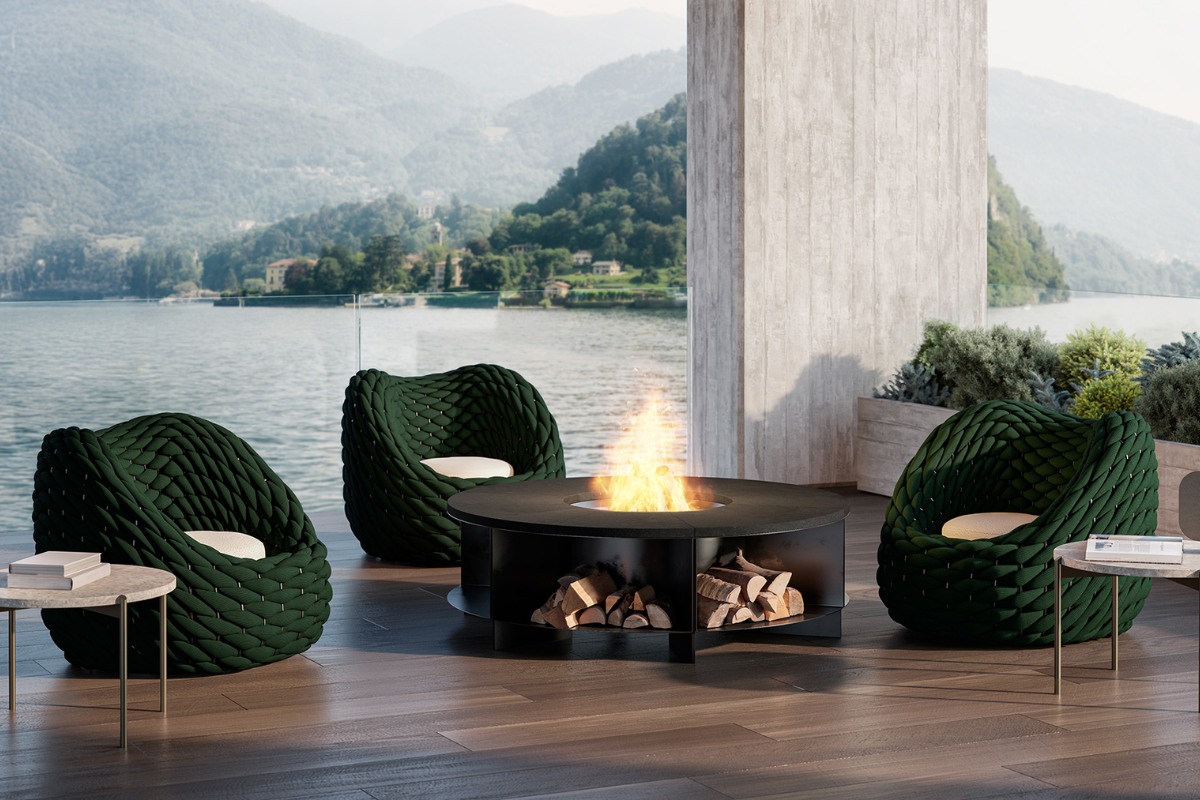
Bouclé, velvets and textures : they enhance volumes and light and make the armchair more “material”, but they must be chosen knowing that marks, crushing and variations in pile can emerge with use.
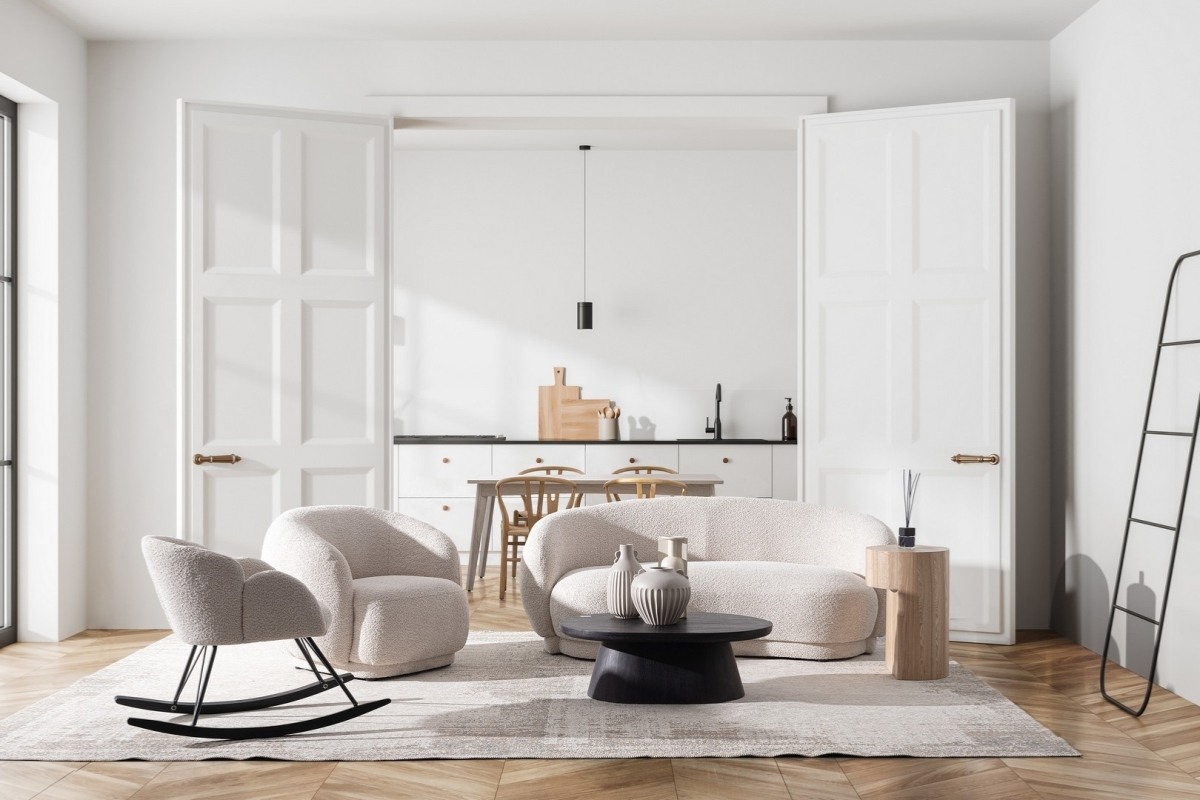
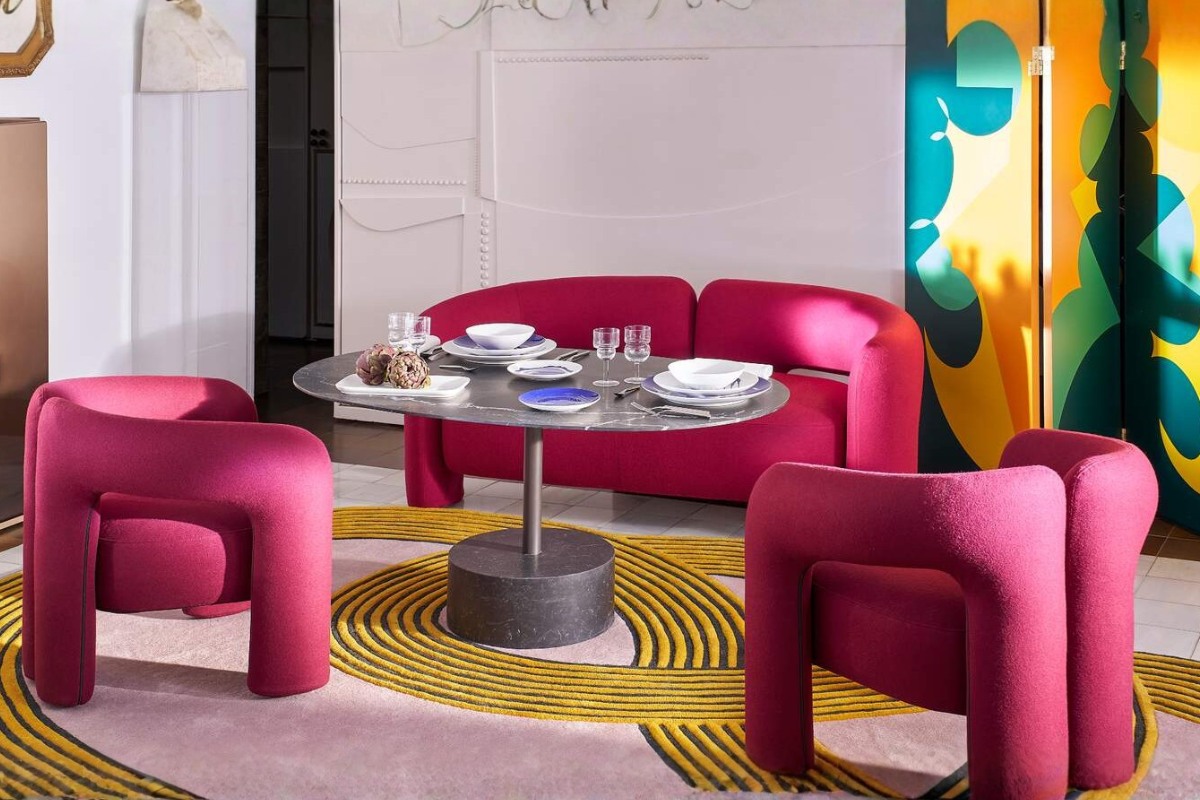
Color must also be read together with the light and surrounding materials: understanding how to choose the color of an armchair means evaluating undertones, reflections and texture rendering in the real environment, not just on a sample.
Structure and padding
The structure governs stability, settlement and deformations. Here the quality of the execution matters more than the label of the material: a correct frame can be “felt” when the armchair does not move, does not flex and does not change its structure over time.
-
Frame : Wood or metal can work well; what matters is overall rigidity, correct management of load points and solid joints.
-
Seat support : straps, springs or panels change response and elasticity. A seat that is too soft can be pleasant at first but lose control over time.
-
Padding : density and stratification determine support and elastic return, especially in the most stressed areas.
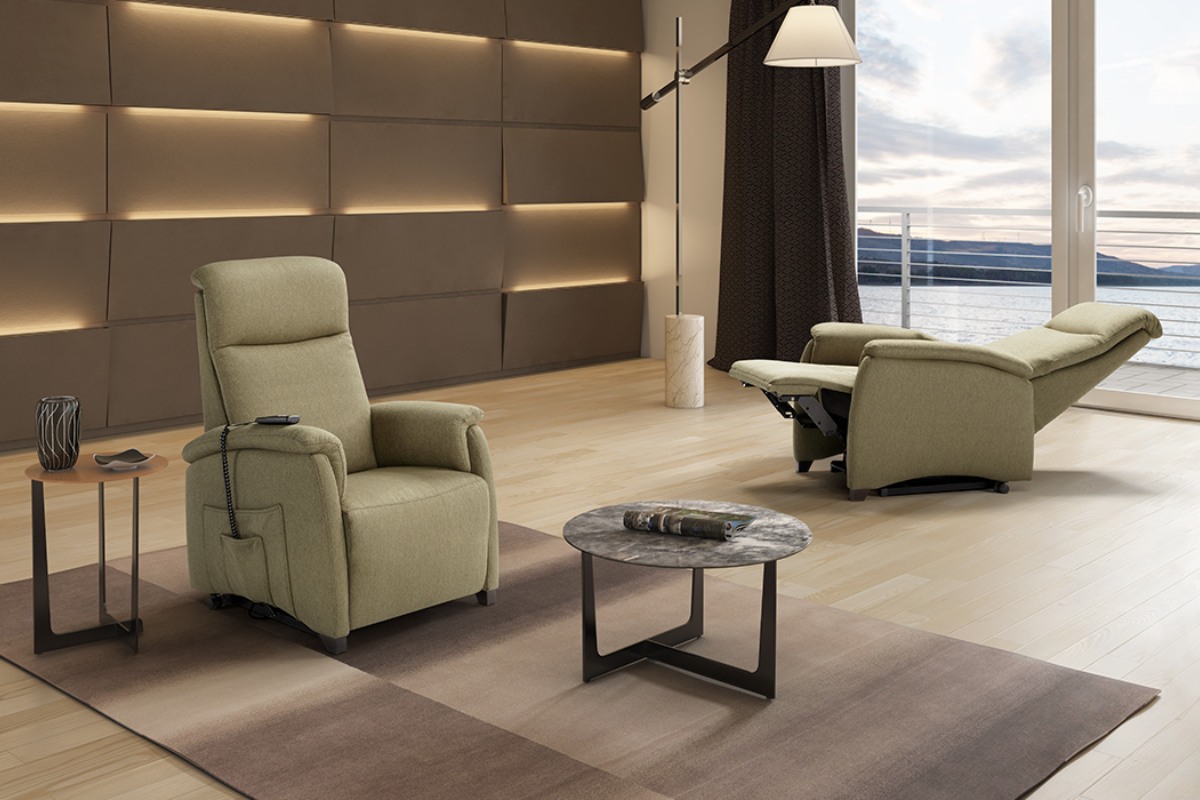
In the case of relaxation armchairs and reclining armchairs , quality also depends on mechanisms, fluidity of movements and robustness of the articulation points: aspects that affect comfort, noise and maintenance. If the armchair is motorized , the same principle applies: the functionality must be stable and “clean” over time, not just comfortable on the first day.
Style and proportions

When choosing an armchair for a small space, it is not just the width in centimeters that counts, but the actual size of the room and the freedom of movement it leaves around you.
The real question is not “which is the smallest armchair possible”, but which model takes up little space without compromising the passage and comfort of the seat.
- Proportions and real size : armrests, depth and thickness of the backrest determine the presence of the armchair in space, often more than the frontal view alone suggests.
- Use and posture : a shallower seat invites a more “active” posture (reading, conversation); the lounge models, on the other hand, require more breathing space and lead towards more relaxed relaxation.
- Color and light : textures and finishes change with natural and artificial light; in the presence of oblique light, the visibility of texture, shadows and small marks increases.
Best armchair brands: overview and main differences
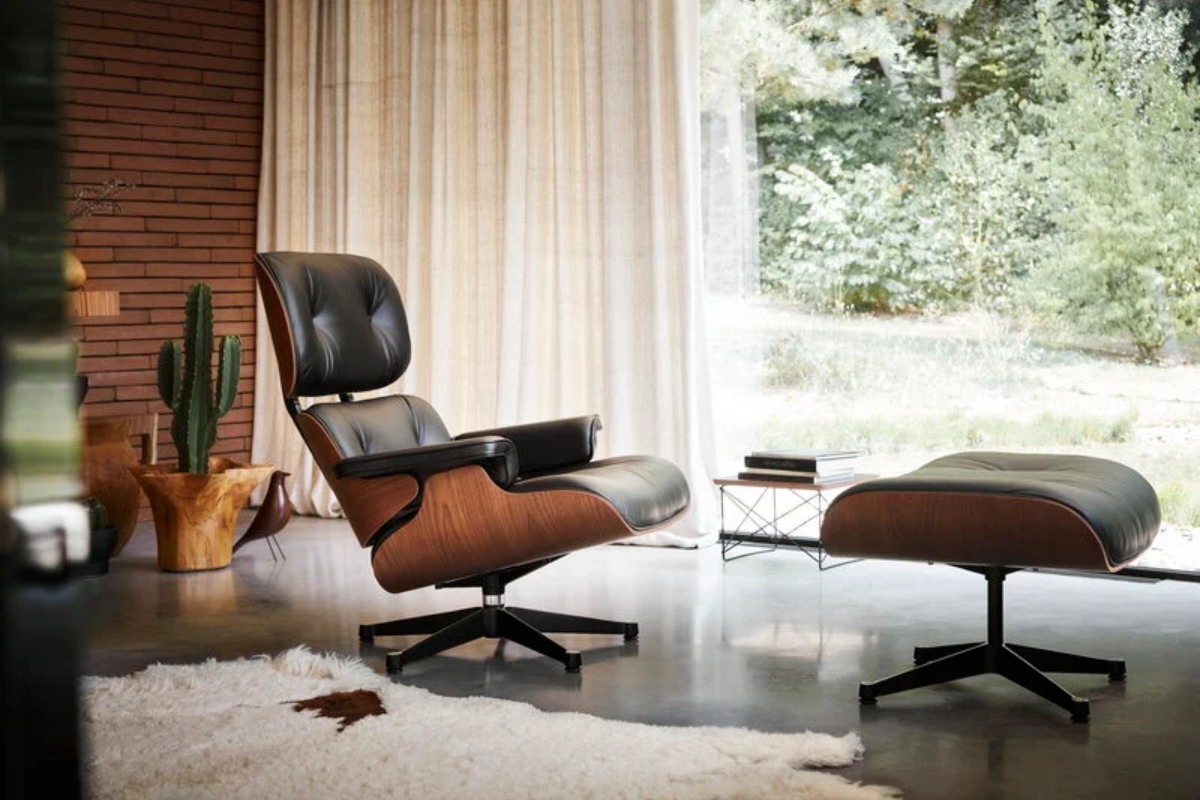
1. Baxter
How much does an armchair cost: price ranges and factors that change the budget
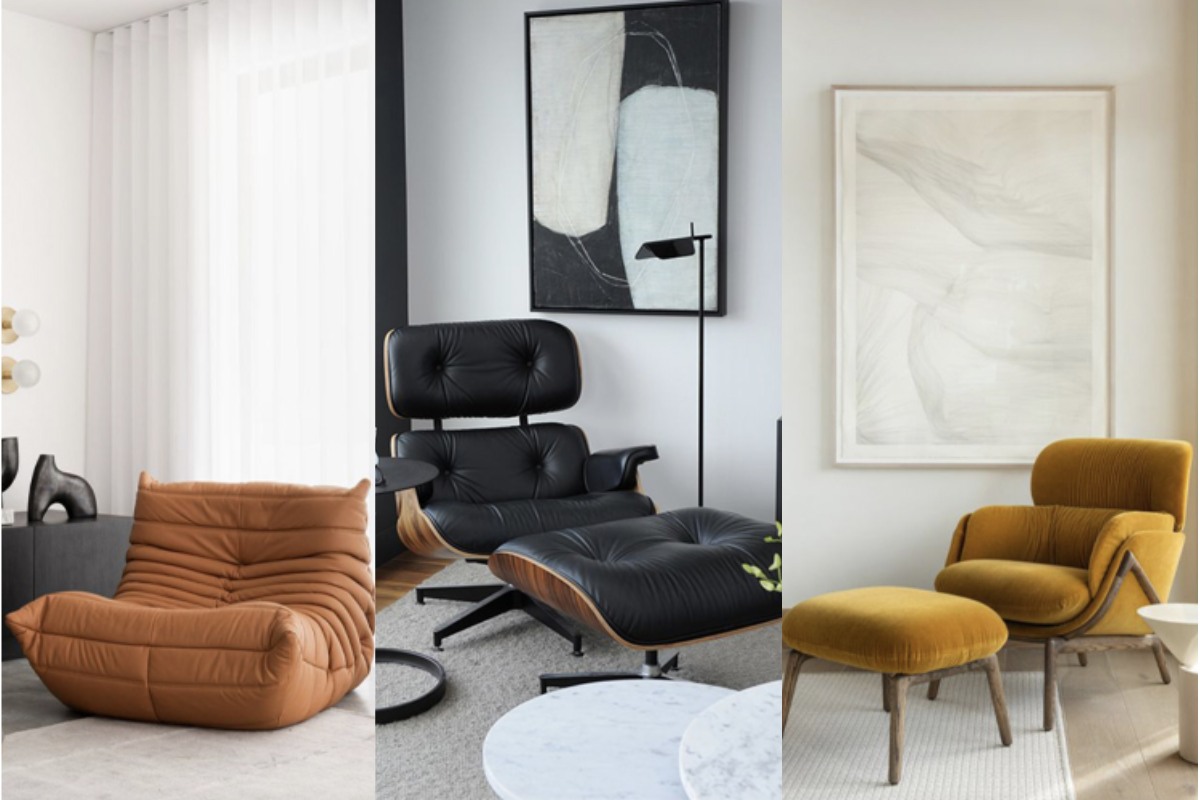
When it comes to prices of seats , the question how much does it cost? it only makes sense if you first understand what type of armchair you need: a lounge chair, a compact armchair or a reclining one play on very different budgets. The table below summarizes the most common indicative ranges for a new armchair, helping you to orient yourself between living room, relaxation, bedroom and outdoor models.
| Type of armchair | Approximate price range (/each) |
|---|---|
| Standard living room armchair | 4001,500 |
| Compact / space-saving armchair | 250900 |
| Lounge armchair (deep relaxation) | 8003,000 |
| Iconic armchair / statement piece | 1,5008,000 |
| Swivel armchair | 5002,500 |
| Relaxing / reclining armchair | 7004,500 |
| Armchair with matching pouf | 7003,500 |
| Bedroom armchair / vanity | 2501,200 |
| Outdoor armchair | 3002,500 |
With the same type, the price changes especially for upholstery – fabric/leather and category – dimensions of the seat , quality of structure and padding and level of finishes ; mechanisms and components also affect relaxation armchairs.
For this reason, before comparing brands and models it is best to clarify where the armchair will be used and how much space it can take up. When destination and footprint are defined, the budget becomes more predictable and the choice much more coherent.
FAQ seats: frequently asked questions and answers
What are the most comfortable armchairs?
Generally they are those with ergonomics consistent with use: adequate seat height, not excessive depth, backrest with good support (including lumbar) and armrests that do not force the posture. The initial “softness” is not enough: a comfortable armchair remains stable after an hour, without sliding forward or compressing the seat too much.
What is an armchair that takes up little space?
The most efficient solutions are those with controlled dimensions: shallower seat, thin or no armrests, compact base and backrest not too far back. In small environments, models on feet (visually lighter) or swivel often work, because they improve use without increasing the footprint.
What are relaxation armchairs and why choose them?
Relaxing armchairs are designed for more relaxed comfort: they can include a reclining backrest and integrated footrest, with manual or motorized adjustments. They make sense when the main objective is the resting posture (long reading, TV, recovery), but require attention to bulk and mechanisms over time.
Difference between armchair and poltronissima?
The poltronissima is, in fact, an oversized armchair: a wider and often deeper seat, designed for spacious and informal relaxation. The size and posture change: it is ideal if space allows it, less suitable if free passages or a more “active” seat are needed for conversing or reading.
How to choose the color of an armchair?
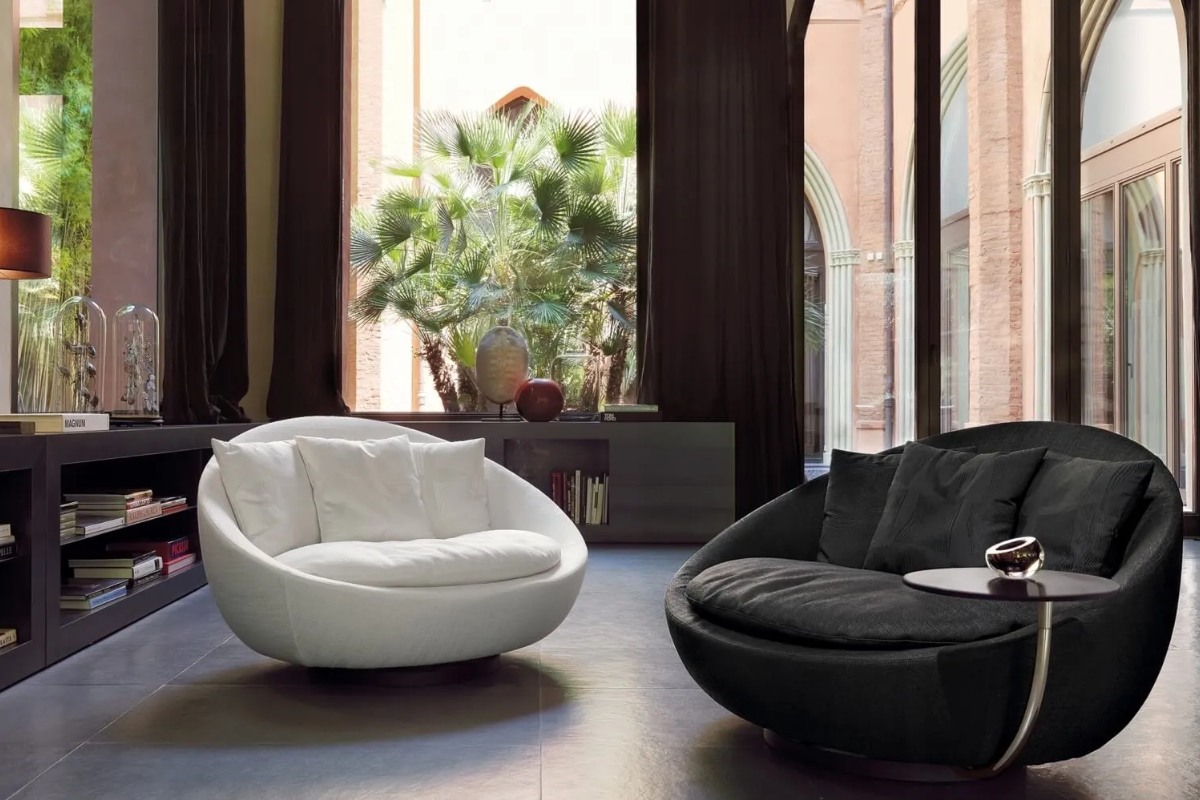
Start from the light (natural and artificial) and from the materials already present: wood, floors, metals and textiles greatly influence the perception of color. Evaluate the undertones (warm/cold) and consider your personalityxture of the coating, because it can dirty, warm or cool the shade compared to a flat sample.
Choosing an armchair in 2026 means matching design and use: ergonomics, proportions and materials matter as much as style. When these elements are consistent, quality is seen and felt over time.