Wood, pellet, gas, bioethanol or electric: how to choose a modern fireplace, where to place it, what it costs, which rules apply and how to furnish around the fire.
The modern fireplace is no longer the thermal heart of the home but a piece of architecture: a flame framed in glass, pared-back lines and a choice of fuels. How to choose between wood, pellet, gas, bioethanol and electric, where to place it, what it costs and which rules apply.
For centuries the hearth was the physical centre of the home: people cooked there, kept warm there and gathered around it. Today the modern fireplace has changed jobs. Heat pumps, underfloor heating and boilers take care of comfort; fire has returned to the living room for a different, almost opposite reason. It is moving light, a focal point no lamp can imitate, the element that gives a contemporary room the perceived warmth that smooth surfaces and neutral palettes so often take away.
There is an intriguing paradox in this shift. It was emissions regulation that pushed the market towards closed fireboxes, with ceramic glass and controlled combustion. And that very pane of glass handed designers a frame: the flame is now composed like an artwork, stretched horizontally for metres, carried through a wall so that it can be seen from two rooms. The modern fireplace is born from this meeting of efficiency and stagecraft.
What makes a fireplace modern today?
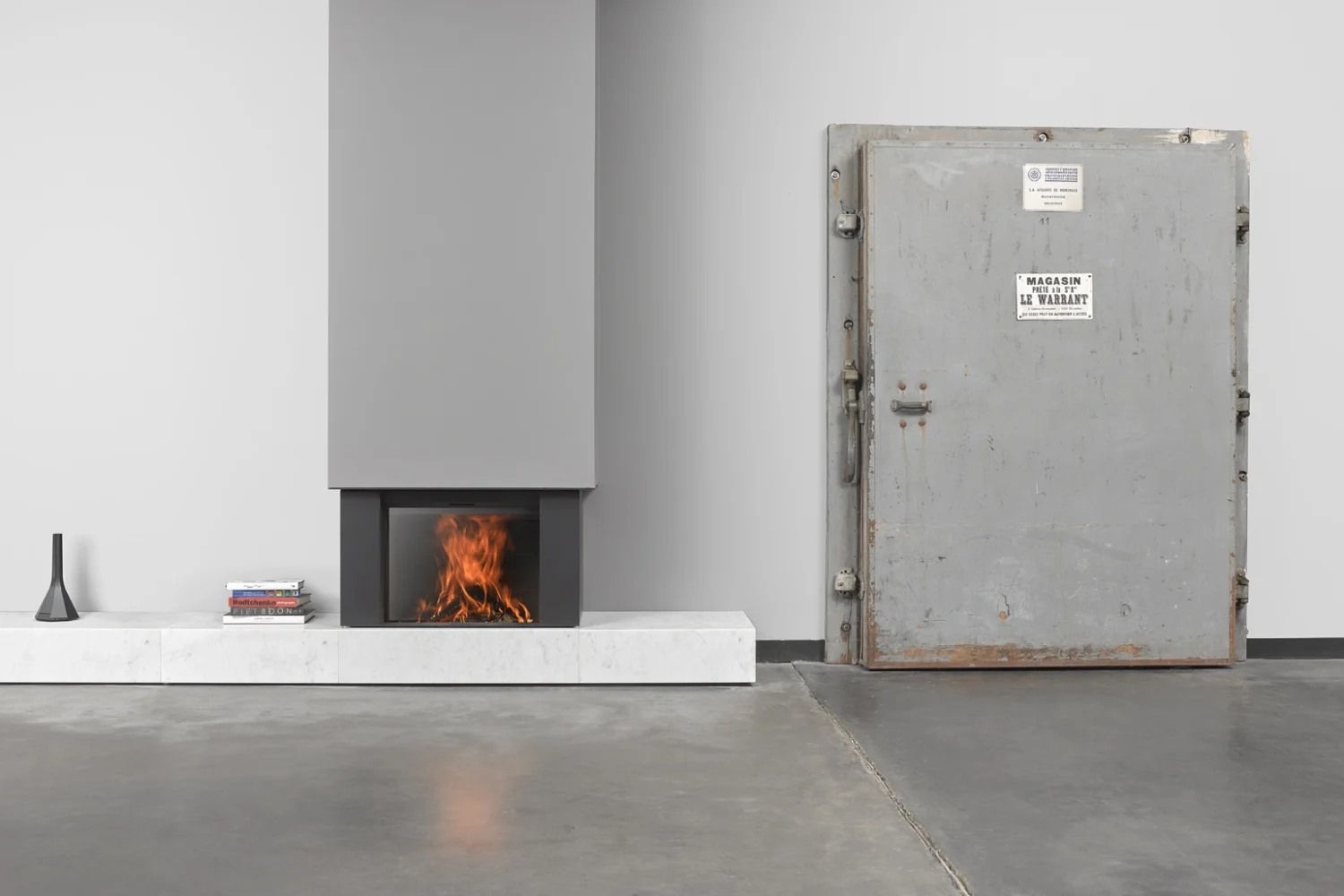
A fireplace reads as modern when the fire takes centre stage and the structure disappears. No protruding hoods, heavy mantels or rustic stone cladding: instead, panoramic fireboxes, razor-thin steel profiles and flush, built-in fires that look carved into the wall.
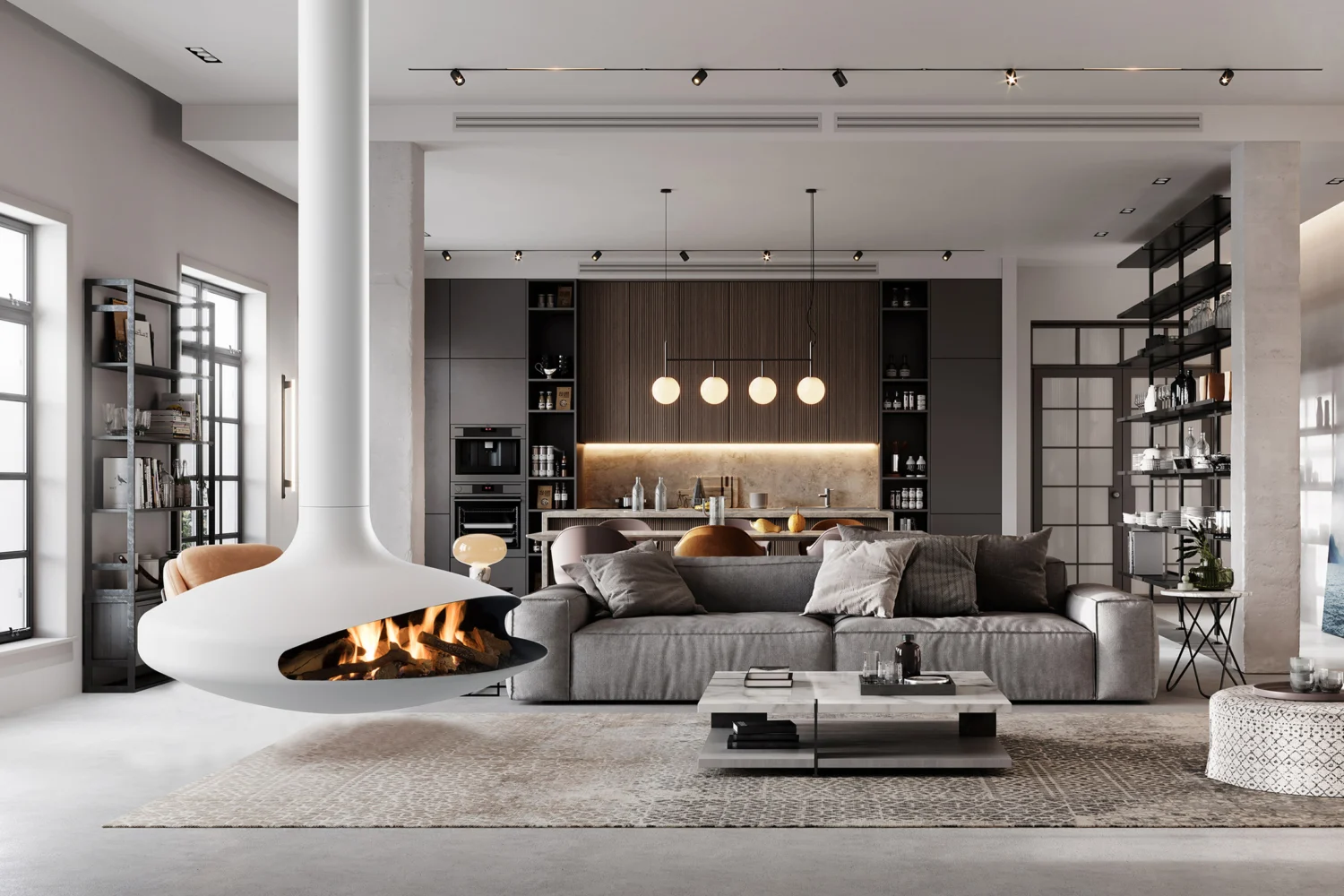
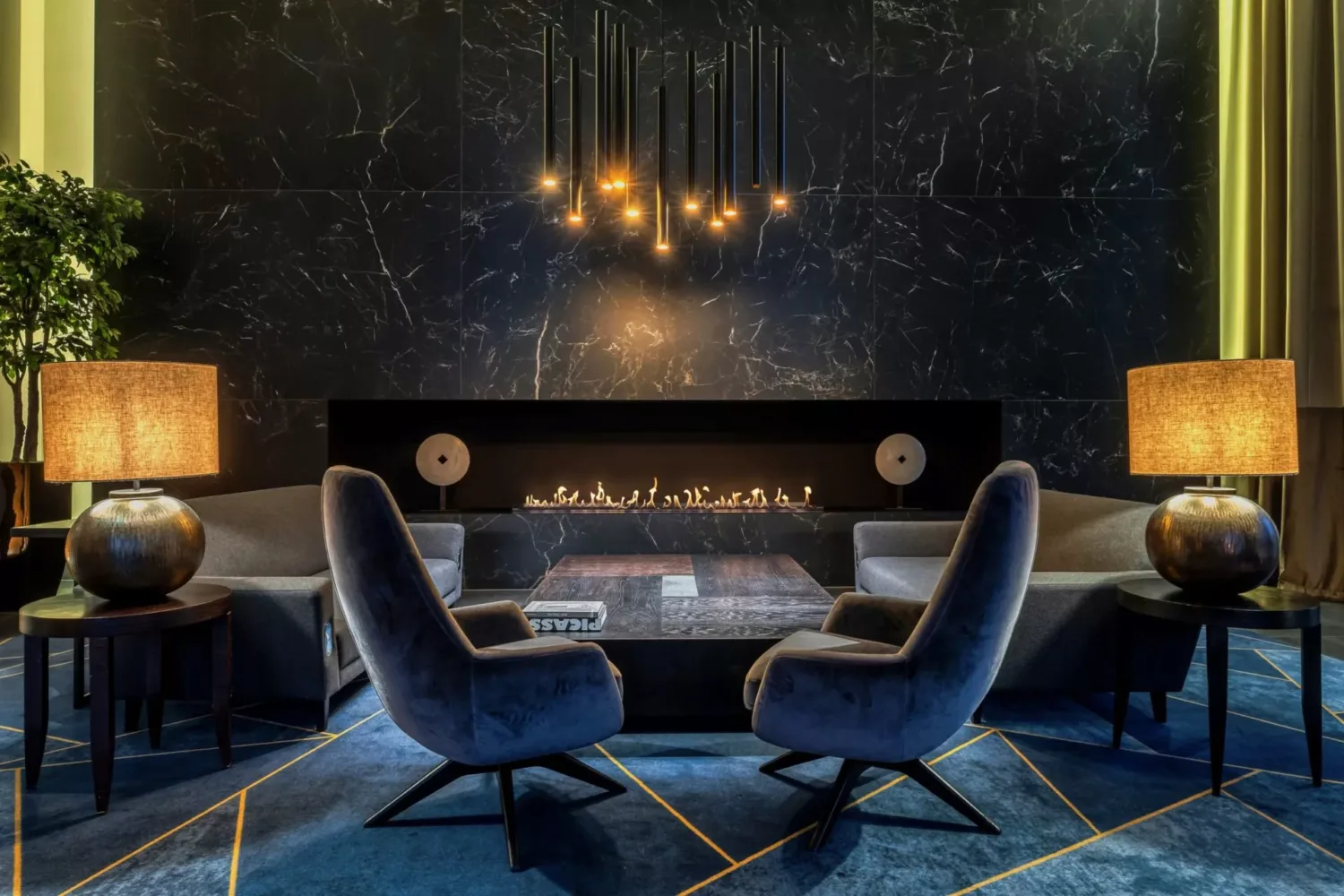
Four configurations dominate contemporary projects. The hole-in-the-wall fireplace, with the flame opening like a long horizontal window, is the cleanest solution for a minimalist living room. The double-sided or see-through fireplace passes through a wall and divides living and dining areas, or a lounge and a study. The three-sided model works as a small freestanding volume, ideal in open-plan spaces. Finally there is the suspended fireplace, the most sculptural of all: its modern story begins in 1967 with Dominique Imbert’s Gyrofocus, a rotating hearth hung from the ceiling that anticipated by decades the idea of fire as a design object.
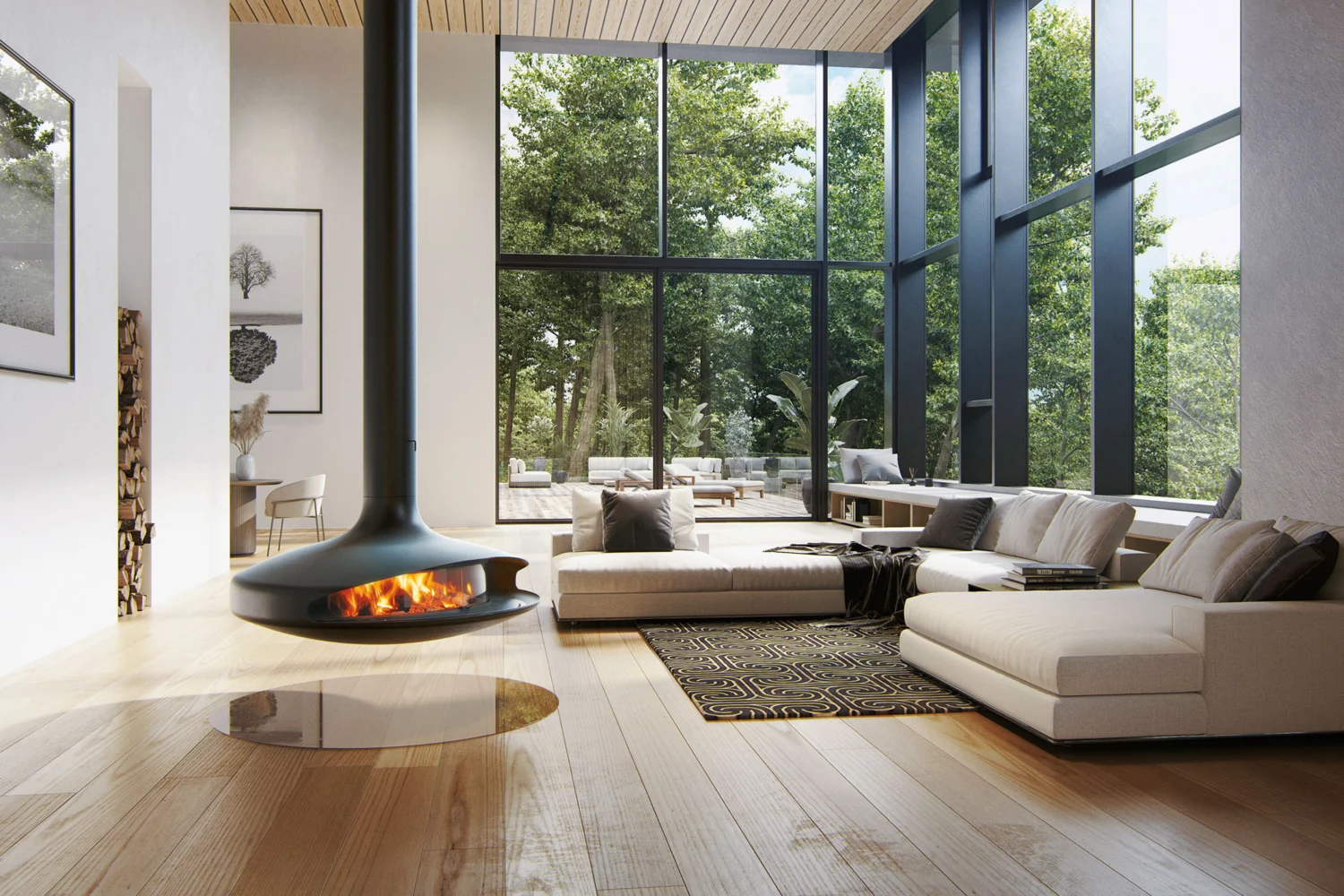
The language of materials has changed too. Rustic stone and exposed brick have given way to seamless microcement, horizontally veined slabs of travertine, burnished steel, large-format ceramics and textured plasters. It is the same grammar as warm minimalism: few surfaces, very carefully chosen, with the fire doing the rest.
What types of modern fireplace are there?
The first decision is technical rather than aesthetic: what the fireplace burns. The fuel determines whether you need a flue, how much heat actually reaches the room, the maintenance involved and even the character of the flame.
Modern wood-burning fireplace
The most authentic option, with the crackle, the scent and the embers. In its contemporary form it is almost always a closed firebox or an insert with ceramic glass, which burns in a controlled way and returns far more heat than a traditional open fire, where most of the energy simply escapes up the chimney. It requires a compliant flue terminating above the roof, dry seasoned wood and regular sweeping. It is the right choice for a detached house or an apartment that already has a suitable flue.
Pellet fireplace
Pellets brought the logic of the stove to the fireplace: automatic feed, programmable ignition, thermostatically controlled temperature. Fireboxes tend to be smaller than wood-burning ones, because pellet combustion produces a less expansive flame, but the heat output is high and steady. A flue is still needed, as is a power socket, since the auger and fans run on electricity.
Gas fireplace
Ignition at the touch of a button, adjustable flame, no ash: the gas fireplace is a favourite of many architects for contemporary homes because it allows extremely long, perfectly clean flame lines. Modern appliances are balanced-flue models, drawing combustion air from outside and expelling fumes through a dedicated duct. They run on natural gas or LPG and must be installed by a qualified engineer in line with domestic gas regulations.
Bioethanol fireplace
It needs no flue, because burning ethanol produces no visible smoke, which makes it the easiest fireplace to place in an apartment: wall-mounted, tabletop, set into a bookcase or a media wall. The flame is real, the heat is modest and best thought of as a complement. It does, however, demand strict adherence to the instructions: refuel only when the flame is out and the burner has cooled, ventilate the room, and match the burner’s output to the volume of the space. Swiss fire-prevention and public-health bodies have gathered these rules in a safety sheet (in Italian) that is worth reading before you buy.
Electric and water-vapour fireplaces
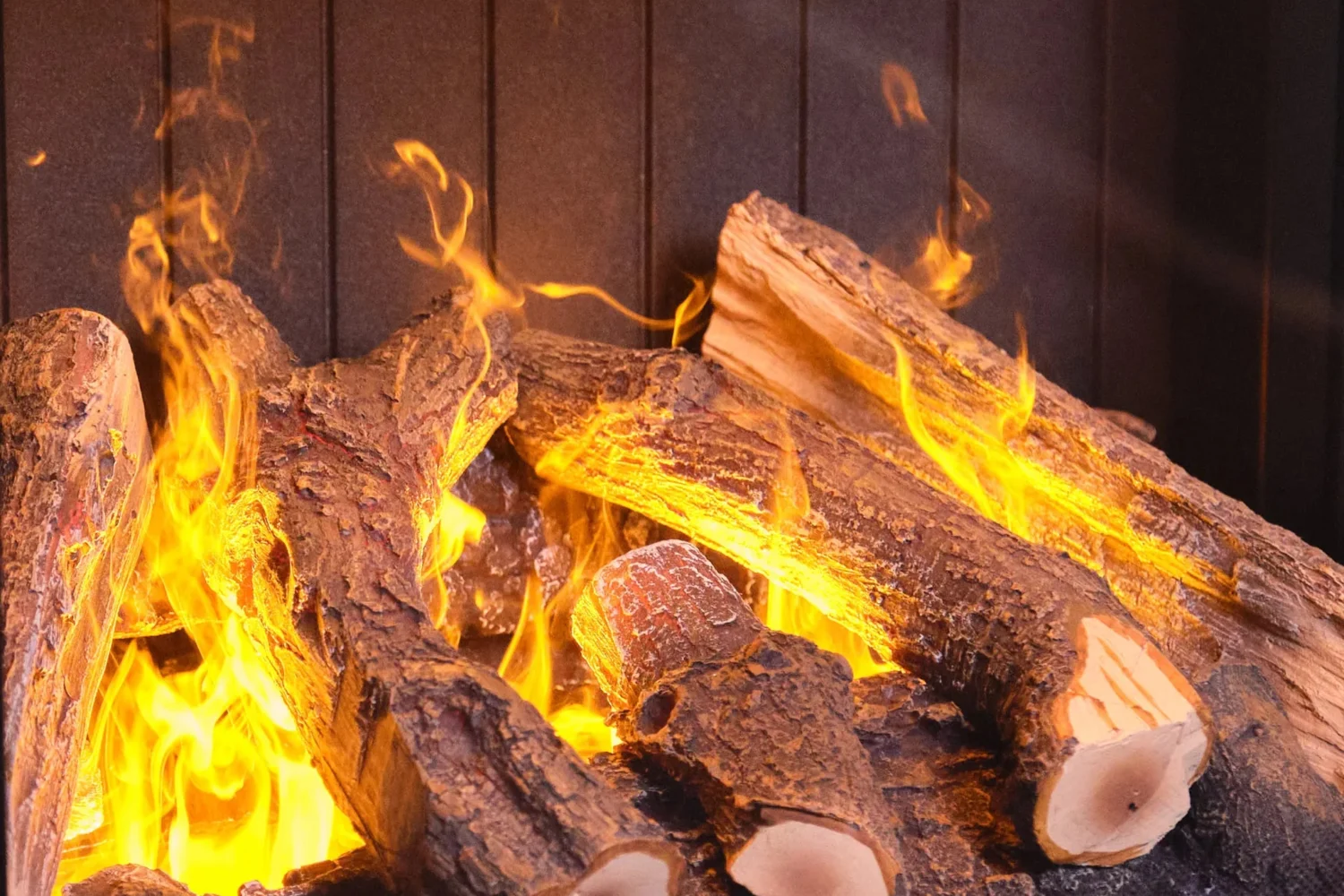
The electric fireplace has come a long way. The most advanced models no longer simply project an LED flame but use an illuminated mist of water vapour that creates a surprisingly convincing three-dimensional effect. It can be installed anywhere, involves no combustion and needs no maintenance; heating, where offered, comes from an element that can be switched off while the flame effect stays on. It is the simplest option for rented homes, buildings without a flue, or bedrooms.
| Fuel | Flue | Heat | Flame | Best for |
|---|---|---|---|---|
| Wood (closed firebox) | Yes, terminating at roof level | High | Real, with embers | Detached houses, mountain homes, lovers of the fire ritual |
| Pellet | Yes | High and programmable | Real, more compact | Those who want automation and steady output |
| Gas | Dedicated flue duct | Medium to high | Real, long and clean | Contemporary projects with panoramic flames |
| Bioethanol | No | Low | Real, smoke-free | Apartments, reception spaces |
| Electric and water vapour | No | Optional | Simulated | Rentals, bedrooms, spaces with technical constraints |
Where should a fireplace go in a contemporary living room?
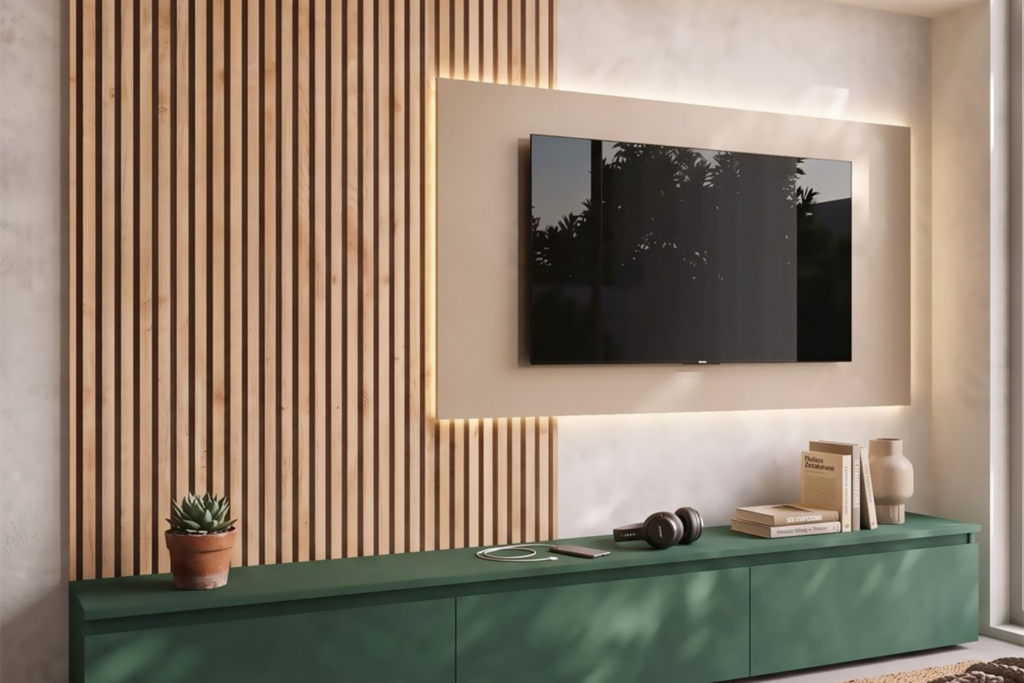
Placement shapes the character of the room. The wall-mounted fireplace is the classic choice and organises the space like a stage set: it works best aligned with the sofa rather than competing with the television. If the screen has to share the same wall, avoid stacking the two too closely, as the heat and the light of the flame disturb viewing; it is better to set them side by side within a single bespoke composition, as in a well-designed media wall.
The corner fireplace reclaims space that often goes unused and suits small living rooms, where a free wall is a luxury. The central or see-through fireplace is the most architectural option: it divides without closing off, creates two settings with a single fire and forces a rethink of the furniture layout around a new centre of gravity. The suspended model, finally, needs generous ceiling heights and a flue that drops from above, but no other solution delivers the same lightness.
In every case one principle of good design applies: a fire is meant to be watched from a seated position. The height of the firebox, the distance from the sofa and the depth of the seating should be studied together, along with the safety clearances from curtains, bookcases and flammable materials specified by the manufacturer.
How much does a modern fireplace cost?
Prices vary enormously depending on the fuel, the size of the firebox and above all the work required around the appliance. As an order of magnitude in the Italian market, an electric fireplace starts at a few hundred euros and rarely exceeds two thousand even for good water-vapour models; a bioethanol fireplace ranges from a few hundred euros for freestanding pieces to several thousand for bespoke built-in burners. A good-quality gas fireplace or closed wood-burning firebox generally costs a few thousand euros for the appliance alone, while high-end panoramic, double-sided or suspended designs easily exceed ten thousand.
To that figure you need to add the items that are often underestimated: the flue or exhaust duct, which in a renovation can cost as much as the appliance itself; the cladding, which in travertine or steel becomes a piece of bespoke joinery; installation, building work, certification and annual servicing. Always ask for a quote that separates appliance, building work and finishes: it is the only way to compare offers properly.
What rules apply to installing a fireplace?
Rules are national and sometimes regional, so the starting point is always a qualified local installer. Across the European Union, new solid-fuel room heaters placed on the market must meet the efficiency and emission limits of Ecodesign Regulation (EU) 2015/1185, in force for these appliances since 1 January 2022. This is one of the reasons why open fires have largely given way to closed, glass-fronted fireboxes.
In Italy, wood and pellet installations follow the technical standard UNI 10683:2022, which covers combustion air, flue sizing and termination, and requires a certificate of compliance from the installer. On top of this, a 2017 ministerial decree rates biomass appliances from one to five stars according to their emissions of particulates, organic carbon, nitrogen oxides and carbon monoxide. Regions in the Po Valley use this rating to decide what may be installed and used: in Lombardy, since 1 January 2020, new appliances must have at least four stars and those rated zero to two stars may no longer be used, with an exemption for fireplaces up to 10 kW used occasionally for recreational purposes, as explained by Regione Lombardia.
Gas appliances are subject to domestic gas regulations and to rules on flue discharge, which in apartment buildings often restrict wall-mounted terminals. In shared buildings, a new flue on the façade or roof also has to be checked against the building’s regulations. Bioethanol and electric fireplaces, having no exhaust, are governed mainly by product standards and the manufacturer’s instructions.
Is a fireplace bad for your health?
It depends on what you burn and how. Domestic wood burning is now one of the main sources of fine particulates in northern Italy: according to estimates published by the environmental agencies of Veneto and Lombardy as part of the EU-funded Prepair project, wood-fuelled home heating accounts for 54% of annual primary PM10 emissions in the Po Valley, and appliances more than ten years old produce 79% of the sector’s emissions while consuming just over half of its energy (Ecoscienza, 2023, in Italian).
The same data point to the solution. A modern, certified closed firebox burning dry wood or quality-certified pellets pollutes far less than an old open fire. Indoors, what matters is a well-sealed appliance, an external air supply and a well-maintained flue; a carbon monoxide detector is a small, sensible investment in any home with a live fire. With bioethanol, the focus is on ventilation, because combustion takes place directly in the room.
How to furnish around a modern fireplace
The contemporary fireplace calls for restraint. The mantel, if there is one, is a slim blade or a ledge in the same material as the cladding; above it, a single artwork or an empty surface works better than a collection of objects. Seating is arranged in a horseshoe or parallel to the flame, the rug defines the area without coming too close to the firebox, and logs, where present, become decorative material in a dedicated niche.
Artificial lighting should be tuned to the fire: low, warm sources, floor and table lamps instead of widespread downlights, so that in the evening the flame remains the dominant light. It is the same principle that makes hotel interiors so welcoming, as we explored in our piece on the hotel-inspired home: a few well-placed light sources and materials that respond to grazing light. For a bolder statement, the fireplace can anchor a more radical architectural gesture, such as a curved wall that embraces it or a concrete volume with a brutalist edge.
For those after higher efficiency, the next step is a thermo-fireplace, which connects the fire to the central heating system, or a design-led pellet stove.
Modern fireplace: frequently asked questions
Which type of fireplace gives out the most heat?
Size for size, closed wood-burning fireboxes and pellet fireplaces return the most heat to the room. If the goal is to heat the whole house rather than just the living room, the answer is a thermo-fireplace connected to the heating system or a ducted system that distributes warm air to several rooms.
Can you have a fireplace in an apartment without a chimney?
Yes, but only a bioethanol or electric fireplace, since neither produces fumes to be expelled. Wood, pellet and gas appliances need a compliant flue, and in an apartment building its construction must also be checked against the building’s rules.
Are bioethanol fireplaces safe?
They are safe when used correctly: an appliance that meets product standards, an output suited to the room, refuelling only when the flame is out and the burner is cold, regular ventilation and adequate distance from flammable materials. The main risks come from refuelling while hot and from use in rooms that are too small or poorly ventilated.
Fireplace or stove: which is better?
A stove delivers more heat relative to its footprint and cost; a fireplace offers a wider flame and greater architectural impact. Many contemporary projects choose a middle way: a flush, closed firebox that combines the efficiency of a stove with the presence of a fireplace.
How much electricity does an electric fireplace use?
The flame effect alone uses little power, in the order of a few tens of watts for LED models and somewhat more for water-vapour ones. Consumption rises when the heating element is switched on, typically between 1 and 2 kW in domestic models: think of it as supplementary heat, not the home’s main heating system.