Where to use fluted wood at home, from the living room wall to the headboard and the kitchen island: materials, colours, light and the mistakes to avoid.
From the living room wall to the headboard and the kitchen island, fluted wood brings rhythm, light and warmth to pared-back interiors. A guide to choosing it, and the mistakes to avoid.
A fluted wood wall changes a room without raising its voice. The vertical grooves catch raking light, draw a steady rhythm and turn a flat surface into texture. After fluted glass, wood now brings the same language into the home: on the living room wall, behind the bed, on kitchen and island fronts, on sideboard and wardrobe doors.
The reason for its success is simple: fluting adds depth and warmth without ornament, which makes it ideal for anyone after an interior that is pared back but never cold. Here is what it is, where to use it, how to choose it and the mistakes to avoid.
What is fluted wood?
Fluted wood is a surface worked with parallel grooves, usually vertical, alternating ridges and channels. It is made in three main ways. The most tactile version, and also the most expensive, is built from solid wood battens set side by side with a gap between them. The most common choice for walls and doors is routed MDF panelling, finished in real wood veneer or lacquer, stable and precise. Finally there are slatted panels on felt, wood or veneer slats mounted on a sound-absorbing backing, designed to improve the acoustics of the room as well.
The result changes a great deal with the spacing of the flutes: a narrow, dense groove (micro-fluting) gives a refined, almost textile effect, while wider and deeper slats create a more architectural rhythm suited to larger rooms.
Why it is the surface of the moment
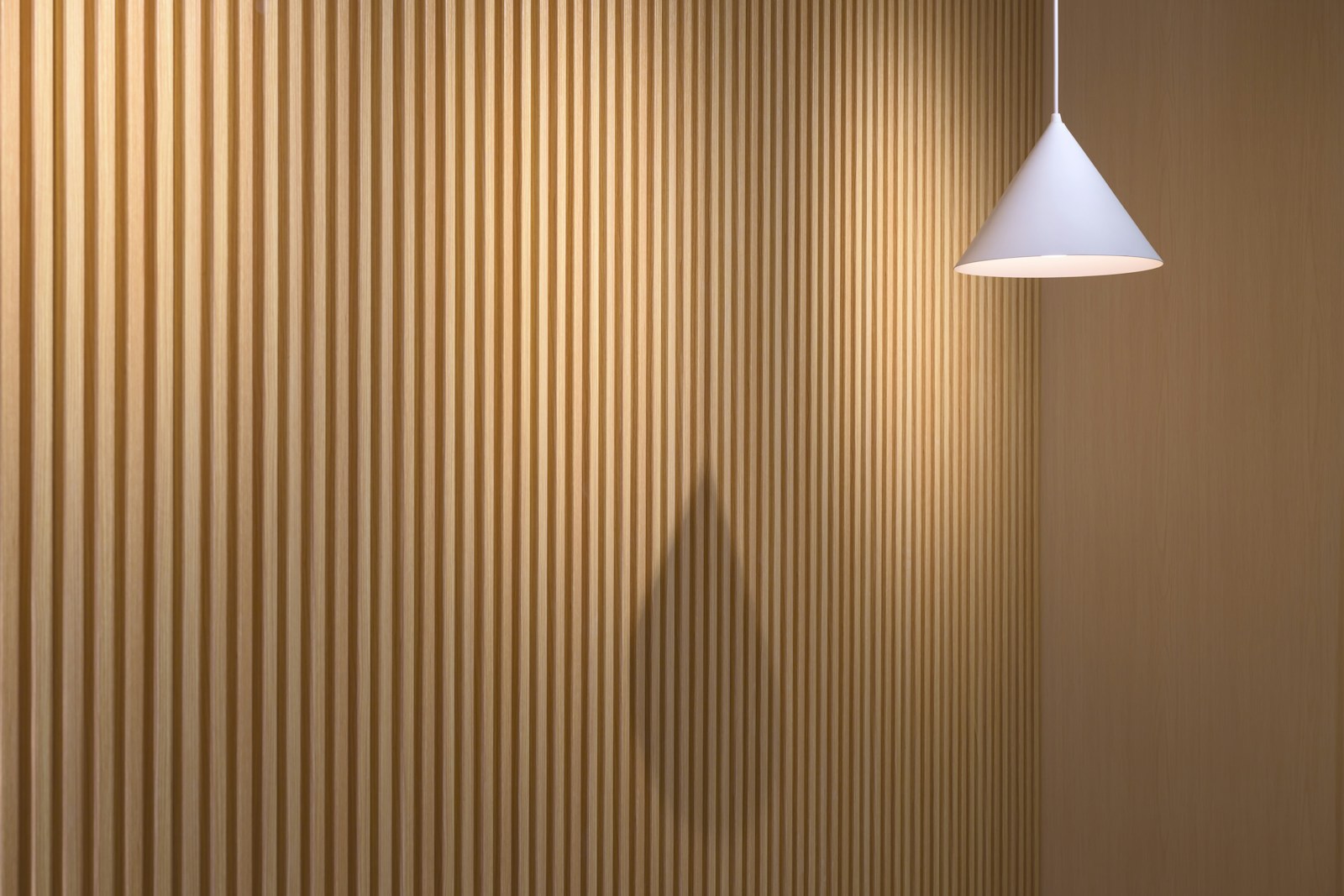
Fluting answers two desires of contemporary living: materials you want to touch and light that changes through the day. The grooves cast fine shadows that move with the sun and with artificial light, so the wall never looks the same twice. It is the same principle that makes fluted glass so appealing, translated into a warm material that sits naturally with warm minimalism and with Nordic and Japanese-inspired interiors.
Where to use it at home
The living room wall
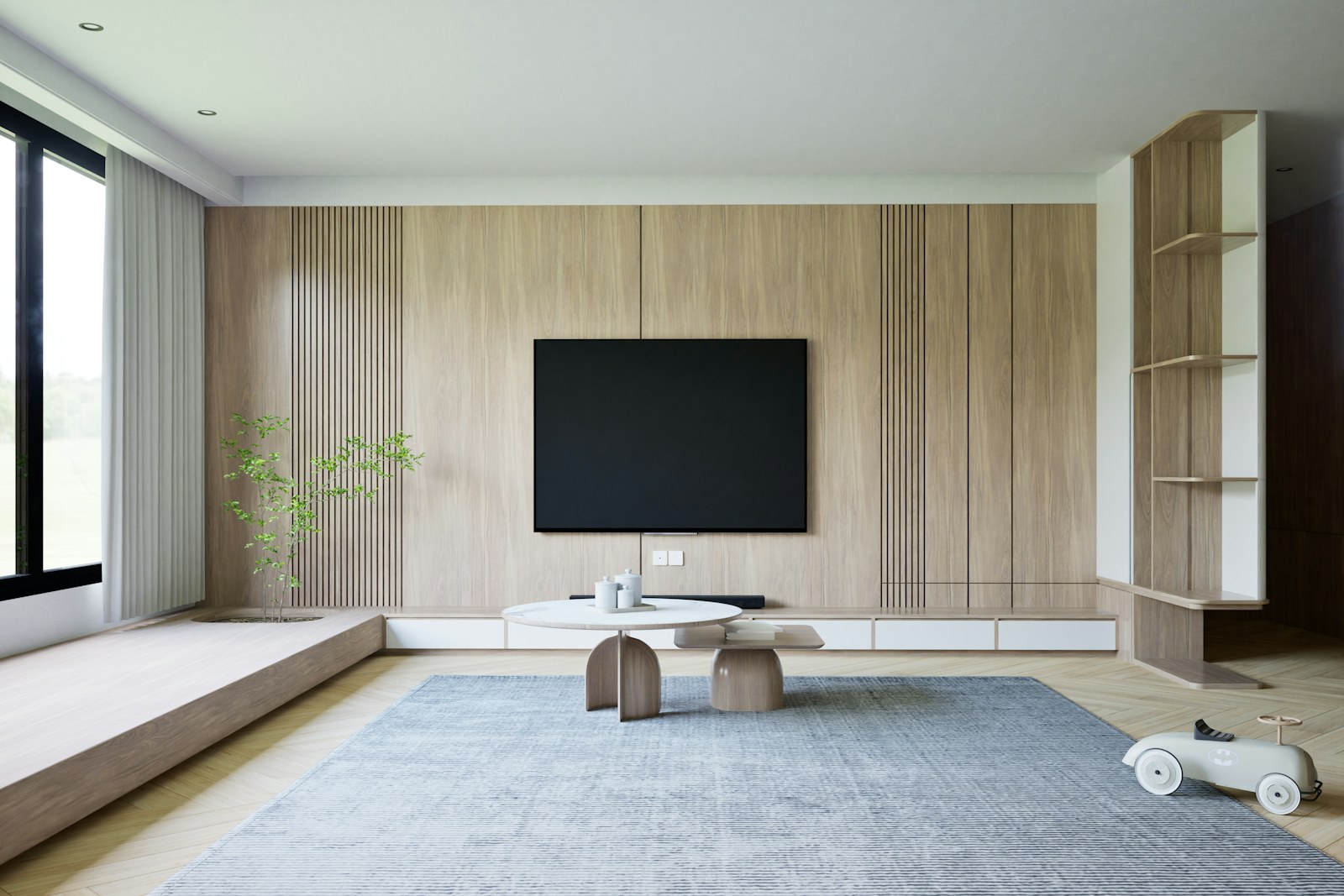
This is the most striking use: a whole wall, or just the section behind the sofa or the TV, clad in fluted wood. It works like modern wall panelling, but with a more graphic line. Our advice is to take it to full height, from floor to ceiling: the verticality of the grooves makes the room feel taller.
The headboard
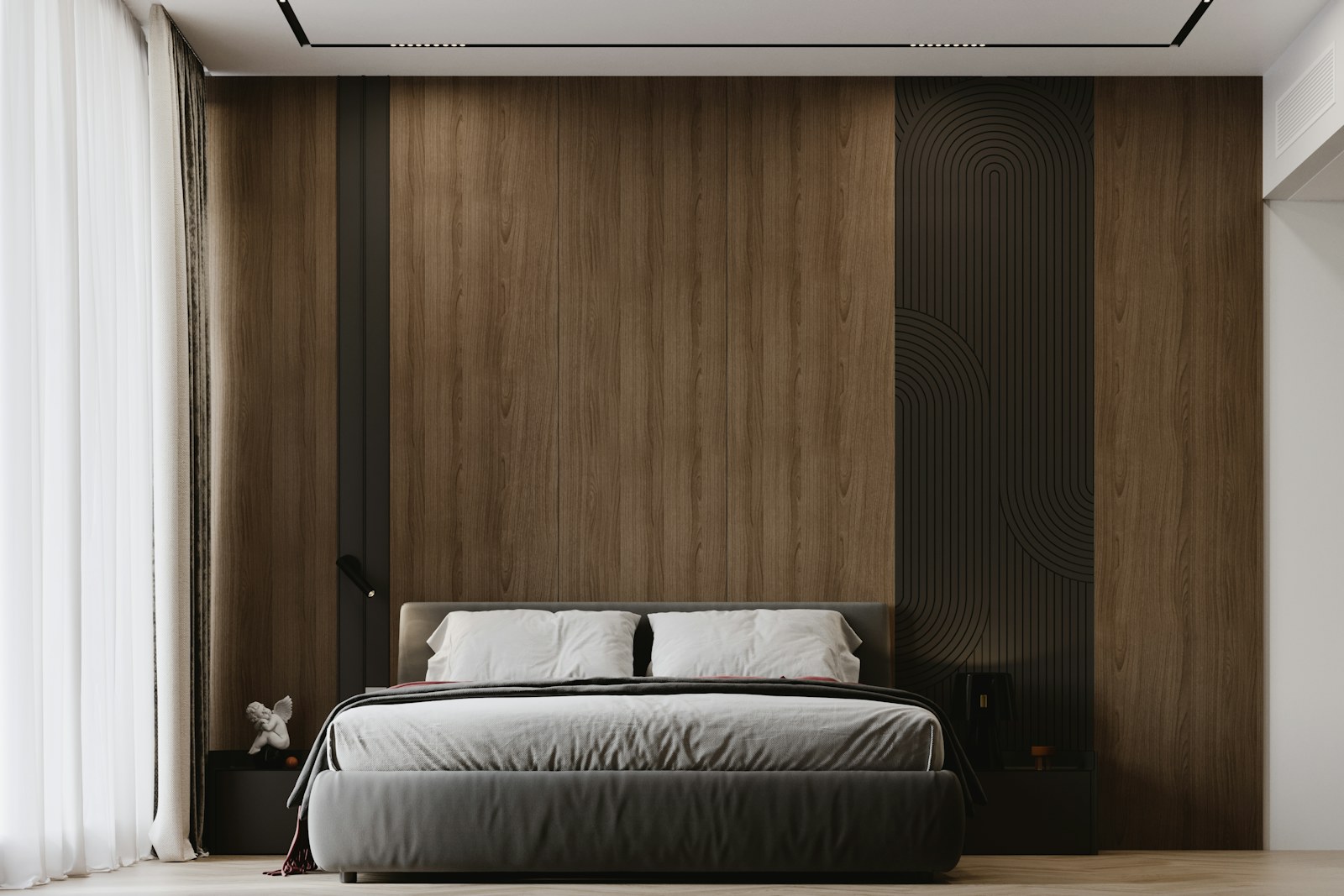
In the bedroom, fluting replaces the traditional headboard: a panel as wide as the bed, or the entire wall, with integrated lighting from above or floating bedside tables. The wood makes the room feel more enveloping and softens echo.
Kitchen and island
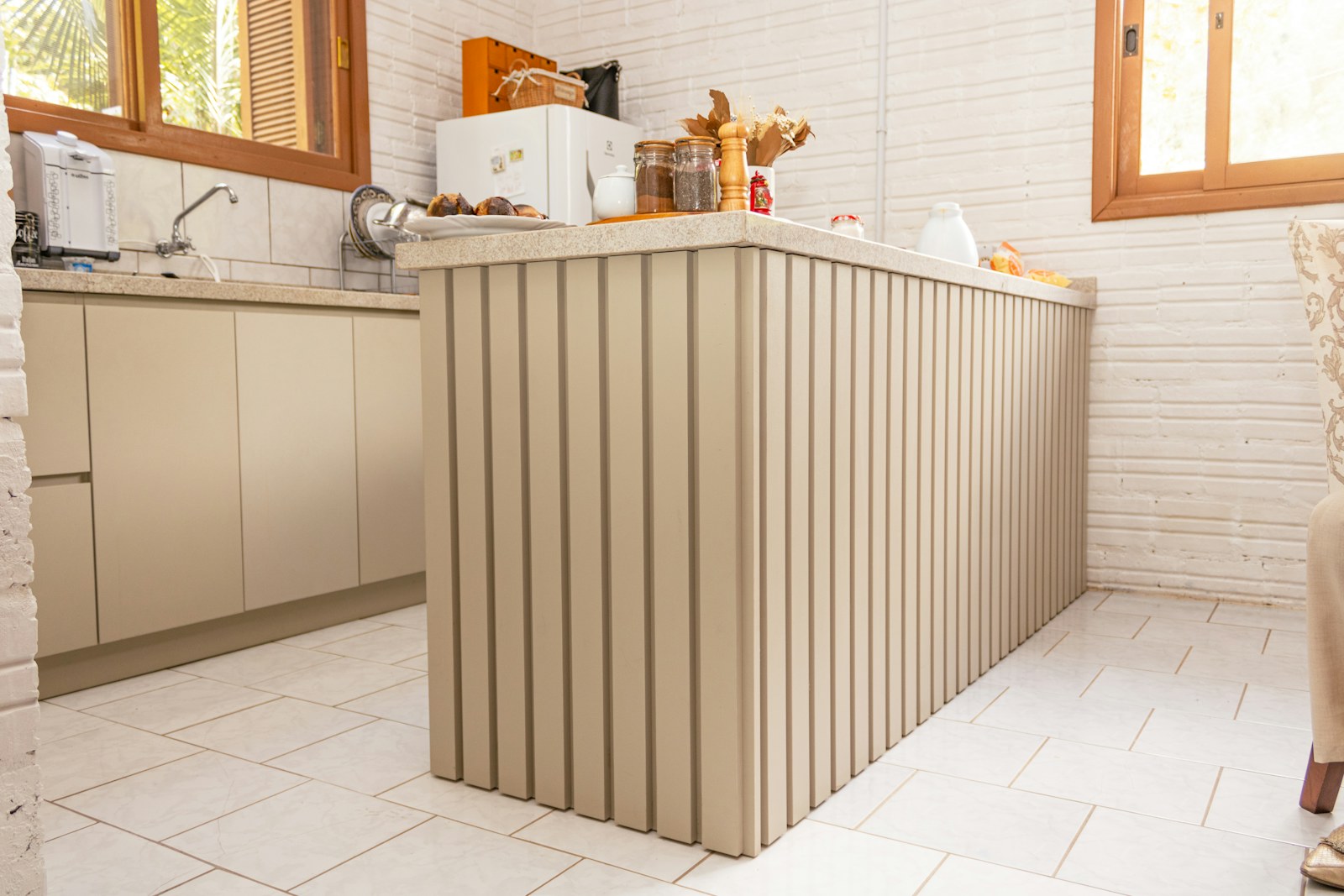
Fluted fronts are one of the strongest trends in the kitchen: on the island, on tall unit doors or on the peninsula, often paired with stone or steel worktops. Here it is best to choose veneered or lacquered panels, which are easier to clean, and grooves that are not too deep, so that dirt does not build up.
Sideboards, wardrobes and doors
On a sideboard or a floor-to-ceiling wardrobe, fluted doors turn storage into a statement piece. With flush doors clad in fluting, the wardrobe can almost disappear into the wall.
The bathroom: only with the right materials
In the bathroom, fluting looks beautiful on vanity units and on walls away from water, but it needs woods and panels suited to humidity and good ventilation. Inside the shower, fluted surfaces in ceramic, stone or glass are the better choice.
How to choose: materials, finishes and colours
Natural or bleached oak is the choice for bright, Nordic-inspired interiors. Walnut and darker woods create a warmer, more sophisticated mood, and they are the ones that respond best to raking light. Lacquer, in neutral or deep shades such as green, midnight blue or terracotta, gives a more contemporary, graphic effect. When a room echoes, as open-plan spaces, home offices and dining rooms with many hard surfaces often do, the right answer is acoustic slatted panels.
Fluted wood pairs beautifully with travertine and warm stones, with brushed metal and, of course, with fluted glass: the same rhythm across different materials makes for a coherent scheme.
The mistakes to avoid
The first mistake is using it everywhere: one wall or one feature per room is enough, because too much fluting becomes tiring and flattens the effect. The second is forgetting the light. Without raking light, from above, below or the side, the grooves barely show, while an integrated LED strip or an angled spotlight makes all the difference.
The spacing matters too: wide slats in a small room feel heavy, and micro-fluting suits compact spaces better. Maintenance has to be factored in, because the grooves collect dust; a soft cloth or a vacuum cleaner with a brush nozzle is enough, but in the kitchen you will notice it. Finally, humidity: standard MDF panels are not suitable for wet areas, which call for a dedicated material.
Frequently asked questions
What is fluted wood?
It is a wood cladding (solid wood, veneered MDF or lacquered) worked with parallel grooves, used for walls, headboards, kitchens and furniture.
Where is fluted wood used at home?
Above all on the living room or TV wall, as a headboard, on kitchen and island fronts, and on sideboards, wardrobes and doors.
Does fluted wood improve acoustics?
Slatted panels mounted on felt are also designed to reduce echo; a simple routed panel has a more limited effect.
How do you clean fluted wood?
With a soft, dry or slightly damp cloth, or with a vacuum cleaner and brush nozzle, following the direction of the grooves.
Can it be used in the bathroom?
Yes, away from direct water and with materials suited to humidity. In the shower, fluted ceramic, stone or glass are the better option.
Fluted wood is proof that an interior can be pared back and warm at the same time: a single surface, the right light, and the room changes character.