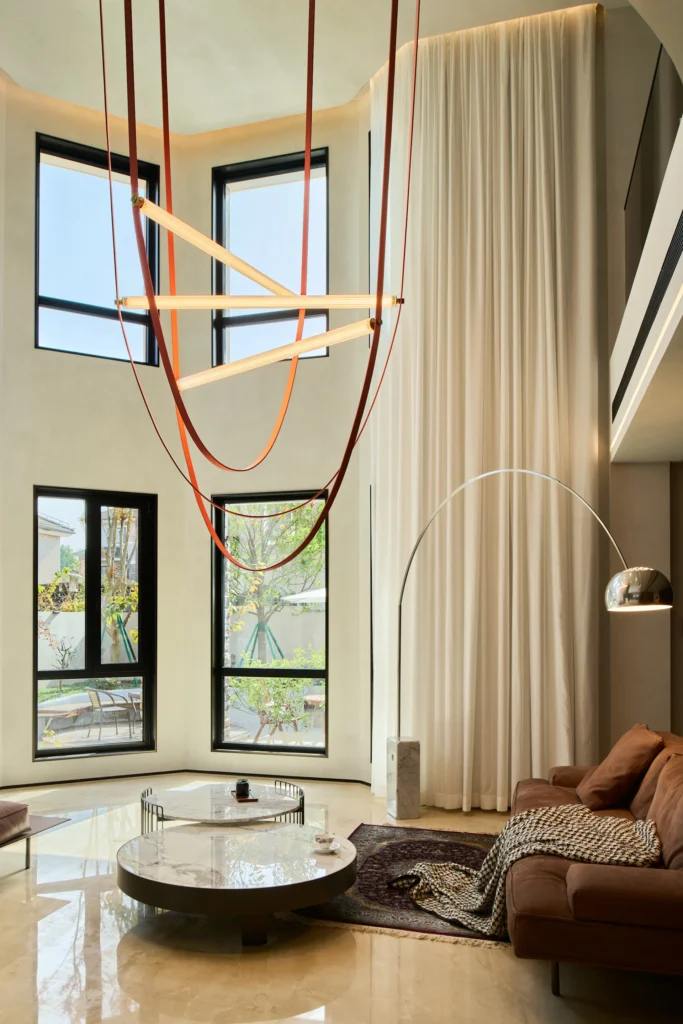
Choose modern pendant lighting with the right proportions, hanging position and light distribution for dining rooms, kitchens and bedrooms.
Modern pendant lighting should be chosen by scale, position and light distribution, not by the shade alone. A fitting above a table has different requirements from one over a circulation route. Measure the room, the furniture and the lowest usable point before buying.
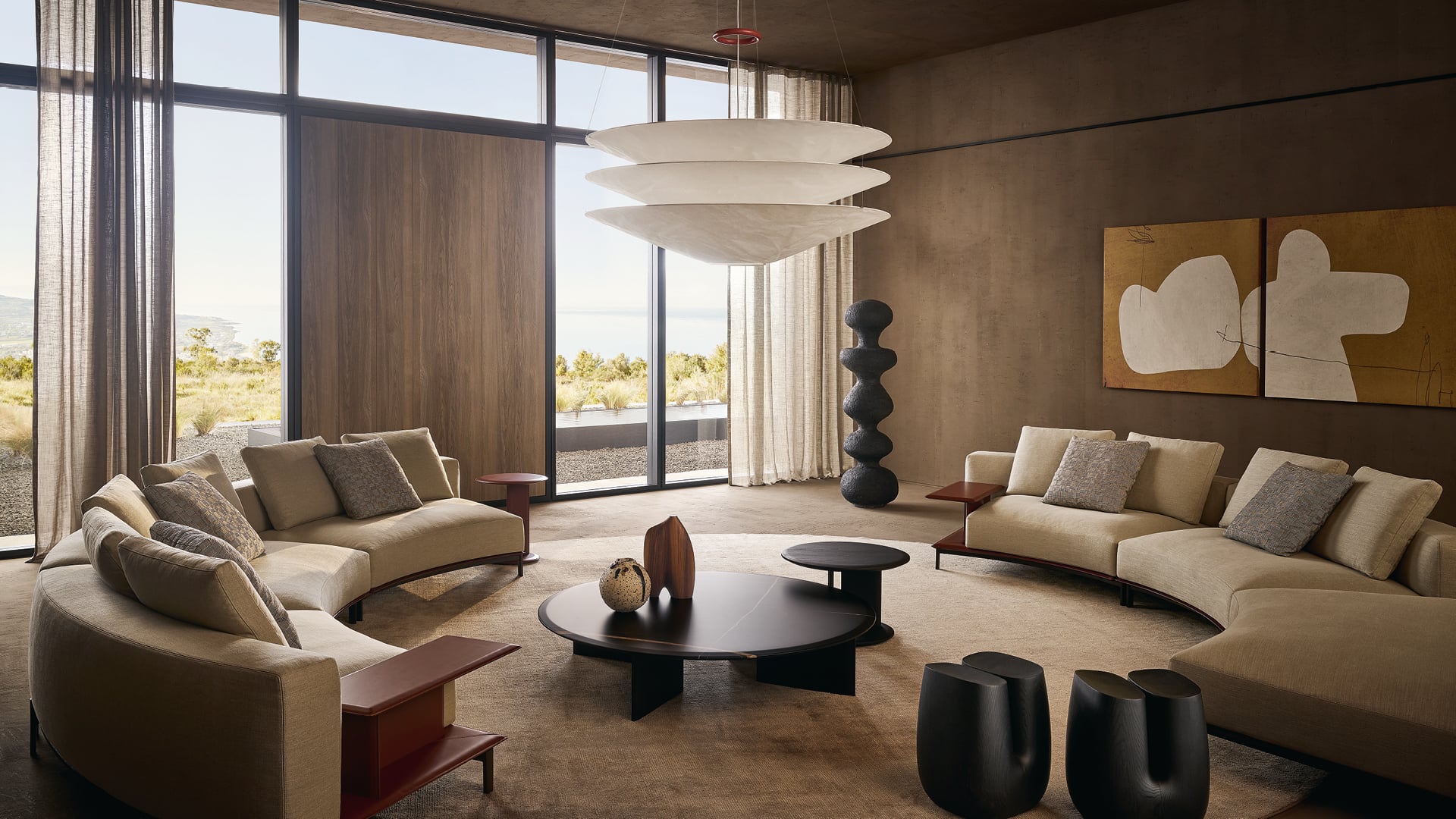
A pendant can give a room a recognisable silhouette. Its body may feel like a small sculpture even when switched off. To make that presence convincing, the relationship with the table, ceiling and surrounding furniture needs to be deliberate.
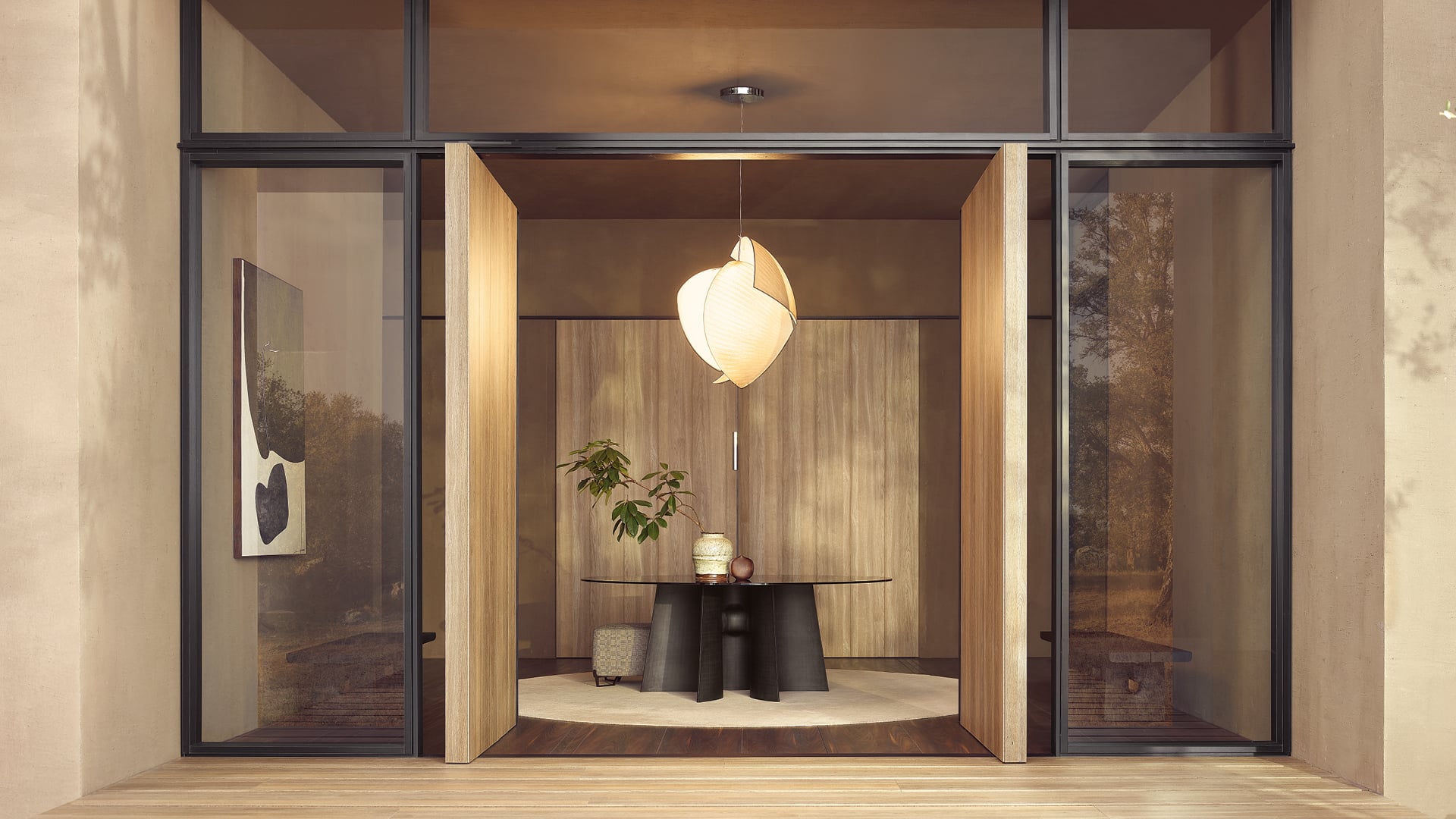
Modern pendant lighting: match the fitting to its role
Over a dining table, the pendant belongs to the composition below it. In a walkway, it must allow safe and comfortable movement. Above an island, light should support the actual activity as well as the overall view.
A single pendant rarely resolves every lighting need. Pair decorative suspension with appropriate ambient and task light. Otherwise a striking object may leave the room unevenly lit.
| Position | Primary consideration | Check |
|---|---|---|
| Dining table | Scale against the tabletop | Sightlines and glare |
| Kitchen island | Preparation or social use | Light distribution and shadows |
| Bedroom | Movement and atmosphere | Clearance and bedside functions |
| Circulation | Safe passage | Lowest point and installation requirements |
Diameter is only one part of proportion
Compare the width, height and visual weight of the entire fitting. An open structure can read more lightly than a solid shade of the same diameter. A cluster also has an overall footprint that needs to be drawn.
Use a cardboard outline or temporary mock-up to judge scale from several positions. Look from the entrance and from a seated position. Catalogue photography can disguise how a large fitting dominates a normal ceiling height.
Set hanging height for the actual room
There is no universal hanging height that suits every fitting and space. Over a table, test views across the room and check the manufacturer guidance. In movement areas, ensure clearance for the people and activities involved.
Check suspension adjustment, ceiling fixing and cable length before ordering. Some fittings need specific support or installation components. Electrical work and local requirements should be handled by a qualified installer.
Control glare and shadows
A visible lamp or bright diffuser can be uncomfortable from a seated position. Look at the fitting from below and across the table. The direction of light matters: downward, diffused and upward effects produce different rooms.
In the kitchen, the person working should not block the only light reaching the counter. Layered illumination usually gives more control than increasing the brightness of one pendant.
Colour appearance and dimming
Compare light colour and colour rendering alongside the finishes. Timber, painted walls and textiles can appear different under different lamps. Consistency across nearby fittings helps a room feel intentional.
Dimming depends on compatible components, not simply the presence of a dimmer switch. Check the complete system with the supplier and installer. A fitting should offer useful evening light as well as its brightest setting.
Finish the composition without overfilling it
A sculptural pendant may need a quiet background. If the room already contains patterned textiles and strong artwork, a simpler fitting can let those elements remain legible. Repeat a material selectively rather than matching every detail.
For the broader living-room composition, see our designer sofa guide. A palette based on modern Mediterranean materials can also help place the pendant in a coherent interior.
For the wider project, explore modern kitchens, modular sofas.
Frequently asked questions
Can a pendant be the only light in a room?
Sometimes, but many rooms need separate ambient or task lighting for different activities.
Is there one ideal hanging height?
No. Furniture, fitting dimensions, sightlines and movement determine the appropriate position.
Are all pendant lights dimmable?
No. Compatibility must be confirmed for the fitting, light source, driver and control system.
Opening image: Poliform.