Ambient, task and mood light, kelvin, CRI, lamps and LEDs: a practical method for designing living-room lighting.
Three layers of light, the right colour temperature and lamps chosen for what actually happens in the room: how to design living-room lighting, even without a ceiling pendant.
In 1962 Achille and Pier Giacomo Castiglioni asked a practical question: how could light be brought over a table without drilling into the ceiling or obstructing the space around those seated there? Their answer was Arco, produced by Flos: a 65 kg Carrara marble base and a steel stem describing a broad curve, carrying light far from its point of support. A problem of living-room lighting thus produced one of the icons of Italian design.
More than sixty years later, the problem is the same but more complex. The living room is used for reading, watching films, dining and working on a laptop. Each activity needs different light, and a single point in the centre of the ceiling cannot serve them all. In the interiors we feature, the difference between a resolved living room and an anonymous one often lies here: in the way light brings furniture to life after sunset.
How to light a living room: the three-layer rule
Good living-room lighting combines three layers: ambient light that makes the space legible, task or accent light that supports activities and highlights objects, and mood light that gives the room character. This principle of layered lighting applies to a studio apartment just as much as to a fifty-square-metre living room.
Ambient lighting
This is the background layer: diffuse, even illumination that allows people to move safely and understand the room’s volume. It can come from flush ceiling lights or recessed fixtures, but increasingly it is indirect, reflected from ceilings and walls. When too strong it flattens everything, so treat it as an adjustable base rather than the main event.
Task and accent lighting
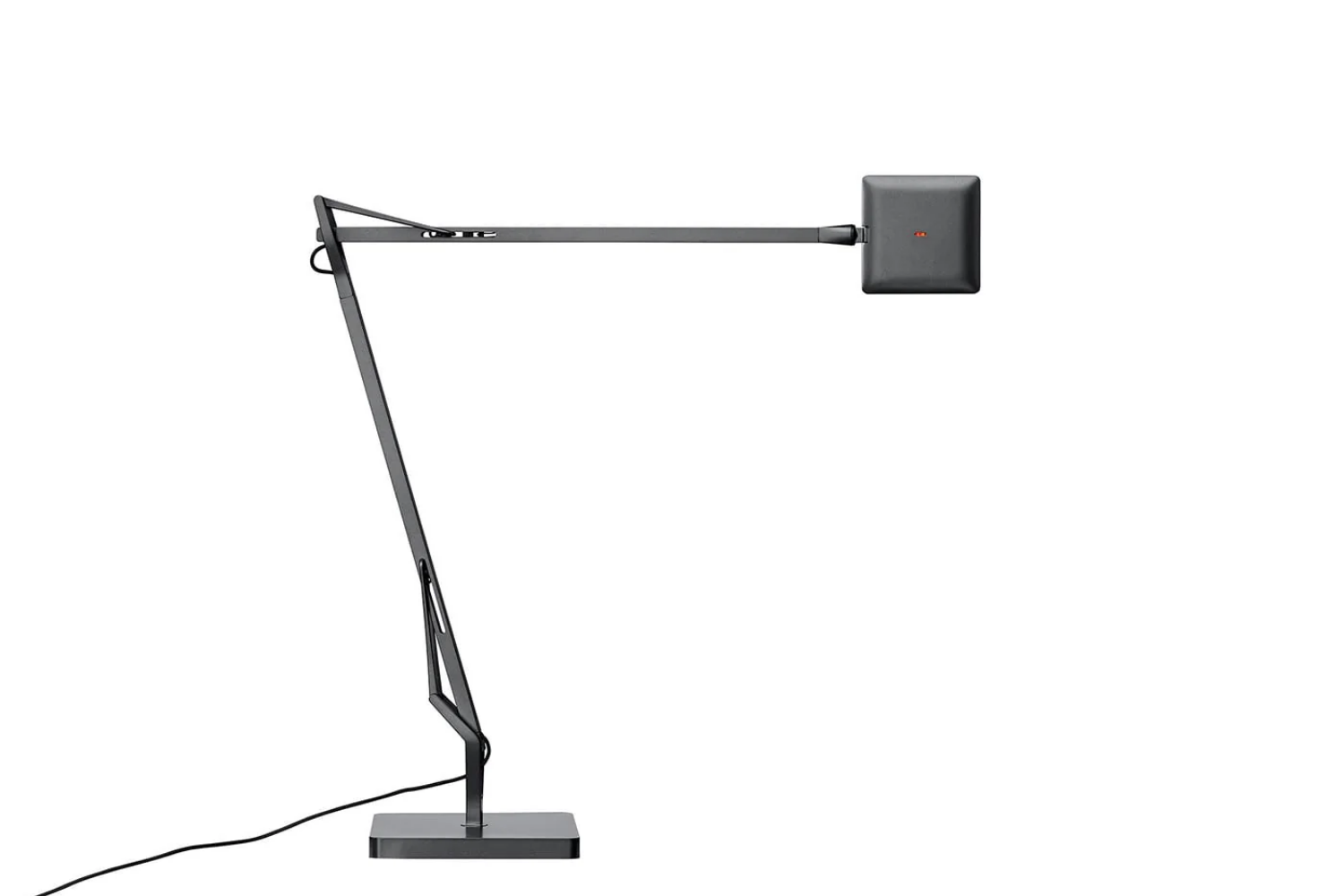
Here light becomes precise. Task lighting supports an action, such as reading on the sofa, setting the table or writing. Accent lighting isolates a picture, bookcase or textured wall to create contrast. In its advice for domestic energy use, ENEA likewise recommends localised lighting for areas devoted to specific activities such as eating, reading or studying: bring the light to where it is needed.
Mood lighting
This is the most emotional layer: table and portable lamps, grazing light and candles. It creates pools of brightness and zones of shadow, because contrast is what makes a room feel welcoming. Our guide to lighting for wellbeing and design explores the relationship between light and comfort in more detail.
Which colour temperature should you choose for living-room lighting?
The most common choice for a living room is warm white light between 2700 and 3000 K. Colour temperature, expressed in kelvin, describes the hue of the light: the lower the figure, the more it tends towards amber yellow; the higher it is, the more it shifts towards blue. The Italian technical specification UNI/TS 11826:2021 for residential interior lighting uses three families: warm white below 3300 K, neutral white between 3300 and 5300 K, and cool white above 5300 K.
The 2700-3000 K range recalls evening light and the tone of an old incandescent bulb. Moving down to 2200-2400 K makes sense for low, golden mood lighting; moving above 3500 K often gives a living room an office-like appearance. This is also linked to biological rhythms, discussed in our article on circadian lighting: in the evening, light should be warmer and lower.
The following table summarises a typical arrangement. The figures are indicative and should be adapted to surface colours, the room’s orientation and the preferences of those who live there.
| Lighting layer | Indicative colour temperature | Typical fixtures | Living-room use |
|---|---|---|---|
| Ambient | 2700-3000 K | LED coves, flush ceiling lights, recessed fittings, indirect floor lamps | Moving around, cleaning, receiving guests |
| Task | 2700-3000 K | Reading lamps, pendants above the table, adjustable wall lights | Reading, dining, working at the table |
| Accent | 3000 K | Track spotlights, adjustable recessed lights, bookcase lighting | Highlighting art, niches and textured walls |
| Mood | 2200-2700 K | Table lamps, portable lamps, dimmable LED strips | Evenings, home cinema and conversation |
Colour rendering: why CRI matters
The colour rendering index, shown as CRI or Ra, measures how faithfully a light source reveals the colours of objects. ENEA describes it as a value between 0 and 100: the closer it is to 100, the better the source shows subtle differences in colour. Since 1 September 2021, EU Ecodesign Regulation 2019/2020 has set a minimum CRI of 80 for general-purpose light sources, with exceptions for specific uses.
Eighty is the legal threshold, not the target. In living rooms that combine wood, textiles and artworks, a source rated Ra 90 or above renders skin tones and materials noticeably more faithfully. The figure appears in technical data alongside colour temperature and luminous flux.
How much light does a living room need? Lumens, lux and glare
Light quantity is measured in two ways: lumens describe how much light a source emits, while lux describes how much reaches a surface. ENEA offers a simple definition: one lumen spread over one square metre equals one lux. The first figure appears on the packaging; the second depends on distance, optics and the colour of the surrounding surfaces.
For residential interiors, the recommended average illuminance and colour rendering values for each room are given in UNI/TS 11826:2021, published in July 2021. This is the document a lighting designer uses to size the system. In practice, the contrast between layers matters most in a living room. A reading area should receive substantially more light than the rest of the space, while ambient light can remain moderate, particularly because pale walls and white ceilings return part of the luminous flux.
Glare occurs when a very bright source enters the field of vision of someone seated: a spotlight aimed towards the sofa, a bare bulb seen obliquely in a pendant, or an LED strip reflected in the television screen. In a considered scheme, sources are screened, recessed into their fittings or directed at surfaces. A useful test is to sit in every seat and check that no source is directly visible.
For energy use, since 1 September 2021 light sources sold in the European Union have carried the new European energy label for light sources. It uses an A-to-G scale, states consumption in kWh per 1,000 operating hours and includes a QR code linking to the EPREL database. ENEA clearly explains the technical definitions on its page covering the parameters that describe lamps.
Which lamps should you choose for a modern living room?
Choose lamps for a modern living room by function before style: pendants for the dining area, at least one floor lamp for reading, wall lights or spotlights for accents, and table lamps for atmosphere.
Pendants above the table in a living-dining room
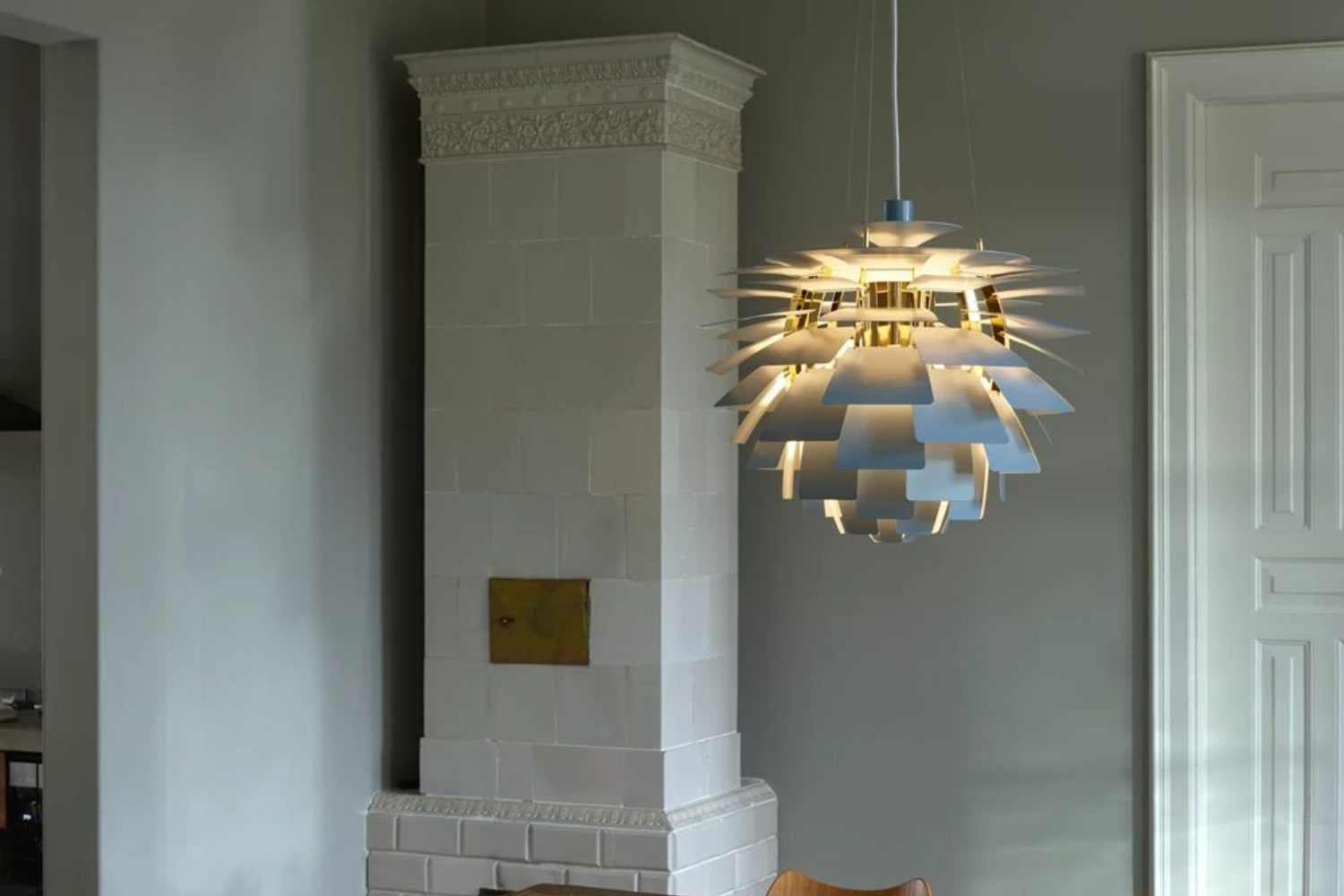
When the living room includes a dining area, the pendant above the table becomes the compositional focus and marks the boundary between functions without walls. Industry guidance commonly places it about 70-80 cm above the tabletop. Treat this as a starting point to be checked against the shape of the shade and the height of those seated: the source should remain hidden and the fitting should not interrupt sightlines across the table. Two or three aligned pendants or one linear fitting usually work better over a long table than a single large chandelier.
Floor and reading lamps
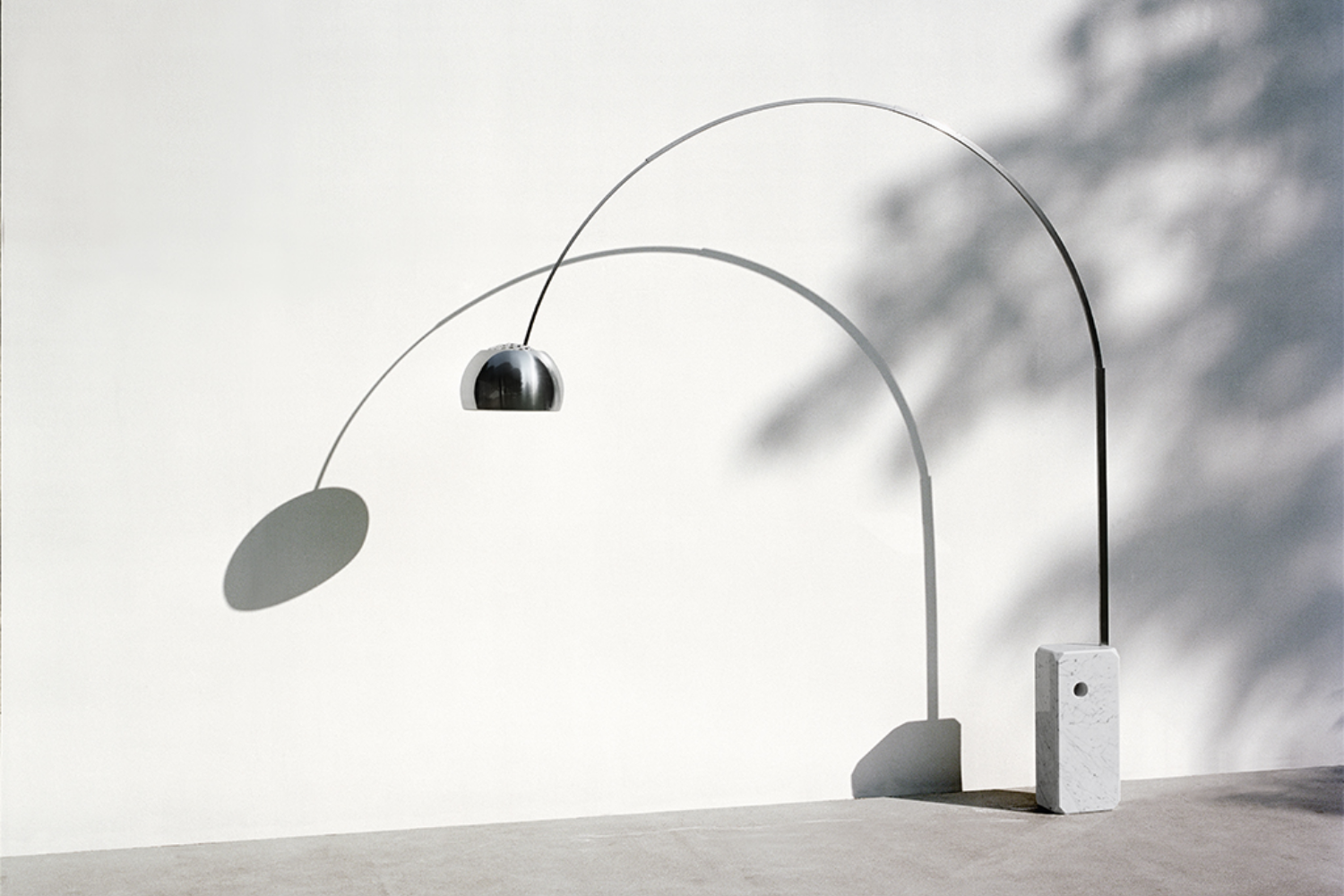
The floor lamp is the most versatile fitting in the living room. It can provide indirect light towards the ceiling, direct light onto an armchair, or both. A reading light should be adjustable and placed slightly behind and to the side of the reader so that the page is free from shadows and reflections. ENEA recommends a lamp with a dimmer for reading on the sofa.
Wall lights, tracks and spotlights
Wall lights work on the vertical plane, washing walls with light and making the room appear broader. Surface-mounted or recessed electrified tracks allow spotlights to be moved and redirected over time, which is useful when artwork changes. Adjustable recessed fittings are the most discreet accent solution, provided their optics place the source deep within the fixture to reduce glare.
Icons of Italian lighting design
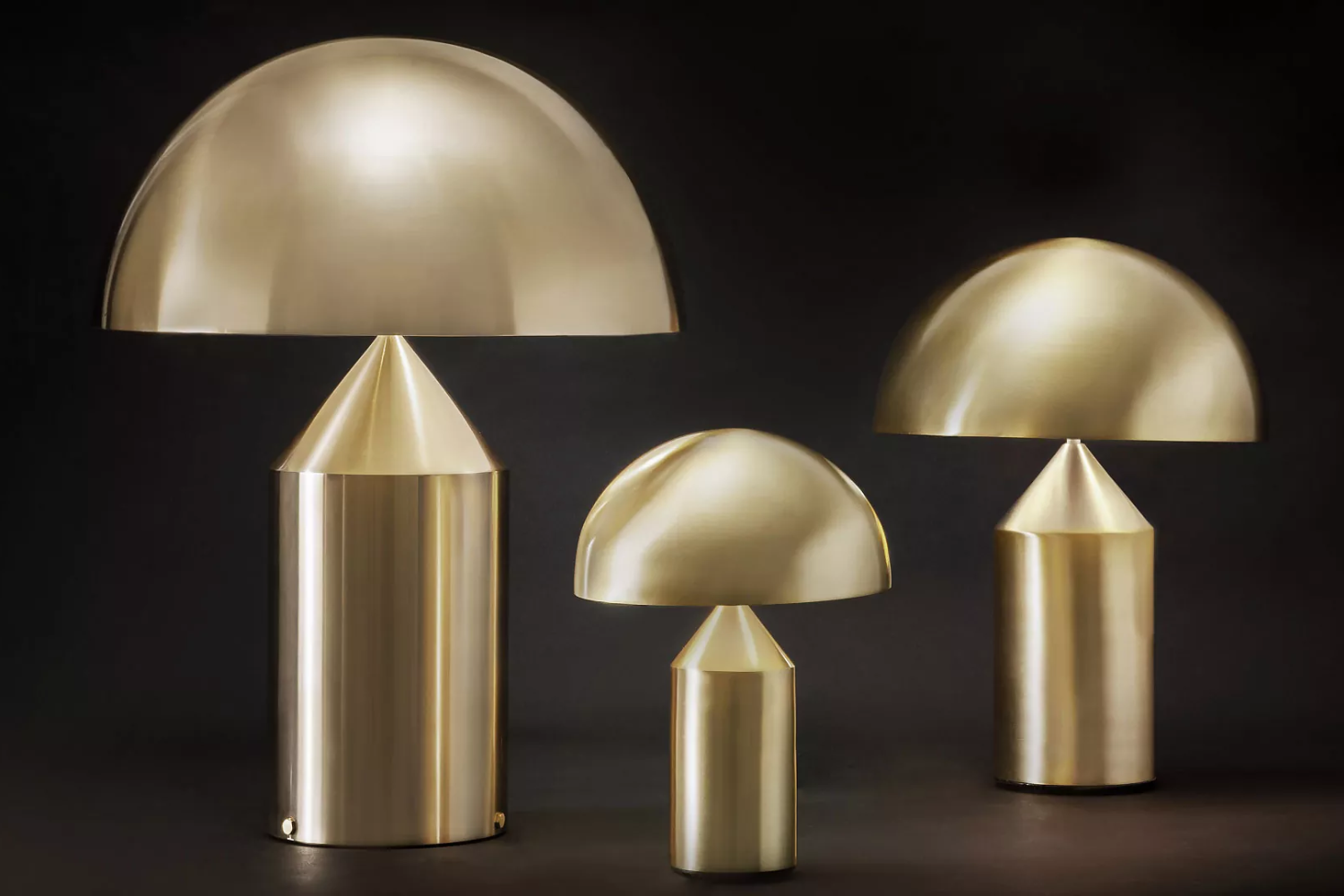
Many lamps that entered the history of Italian design were created for the living room and remain in production. Arco, designed by Achille and Pier Giacomo Castiglioni for Flos in 1962, remains the most elegant answer to lighting a table without a ceiling point; its story appears in our feature on the Arco lamp. Parentesi, presented by Flos in 1971 and designed by Achille Castiglioni with Pio Manzu, who had died two years earlier and whose sketches inspired the idea, is a spotlight that slides along a steel cable tensioned between the ceiling and a counterweight suspended above the floor. It received the Compasso d’Oro in 1979. That year the award also went to Atollo, designed by Vico Magistretti for Oluce in 1977: a cylinder, cone and apparently floating hemisphere. Tolomeo, designed by Michele De Lucchi and Giancarlo Fassina for Artemide in 1987, uses a spring-balanced arm and won the Compasso d’Oro in 1989. Our article on icons of lighting design includes a broader selection.
LED living-room lighting: strips, coves and indirect light
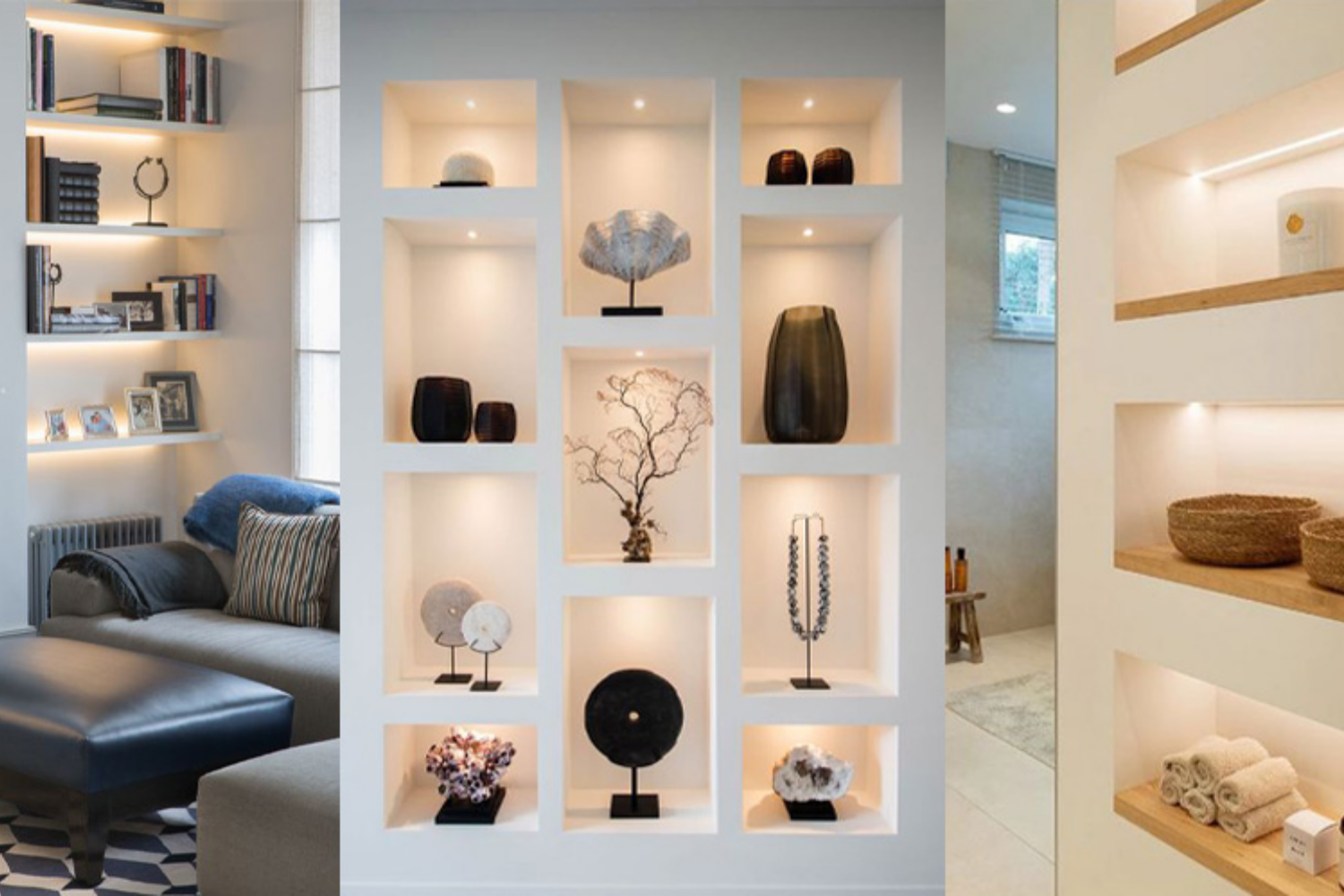
LED technology has changed living-room lighting by allowing light to be integrated into architecture rather than hung from it. A concealed strip creates indirect light that reflects from surfaces and dissolves the room’s edges.
A perimeter cove, a lowered ceiling detail along the walls with a slot for light, is the classic way to create soft ambient illumination. A plasterboard pelmet dropping from the ceiling can hide a downward-facing strip that washes a wall or bookcase. Panelling and media walls can also contain LED profiles that draw grazing lines of light across plaster or stone textures.
Three details matter: an aluminium profile with an opal diffuser to prevent a dotted effect; a high-CRI strip with consistent colour between batches, stated in the technical data as MacAdam steps; and a distance between strip and surface determined when the plasterboard is designed. These details matter even more in a compact apartment, as our guide to furnishing a small living room explains.
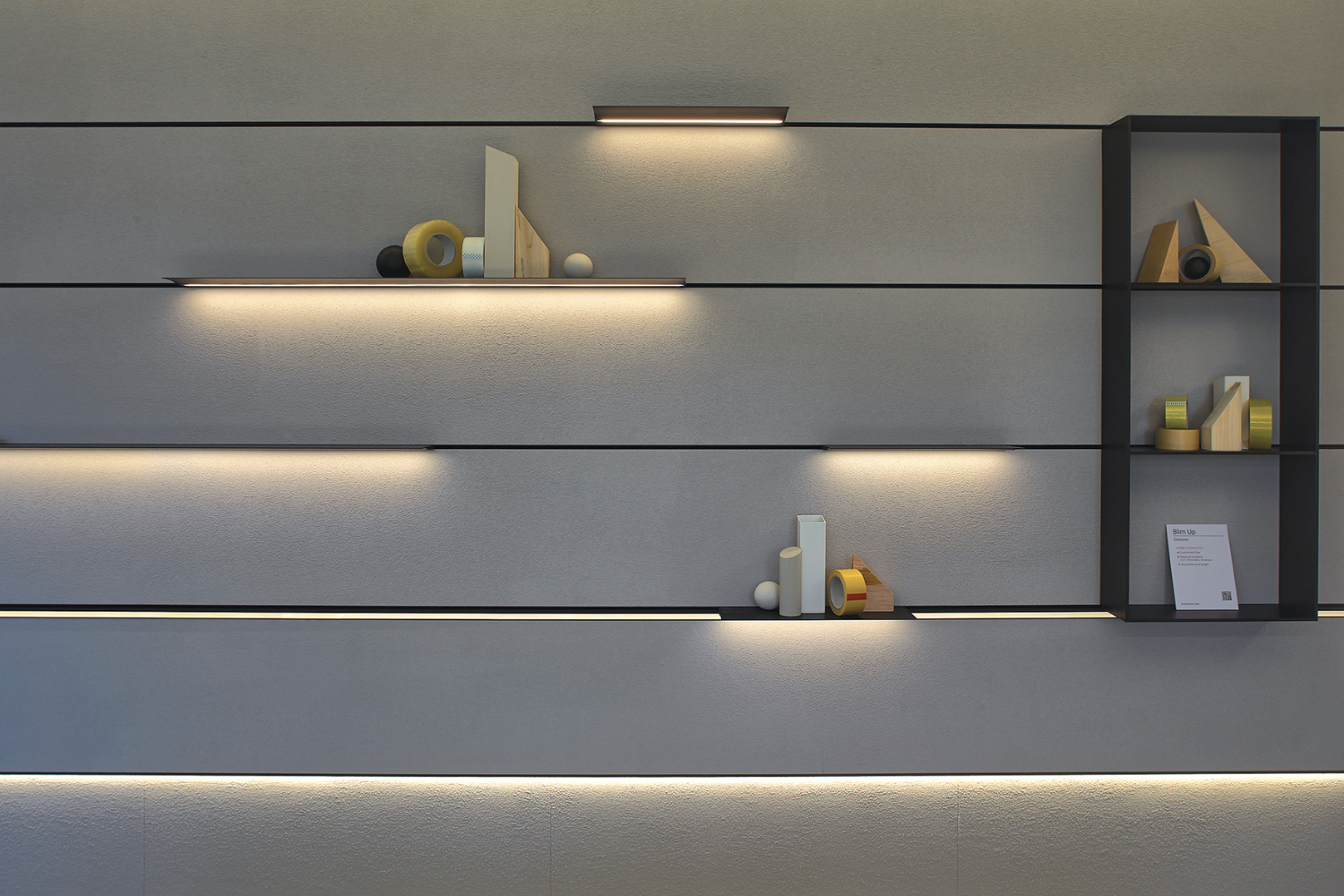

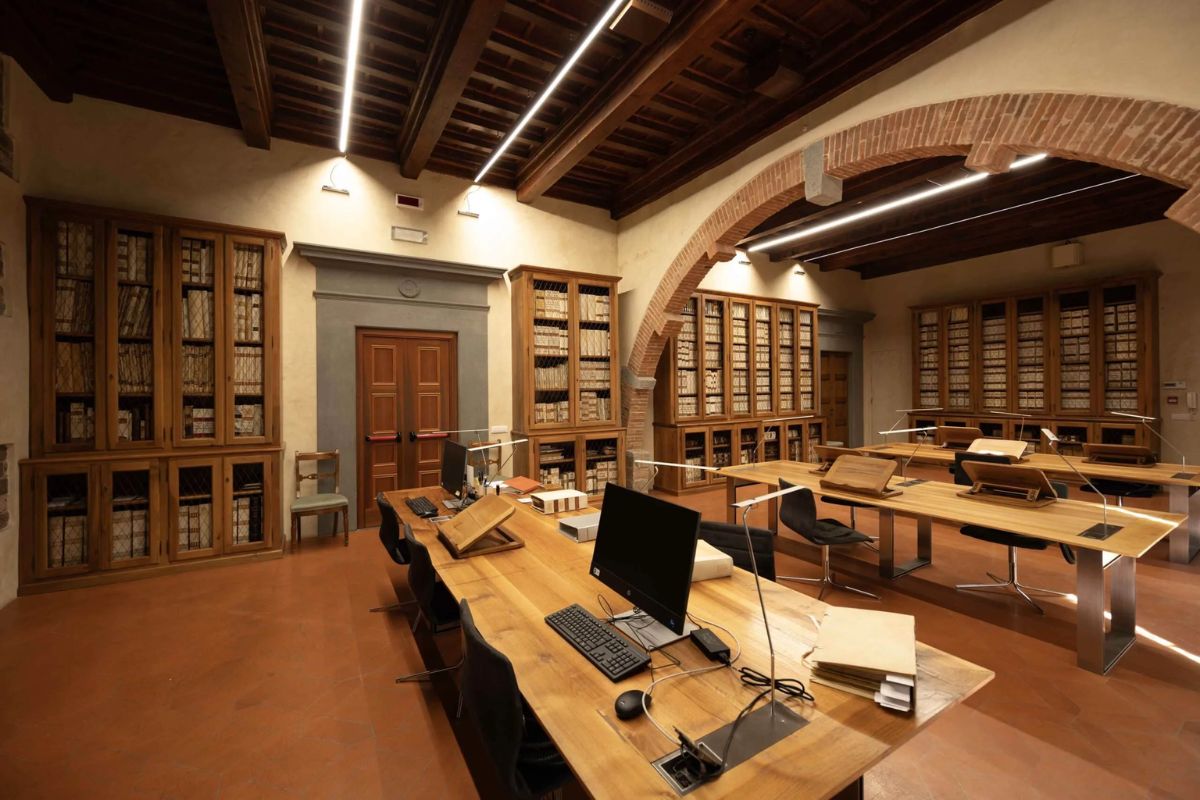
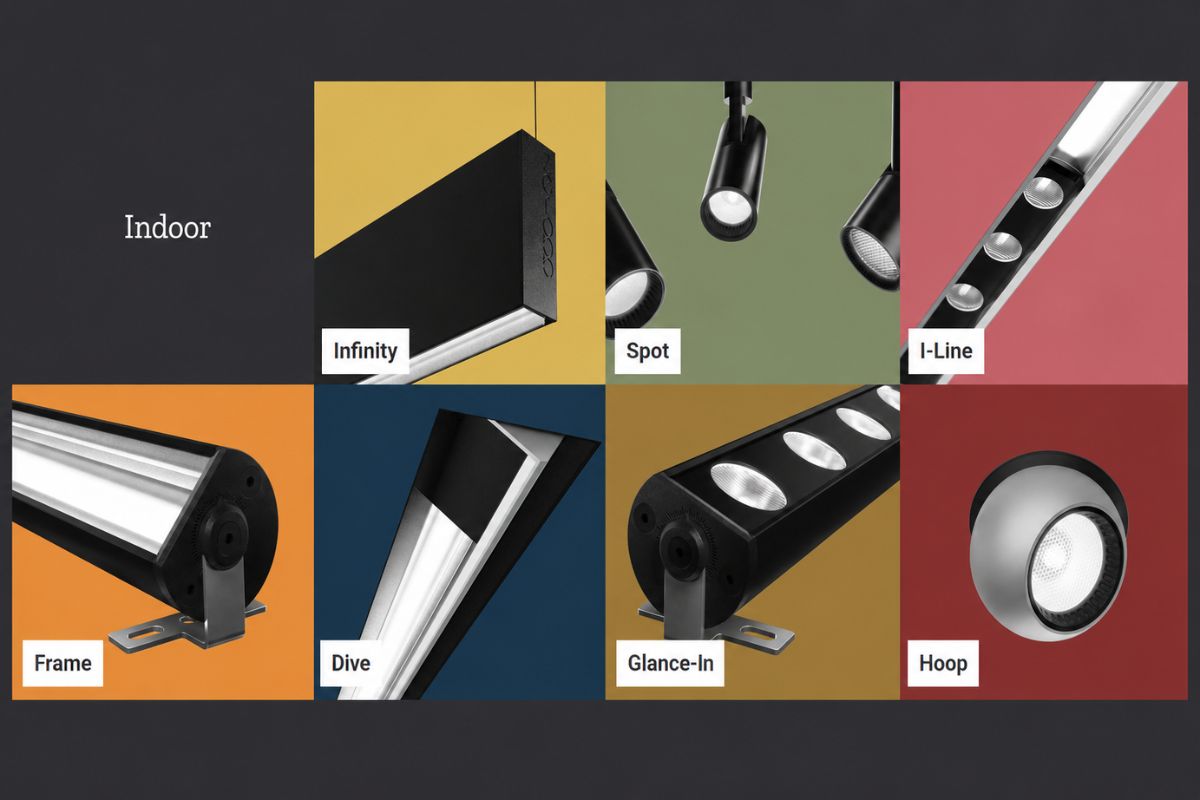
Three applications of architectural lighting by Zero55. Images courtesy Zero55.
How to light a living room without a chandelier
A living room can be lit without a chandelier by using indirect sources for ambient light and distributing several points at different heights: floor lamps, wall lights, concealed strips and table lamps. It is often the more elegant solution because it removes the central source that flattens the room and makes it uniform.
In period homes with decorated ceilings, or in rented properties where new wiring channels are not possible, the strategy works with plug-in fittings and well-placed sockets. One or two indirect floor lamps recreate the ambient layer; wall lights, even with visible cables, illuminate vertical surfaces; table lamps complete the scene. Arco remains the textbook example: a floor lamp that behaves like a pendant. Wall-switched or smart sockets prevent the need to switch five lamps on individually.
Dimmers, scenes and home automation in the living room
A dimmer is the least expensive way to transform a living room, adjusting each group from full brightness to evening shadow. With LEDs, confirm compatibility between the source, driver and dimmer. Phase-cut systems are the most common in homes, while digital protocols such as DALI offer finer, steadier control without flicker at low levels.
The next step is lighting scenes: stored combinations of fittings and intensities recalled with one control. A typical scheme might include three or four scenes for receiving guests, dining, reading and cinema. Automation systems based on open standards such as KNX, as well as newer wireless solutions, can also vary colour temperature with tunable-white sources. Define the scenes before selecting the lamps, because they determine the number of circuits required at each point.
A complete lighting scheme is best developed with a professional. Our overview of contemporary Italian lighting designers and our interview with Andrea Stiaccini of Zero55 on architectural lighting present the perspective of those who design with light professionally.
The most common living-room lighting mistakes
The most common error is relying on one central ceiling point. The room appears flat, the walls remain dark and faces acquire hard shadows. The second is mixing colour temperatures without a plan, such as a 4000 K ceiling light beside a 2700 K reading lamp.
Other mistakes include recessed spotlights arranged in a regular grid with no relationship to the furniture; pendants hung too high above the table, causing glare; LED strips without profiles; and a lack of sockets where floor lamps will be needed. Finally, there is a mistake of sequence: designing the electrical system before the layout. The positions of the sofa, table and bookcase determine where light is required. Lighting and furniture should be planned together, as explained in our guide to furnishing a home.
Frequently asked questions about living-room lighting
How many kelvin should living-room lights have?
The most common choice is warm white light between 2700 and 3000 K, within the range defined as warm white below 3300 K by UNI/TS 11826:2021. Mood lighting can move down to 2200-2400 K. Values above 3500 K have a more technical quality that may be suitable for a study area.
How do you light a living room with no ceiling point?
Use indirect floor lamps for ambient light, wall lights to wash vertical surfaces, and table and reading lamps for specific functions. Arc floor lamps such as the Castiglionis’ Arco can bring light over a dining table without drilling into the ceiling. Wall-switched or smart sockets simplify control.
How high should a pendant hang above the living-room table?
Industry guidance commonly suggests about 70-80 cm above the tabletop, but this should be treated as indicative. What matters is that the light source remains hidden from those seated and that the fitting does not obstruct views across the table. Highly screened shades can hang lower, while clear glass generally needs to sit higher.
What CRI should an LED bulb have in a living room?
Since 2021, EU Regulation 2019/2020 has required a minimum CRI of 80 for general-purpose sources. For a living room containing wood, textiles and art, Ra 90 or above is preferable because it renders materials and skin tones more naturally. The value appears on packaging and technical data sheets.
Can LED strips replace a chandelier?
Yes. When integrated into coves, pelmets or furniture and directed towards the ceiling or walls, LED strips can provide all the ambient light in indirect form. They need aluminium profiles with diffusers, high colour rendering and a compatible dimmer. Add task lights for reading and dining.